By Scooter M. · Last updated August 30, 2026
Shovel Report earns a commission when you buy through the links on this page, at no extra cost to you. It does not change what we recommend, and we publish a skip-this verdict on products we could otherwise earn from. Full disclosure.
Concrete tolerates almost any clearing tool, including single-stage machines that scrape to bare pavement. The constraint is chemistry: de-icer multiplies freeze-thaw cycling in a porous surface. Concrete under a year old should see no chloride at all, and sealing is the cheapest protection there is.
The easy half: clearing
Concrete is hard, flat, non-porous at the surface once cured, and does not care about a scraping blade. That makes it the one driveway surface where the whole product category is available to you.
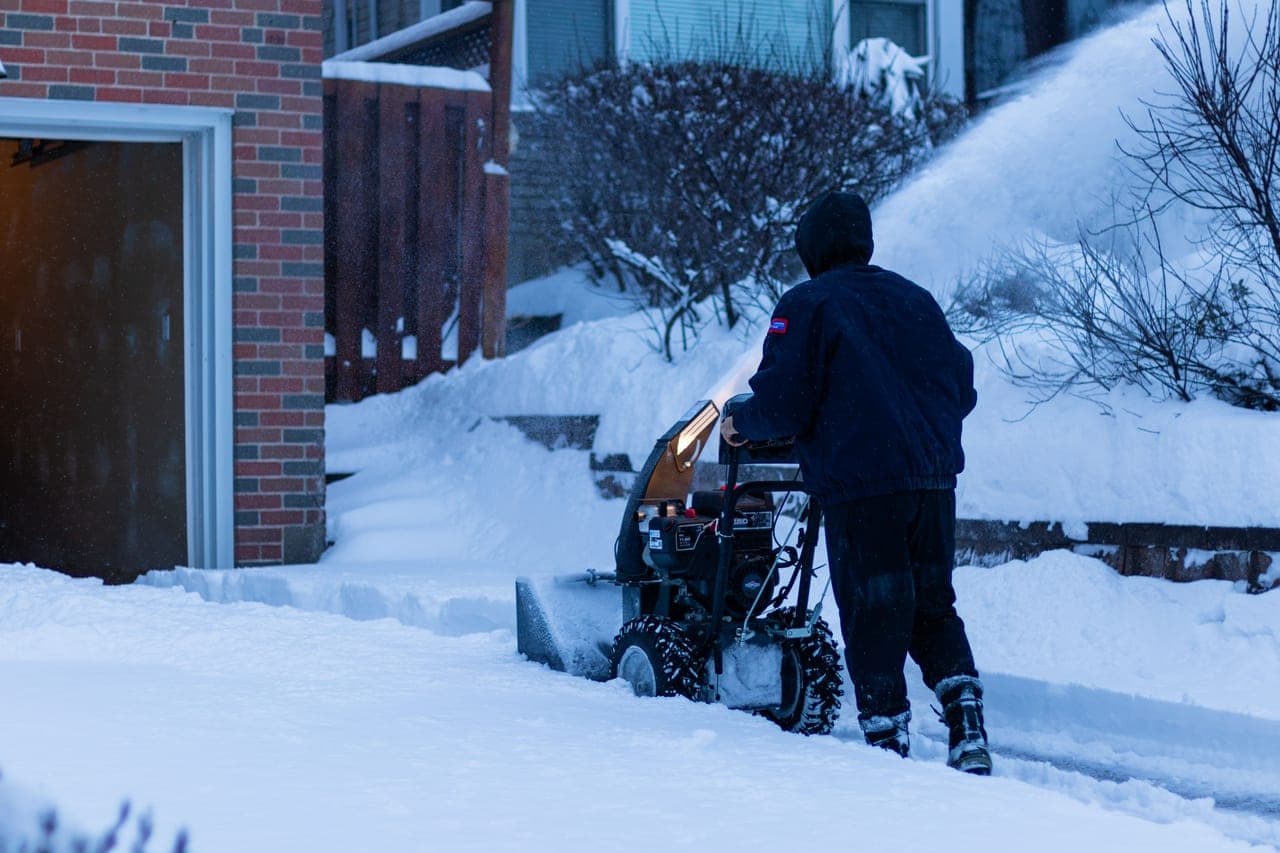
A single-stage snow blower is ideal here, because its ground-contacting auger clears down to bare concrete in a way a two-stage machine deliberately does not. Steel shovel edges are safe on sound mature concrete. Poly and UHMW pushers work well. Nothing is disqualified.
The one exception is decorative and stamped concrete, where the surface finish is the product. Treat those like pavers rather than like a plain slab: no steel edges, and no chlorides on an unsealed finish.
How we picked
- Surface compatibility first — it eliminates entire product categories before any other spec matters
- Auger or blade clearance against what the surface can tolerate being scraped or picked up
- Throughput or blade width matched to the area, so the tool suits the job rather than the price tier
- De-icer chemistry chosen against the surface's actual failure mode, not a generic warning
- A complete answer: a shovel, a powered option and a de-icer that all work on the same surface
We have not physically tested these products. We do not own them, we have no lab, and we do not accept free product. Everything above is compiled from published manufacturer specifications, published manuals, published standards and live retailer data - and we tell you which is which on every claim. How we pick.
Quick picks
Ranked against the criteria below. Tap a row to jump to the full write-up; the price button goes straight to Amazon.
| # | Product | Best for | Score | Price |
|---|---|---|---|---|
| 1 |  Snow Joe SJ627E 22-in Corded Snow Blower 840 pounds of snow a minute from a wall socket, at 35 pounds and a fraction of a cordless machine's price. | Most snow moved per dollar | 8.6/10 | $249.99 - View on Amazon #ad affiliate link · Price as of October 15, 2026 |
| 2 |  The Snowplow Original Snow Pusher, 30 in A UHMW polyethylene blade that snow slides off rather than sticks to, in the width that actually changes your clearing time. | Wide, flat driveways | 8.9/10 | $69.99 - View on Amazon #ad affiliate link · Price as of October 15, 2026 |
| 3 | 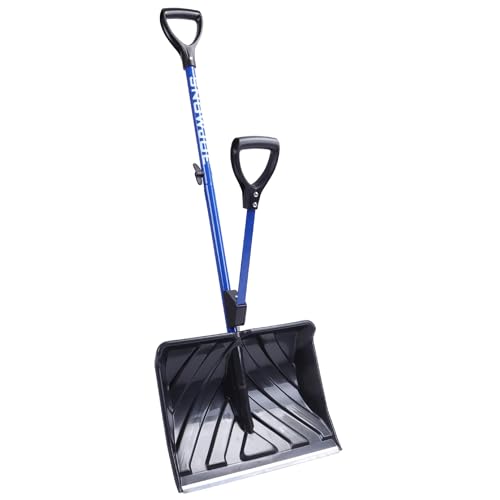 Snow Joe Shovelution SJ-SHLV01 A spring-assisted second handle moves the lifting load down the shaft, and at 3.5 lb the shovel itself adds almost nothing to what you lift. | Backs that already hurt | 8.6/10 | $39.97 - View on Amazon #ad affiliate link · Price as of October 15, 2026 |
| 4 |  Snow Joe AZ-50-EB Premium Enviro Blend Green-coated crystals carrying calcium magnesium acetate for corrosion inhibition — the compromise blend when you cannot use one chemistry everywhere. | Mixed surfaces on one bag | 7.9/10 | $34.97 - View on Amazon #ad affiliate link · Price as of October 15, 2026 |
| 5 |  Hathoro 18-in Steel Blade Snow Shovel An 18-inch steel blade on a 37-inch wooden D-grip handle — the cheap, honest way to own the one tool that can chop a refrozen plow ridge. Our skip-this pick | Cutting the frozen plow ridge | 7.0/10 | $39.50 - View on Amazon #ad affiliate link · Price as of October 15, 2026 |
Most snow moved per dollar
Snow Joe SJ627E 22-in Corded Snow Blower
840 pounds of snow a minute from a wall socket, at 35 pounds and a fraction of a cordless machine's price.
This machine exists to make a point about arithmetic. Snow Joe states it moves up to 840 pounds of snow per minute through a 22-inch by 13-inch intake. The best-documented electric shovel in this build, the Toro Power Shovel, is rated at 300 pounds per minute through a 12-by-6-inch path. That is not a small difference in degree; it is a different job.
Work through a driveway with it. A 20-by-40-foot drive under 6 inches of fresh snow contains very roughly two to four thousand pounds of snow depending on density. At the stated 840 lb/min that is a few minutes of actual throughput — the clock is dominated by walking and turning, not by the machine.
The 13-inch intake depth is the underrated spec. Most single-stage machines in this price class top out around 8 to 10 inches, which means a foot of snow needs layered passes. Thirteen inches takes most storms in one.
The cord is the price. Fifteen amps over a long, thin extension cord is a voltage-drop problem, so you need a heavy-gauge, cold-flexible outdoor cord, and you spend the whole clear aware of where it is. Measure your outlet-to-far-corner distance before you buy — beyond about 100 feet, go cordless.
What works
- 840 lb/min is roughly triple what the best electric shovel here moves
- 13 inches of intake depth handles a real storm in one pass
- 35 lb published weight makes it manageable to turn and store
What does not
- Corded, so your working radius is a cord length
- 15 amps needs a properly rated cold-weather extension cord
- Single-stage: no gravel, and limited on steep grades
Wide, flat driveways
The Snowplow Original Snow Pusher, 30 in
A UHMW polyethylene blade that snow slides off rather than sticks to, in the width that actually changes your clearing time.
UHMW — ultra-high-molecular-weight polyethylene — is the material specification that separates this from a $25 pusher. It is the same family of plastic used for conveyor wear strips and truck-bed liners, chosen for a very low coefficient of friction and high impact resistance at low temperature. The practical consequence is that snow slides off it, including the heavy wet snow that packs solid onto a cheap blade and turns pushing into scraping.
The maker states the edge self-sharpens with use and needs no maintenance, and lists the tool as usable on concrete, blacktop, pavers, decks, roofs and ice rinks. That surface list is unusually broad and is the reason we recommend it where a metal edge would be a liability.
Width is the other half of the argument. A 30-inch blade covers 67 percent more ground per pass than an 18-inch shovel. On a 20-by-30-foot driveway that is the difference between roughly 20 passes and roughly 12 — and each of those passes is a push, not a lift.
It is not a complete answer. Nothing that pushes deals with the plow berm, and on a long driveway you eventually run out of anywhere to push to. Pair it with a shovel, or with a machine.
What works
- UHMW is the reason wet snow releases instead of packing onto the blade
- 30 inches is the width where pass count drops noticeably on a two-car drive
- Rated by the maker for decking and pavers, unlike any steel-edged pusher
What does not
- Costs multiples of a hardware-store pusher
- Still cannot lift, and still cannot cut refrozen crust
- The wider the blade, the more it wanders on uneven ground
Backs that already hurt
Snow Joe Shovelution SJ-SHLV01
A spring-assisted second handle moves the lifting load down the shaft, and at 3.5 lb the shovel itself adds almost nothing to what you lift.
The physics here are simple enough to check without owning one. A snow shovel is a lever, and the load on your lumbar spine depends on how far the weight sits from your hips. A conventional straight-shaft shovel makes your upper hand the fulcrum and your lower back the counterweight. The Shovelution adds a second, spring-loaded grip partway down the shaft, so the lower hand takes the lifting and the spine straightens earlier in the throw.
Snow Joe states the design reduces back strain by up to 30 percent. That is the manufacturer's number and we cannot verify it. What we can verify is the tare weight: 3.5 pounds for an 18-inch blade, which is genuinely low. Weight matters more than it sounds. Twelve pounds of wet snow on a 3.5-pound shovel is a 15.5-pound lift; the same load on a 6-pound steel shovel is 18 pounds, and you are doing it three hundred times.
The blade is poly with an aluminum wear strip. That combination is the right compromise for most driveways: poly is light and does not stick as badly as bare steel, and the aluminum edge keeps the leading lip from rounding off after two seasons. It is not a gravel tool — the wear strip will scoop stone and fling it, and on a composite deck it can leave marks.
The 50-inch assembled height is the real limit. If you are over about six feet you will still bend more than you want, and a longer straight-shaft may serve you better even without the assist. See our straight shaft versus ergonomic comparison for how shovel length maps to user height.
What works
- 3.5 lb is among the lightest 18-inch blades we found published specs for
- The second handle is fixed to the shaft, so the lower hand carries the load instead of your lower back
- Aluminum wear strip on a poly blade — the durable combination at this weight
What does not
- The spring mechanism is one more thing that can fail, and it is not user-serviceable
- 18 inches is a lot of blade for wet snow if you insist on filling it
- 50 inches assembled is short for anyone much over 6 feet
Mixed surfaces on one bag
Snow Joe AZ-50-EB Premium Enviro Blend
Green-coated crystals carrying calcium magnesium acetate for corrosion inhibition — the compromise blend when you cannot use one chemistry everywhere.
Calcium magnesium acetate — CMA — is not a chloride, and that is the entire point of it. It is used by transport agencies specifically where chloride corrosion of steel is unacceptable, and its inclusion here is why Snow Joe positions this blend as safer for concrete and metals.
The green coating is a better idea than it looks. Ice melt is almost always over-applied, because you cannot see white crystals on white snow and so you keep spreading. A colored product shows your coverage, and coverage discipline is what keeps chloride out of your soil and product in the bag.
The missing figure is the working temperature, which the listing we read does not publish. Acetate-based and blended products generally give up some cold performance in exchange for gentleness, so treat this as a moderate-cold product until the maker publishes a number.
It is a sensible default for the common real-world case: a driveway with a lawn edge, a metal railing and a concrete walk, where you want one bag rather than three. If it is genuinely cold, reach for calcium chloride instead.
What works
- Calcium magnesium acetate is a recognized corrosion inhibitor, not marketing language
- The green coating shows you where you have already spread — which is how you avoid over-applying
- Positioned for mixed surfaces where one chemistry will not do
What does not
- No published lowest effective temperature on the listing we read
- The colorant can track indoors on boots and paws
- Blends always trade some cold-temperature performance for gentleness
Cutting the frozen plow ridge
Hathoro 18-in Steel Blade Snow Shovel
An 18-inch steel blade on a 37-inch wooden D-grip handle — the cheap, honest way to own the one tool that can chop a refrozen plow ridge.
Skip this one
A steel shovel is safe on sound mature concrete and is the wrong daily tool anyway — it is heavy, it is hard on your back, and its real job is the frozen plow berm. Own it as the second tool, not as the one you reach for every storm.
The Bully Tools 92814 that used to hold this slot is no longer available, and Bully Tools no longer sells a steel-bladed snow shovel on Amazon at all — its current snow line is poly and aluminium pushers. This is the closest live equivalent: a flat steel blade on a short wooden D-grip handle, at about the same price.
This is a tool for one job that plastic shovels genuinely cannot do: cutting the compacted, refrozen ridge the municipal plow leaves across the end of your driveway. That ridge is not snow by the time you get to it. It is a slab, and a poly blade skates off it.
A steel blade and a short, stiff handle give you the ability to chop. That capability comes with an obligation: steel is also perfectly capable of chewing the sealant off asphalt, scoring pavers and destroying a composite deck. This is a concrete tool. If your driveway is anything else, buy a poly blade and accept a slower fight with the ridge.
What you give up against the Bully Tools shovel is documentation. The listing states the blade is steel and the handle is 37 inches of wood, and that is all anyone publishes — no steel grade, no thickness, no weight, no origin. Treat the edge as a consumable rather than a lifetime purchase, and keep it off gravel.
The weight is unpublished and it will not be light. If you already have back trouble this is the wrong shovel, and the strain-reducing designs are the right ones. Keep this one for the ridge and use something else for the driveway.
What works
- A steel blade cuts through the crusted plow ridge that stops poly blades dead
- 18 inches is a narrower bite than the 22-inch steel shovels, which is the right direction when the snow is wet and heavy
- A wood handle does not pull the heat out of an ungloved hand the way a bare steel shaft does
- Cheap enough to own purely as the second tool for the ridge
What does not
- A steel blade on pavers, decking or sealed asphalt will leave marks
- Steel is heavy work in wet snow however narrow the blade is
- No published steel grade, thickness or weight, so edge durability and heft are both unknown
- A wood handle is the part that fails if it is stored wet or used as a pry bar
- No published origin or warranty, where the Bully Tools shovel it replaces published both
The hard half: chemistry, and the age of the slab
The mechanism is worth stating precisely, because the folk version leads people wrong. De-icer does not dissolve concrete. It keeps water liquid in the concrete's pores at temperatures where it would otherwise be frozen, so the surface goes through far more freeze-thaw cycles than it otherwise would. Each cycle expands water inside the pore structure, and repetition is what causes scaling.
De-icer by slab age and condition
The full mechanism, including the separate chloride-corrosion pathway that matters in reinforced structures, is in does ice melt damage concrete. Product-level picks are on ice melt for concrete.
Sealing pays for itself
A penetrating concrete sealer reduces how much water the slab absorbs, which directly reduces the freeze-thaw cycling that causes scaling. It is a routine maintenance job, it costs a fraction of resurfacing, and it is the single most effective thing you can do for a concrete driveway that will see de-icer.
It is also why the table above distinguishes sealed from unsealed at the same age. A sealed mature slab tolerates chemistry that an unsealed one should not see.
The plow berm is the one hard job
On a concrete driveway that meets a public road, the municipal plow will leave a compacted ridge across the end. It is the last thing you clear and the only part that reliably hurts people, because by the time you get to it, it is a slab rather than snow.
Two things help. Clear it early, before it refreezes into a solid mass. And use the right tool: a steel-edged shovel used as a chisel in short strokes, not a poly blade used as a lever. Cold poly is brittle and that ridge is exactly where cheap shovels break.
If you have any warning, clearing the end of the drive right after the plow passes rather than after you finish the rest is the single most useful sequencing change available.
Questions people ask
What is the best snow blower for a concrete driveway?
Will a snow shovel damage my concrete driveway?
Should I put ice melt on a new concrete driveway?
Does sealing a concrete driveway help against ice melt?
Sources
Next stage
The mechanism, in detail
Why de-icer scales concrete, what the popular explanation gets wrong, and the two things that actually protect a slab.
Keep goingAbout the author
Scooter M.
An enthusiast who is genuinely into this. I read the manuals, compile the published specs, and do the math on door clearances. No lab coat, no test bench, and nothing here is a product I have used - which is exactly why every claim carries a source.
Published by Slate Mill Group, with the Shovel Report team. Published August 13, 2026; last updated August 30, 2026. Editorial policy.
Read next
Best for Concrete
Best Ice Melt for Concrete
Chloride type against concrete age and condition, with the real damage mechanism explained.
Concrete Damage Explained
Does Ice Melt Damage Concrete?
Freeze-thaw cycling, not dissolution — the mechanism, the risk cases, and what protects a slab.

Best for Asphalt
Asphalt Driveway Snow Removal
Sealcoat-safe blades, correct skid height, and why crack sealing beats every de-icer decision.
Best Electric Blower
Best Electric Snow Blowers
Corded and battery machines compared on stated throughput, intake depth and surface fit.