By Scooter M. · Last updated August 29, 2026
Shovel Report earns a commission when you buy through the links on this page, at no extra cost to you. It does not change what we recommend, and we publish a skip-this verdict on products we could otherwise earn from. Full disclosure.
Asphalt handles de-icer better than concrete because it is a flexible bituminous surface, not a porous cementitious one. The winter risks are mechanical: steel blade edges tearing sealcoat, skid shoes set too low, and water freezing in unsealed cracks. Seal the cracks before winter and the rest is easy.
What actually destroys an asphalt driveway
Not salt. The failure mode is water in cracks. Water enters a hairline crack, freezes, expands and widens it. The next thaw admits more water, and after two or three winters a hairline crack is a pothole. It is purely mechanical and entirely preventable.
That makes autumn crack sealing the highest-value winter preparation for an asphalt drive — worth more than any de-icer decision you will make all season.
The second mechanism is petroleum. Gasoline and oil dissolve bitumen, so a leaking machine or a spill while refueling does far more damage than a winter of chemistry. If you refuel a gas snow blower, do it on the lawn or in the garage, not on the drive.
Blade edges and softened bitumen
Asphalt is a viscoelastic material: it stiffens as it cools and softens as it warms. That is why the damage from a steel blade is worst on a mild day and negligible at 15°F — and mild days are exactly when people are out chipping at slush.
The rule that follows is simple. Poly or UHMW blades for the driveway surface, and keep steel edges for the frozen berm at the road end, in cold conditions, if at all. See blade materials.
The same applies to a snow blower's scraper bar. If the skid shoes are set too low, the scraper drags on the asphalt and will lift sealcoat over a season. Set the skids so the scraper clears the surface slightly.
How we picked
- Surface compatibility first — it eliminates entire product categories before any other spec matters
- Auger or blade clearance against what the surface can tolerate being scraped or picked up
- Throughput or blade width matched to the area, so the tool suits the job rather than the price tier
- De-icer chemistry chosen against the surface's actual failure mode, not a generic warning
- A complete answer: a shovel, a powered option and a de-icer that all work on the same surface
We have not physically tested these products. We do not own them, we have no lab, and we do not accept free product. Everything above is compiled from published manufacturer specifications, published manuals, published standards and live retailer data - and we tell you which is which on every claim. How we pick.
Quick picks
Ranked against the criteria below. Tap a row to jump to the full write-up; the price button goes straight to Amazon.
| # | Product | Best for | Score | Price |
|---|---|---|---|---|
| 1 |  Snow Joe SJ627E 22-in Corded Snow Blower 840 pounds of snow a minute from a wall socket, at 35 pounds and a fraction of a cordless machine's price. | Most snow moved per dollar | 8.6/10 | $249.99 - View on Amazon #ad affiliate link · Price as of October 15, 2026 |
| 2 |  The Snowplow Original Snow Pusher, 30 in A UHMW polyethylene blade that snow slides off rather than sticks to, in the width that actually changes your clearing time. | Wide, flat driveways | 8.9/10 | $69.99 - View on Amazon #ad affiliate link · Price as of October 15, 2026 |
| 3 | 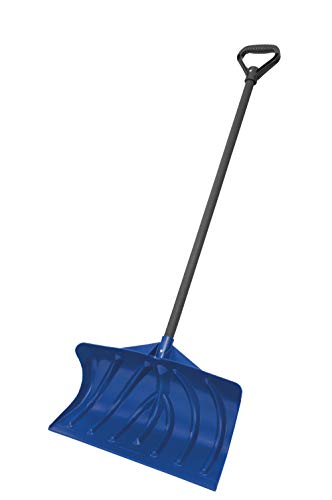 Suncast 20-in Snow Shovel/Pusher Combo with Wear Strip A 20-inch resin combo blade with a galvanized steel wear strip on a Steel Core shaft, at a published 51 inches overall. | A combo whose maker prints the length | 7.8/10 | $109.99 - View on Amazon #ad affiliate link · Price as of October 15, 2026 |
| 4 |  FIREKI Pet Safe Ice Melt, Magnesium Chloride Pure magnesium chloride with no additives or dye in a 15 lb tub with a scoop — but its published -35°F is colder than magnesium chloride brine can stay liquid, so plan around the chemistry's real floor instead. | A small tub of magnesium chloride, with a scoop | 7.2/10 | $56.99 - View on Amazon #ad affiliate link · Price as of October 15, 2026 |
| 5 |  Hathoro 18-in Steel Blade Snow Shovel An 18-inch steel blade on a 37-inch wooden D-grip handle — the cheap, honest way to own the one tool that can chop a refrozen plow ridge. Our skip-this pick | Cutting the frozen plow ridge | 7.0/10 | $39.50 - View on Amazon #ad affiliate link · Price as of October 15, 2026 |
Most snow moved per dollar
Snow Joe SJ627E 22-in Corded Snow Blower
840 pounds of snow a minute from a wall socket, at 35 pounds and a fraction of a cordless machine's price.
This machine exists to make a point about arithmetic. Snow Joe states it moves up to 840 pounds of snow per minute through a 22-inch by 13-inch intake. The best-documented electric shovel in this build, the Toro Power Shovel, is rated at 300 pounds per minute through a 12-by-6-inch path. That is not a small difference in degree; it is a different job.
Work through a driveway with it. A 20-by-40-foot drive under 6 inches of fresh snow contains very roughly two to four thousand pounds of snow depending on density. At the stated 840 lb/min that is a few minutes of actual throughput — the clock is dominated by walking and turning, not by the machine.
The 13-inch intake depth is the underrated spec. Most single-stage machines in this price class top out around 8 to 10 inches, which means a foot of snow needs layered passes. Thirteen inches takes most storms in one.
The cord is the price. Fifteen amps over a long, thin extension cord is a voltage-drop problem, so you need a heavy-gauge, cold-flexible outdoor cord, and you spend the whole clear aware of where it is. Measure your outlet-to-far-corner distance before you buy — beyond about 100 feet, go cordless.
What works
- 840 lb/min is roughly triple what the best electric shovel here moves
- 13 inches of intake depth handles a real storm in one pass
- 35 lb published weight makes it manageable to turn and store
What does not
- Corded, so your working radius is a cord length
- 15 amps needs a properly rated cold-weather extension cord
- Single-stage: no gravel, and limited on steep grades
Wide, flat driveways
The Snowplow Original Snow Pusher, 30 in
A UHMW polyethylene blade that snow slides off rather than sticks to, in the width that actually changes your clearing time.
UHMW — ultra-high-molecular-weight polyethylene — is the material specification that separates this from a $25 pusher. It is the same family of plastic used for conveyor wear strips and truck-bed liners, chosen for a very low coefficient of friction and high impact resistance at low temperature. The practical consequence is that snow slides off it, including the heavy wet snow that packs solid onto a cheap blade and turns pushing into scraping.
The maker states the edge self-sharpens with use and needs no maintenance, and lists the tool as usable on concrete, blacktop, pavers, decks, roofs and ice rinks. That surface list is unusually broad and is the reason we recommend it where a metal edge would be a liability.
Width is the other half of the argument. A 30-inch blade covers 67 percent more ground per pass than an 18-inch shovel. On a 20-by-30-foot driveway that is the difference between roughly 20 passes and roughly 12 — and each of those passes is a push, not a lift.
It is not a complete answer. Nothing that pushes deals with the plow berm, and on a long driveway you eventually run out of anywhere to push to. Pair it with a shovel, or with a machine.
What works
- UHMW is the reason wet snow releases instead of packing onto the blade
- 30 inches is the width where pass count drops noticeably on a two-car drive
- Rated by the maker for decking and pavers, unlike any steel-edged pusher
What does not
- Costs multiples of a hardware-store pusher
- Still cannot lift, and still cannot cut refrozen crust
- The wider the blade, the more it wanders on uneven ground
A combo whose maker prints the length
Suncast 20-in Snow Shovel/Pusher Combo with Wear Strip
A 20-inch resin combo blade with a galvanized steel wear strip on a Steel Core shaft, at a published 51 inches overall.
The Suncast SC3250 we used to list here is no longer available. This is Suncast's current combination shovel in the same line: a 20-inch resin blade with a galvanized steel wear strip on a Steel Core shaft.
Its most useful specification is one most makers leave off the box. The published overall length is 51 inches, and length is what decides whether a shovel fits you — too short and you stoop on every stroke, which no handle shape can undo. One retailer lists a 52-inch handle, so treat it as 51 to 52 inches, but either way it is documented, which puts it in a small minority.
The wear strip is the other reason to choose it. Resin blades usually die at the lip, which rounds off and stops cutting after a couple of seasons. A galvanized steel strip protects that edge and adds bite on packed snow. The trade is that the strip is metal, so it belongs on concrete and asphalt, used with care on pavers, and never on decking.
As a combination blade it does both jobs adequately — pushing on open ground and lifting at the edges — which is exactly right for a household that owns one shovel. The fuller argument for owning two is in types of snow shovels.
What works
- One of the few shovels whose length is published — 51 inches — so you can check fit before buying
- Galvanized steel wear strip protects the lip that normally wears out first on a resin blade
- Combination blade pushes on open ground and lifts at the edges
- 20 inches is a genuinely useful residential width
What does not
- The steel wear strip is metal — not for decking, and caution on pavers
- No published weight
- Retailers publish 51 and 52 inches for the length, so allow an inch either way
- A 20-inch blade full of wet snow is a heavy lift
A small tub of magnesium chloride, with a scoop
FIREKI Pet Safe Ice Melt, Magnesium Chloride
Pure magnesium chloride with no additives or dye in a 15 lb tub with a scoop — but its published -35°F is colder than magnesium chloride brine can stay liquid, so plan around the chemistry's real floor instead.
The Green Gobbler Pet Safe ice melt we used to list here is no longer available, and the brand's ice melt line has gone from the retailer we link to. This is the closest comparable product we can verify is in stock: pure magnesium chloride, in the same 15-pound size.
Every de-icer works the same way: it dissolves into the thin film of water on the ice and lowers that water's freezing point. What differs is which salt does the dissolving, how cold it keeps working, and what it does to concrete, plants and paws. Magnesium chloride sits at the mild end of the working chlorides.
FIREKI states the product is pure magnesium chloride with no additives and no coloring, and publishes a working temperature of -35°F. That temperature is the figure to discount. Texas DOT gives magnesium chloride's eutectic — the coldest point at which its brine can stay liquid at all — as about -28°F, and the Minnesota Pollution Control Agency puts its lowest practical pavement temperature at -10°F. A claim of -35°F sits below both, so plan around -10°F as you would for any magnesium chloride, and switch to calcium chloride or grit below it. magnesium chloride ice melt explains the numbers.
The pet claim deserves a precise reading. Magnesium chloride is less likely to irritate paws than rock salt, which is why it is sold this way. It is not food, and "pet safe" is not "pet edible". Wipe paws after walks regardless. It is also still a chloride, so keep it off concrete poured within the last twelve months — does ice melt damage concrete explains why, and pet-safe ice melt covers the chloride-free alternative.
What works
- No dye, so nothing to stain decking seams or track indoors as color
- Magnesium chloride is the least paw-irritating of the common working chlorides
- Scoop included for measured application
What does not
- "Pet safe" means less irritating, not edible — it is still a chloride salt
- The published -35°F is colder than magnesium chloride's eutectic of about -28°F (Texas DOT) and far below the -10°F practical pavement floor the Minnesota Pollution Control Agency gives, so it is not a figure to plan around
- Costs several times as much per pound as a 50 lb bag of the same chemistry
- No published coverage rate, so you cannot budget a season from the bag
- Attracts moisture and can leave a slick residue if over-applied
Cutting the frozen plow ridge
Hathoro 18-in Steel Blade Snow Shovel
An 18-inch steel blade on a 37-inch wooden D-grip handle — the cheap, honest way to own the one tool that can chop a refrozen plow ridge.
Skip this one
A steel blade on asphalt is a sealcoat problem, and it is worst in exactly the conditions people reach for it — mild weather, when the bitumen has softened. If you need to chop a frozen berm on an asphalt drive, chop it where it meets the road, not across the sealed surface.
The Bully Tools 92814 that used to hold this slot is no longer available, and Bully Tools no longer sells a steel-bladed snow shovel on Amazon at all — its current snow line is poly and aluminium pushers. This is the closest live equivalent: a flat steel blade on a short wooden D-grip handle, at about the same price.
This is a tool for one job that plastic shovels genuinely cannot do: cutting the compacted, refrozen ridge the municipal plow leaves across the end of your driveway. That ridge is not snow by the time you get to it. It is a slab, and a poly blade skates off it.
A steel blade and a short, stiff handle give you the ability to chop. That capability comes with an obligation: steel is also perfectly capable of chewing the sealant off asphalt, scoring pavers and destroying a composite deck. This is a concrete tool. If your driveway is anything else, buy a poly blade and accept a slower fight with the ridge.
What you give up against the Bully Tools shovel is documentation. The listing states the blade is steel and the handle is 37 inches of wood, and that is all anyone publishes — no steel grade, no thickness, no weight, no origin. Treat the edge as a consumable rather than a lifetime purchase, and keep it off gravel.
The weight is unpublished and it will not be light. If you already have back trouble this is the wrong shovel, and the strain-reducing designs are the right ones. Keep this one for the ridge and use something else for the driveway.
What works
- A steel blade cuts through the crusted plow ridge that stops poly blades dead
- 18 inches is a narrower bite than the 22-inch steel shovels, which is the right direction when the snow is wet and heavy
- A wood handle does not pull the heat out of an ungloved hand the way a bare steel shaft does
- Cheap enough to own purely as the second tool for the ridge
What does not
- A steel blade on pavers, decking or sealed asphalt will leave marks
- Steel is heavy work in wet snow however narrow the blade is
- No published steel grade, thickness or weight, so edge durability and heft are both unknown
- A wood handle is the part that fails if it is stored wet or used as a pry bar
- No published origin or warranty, where the Bully Tools shovel it replaces published both
Chemistry on asphalt
Asphalt does not have the pore structure that makes concrete vulnerable to freeze-thaw scaling, so de-icer guidance here is genuinely more relaxed. We say that rather than repeat a blanket concrete warning that does not apply to a different material.
Two real cautions remain. Freshly sealcoated asphalt needs a season to cure fully, so be conservative through the first winter after sealing. And salt in runoff still damages plants and soil and still corrodes metal — the reason to spread less has moved off the driveway, not disappeared.
Product-level picks are on ice melt for asphalt.
The color advantage
One genuine asphalt benefit nobody mentions: a dark surface absorbs solar radiation far better than a light one. On a sunny day above freezing, a cleared asphalt driveway will dry itself considerably faster than a concrete one.
The practical consequence is that clearing thoroughly is worth more on asphalt than elsewhere. Get down to the surface and the sun finishes the job, which means less chemistry, less refreezing overnight and less ice to deal with tomorrow.
Questions people ask
Is ice melt safe for asphalt driveways?
Will a snow blower damage an asphalt driveway?
What is the best snow shovel for asphalt?
Should I seal my asphalt driveway before winter?
Sources
Next stage
Then pick the chemistry
Asphalt is relaxed about de-icer in a way concrete is not. Here is what that actually permits, and the one case where it does not.
Keep goingAbout the author
Scooter M.
An enthusiast who is genuinely into this. I read the manuals, compile the published specs, and do the math on door clearances. No lab coat, no test bench, and nothing here is a product I have used - which is exactly why every claim carries a source.
Published by Slate Mill Group, with the Shovel Report team. Published August 14, 2026; last updated August 29, 2026. Editorial policy.
Read next
Best for Asphalt
Best Ice Melt for Asphalt Driveways
Why asphalt tolerates chlorides better than concrete, and what actually damages it in winter.
Best for Concrete
Concrete Driveway Snow Removal
Clear to bare pavement safely, and pick the de-icer by the age and condition of the slab.
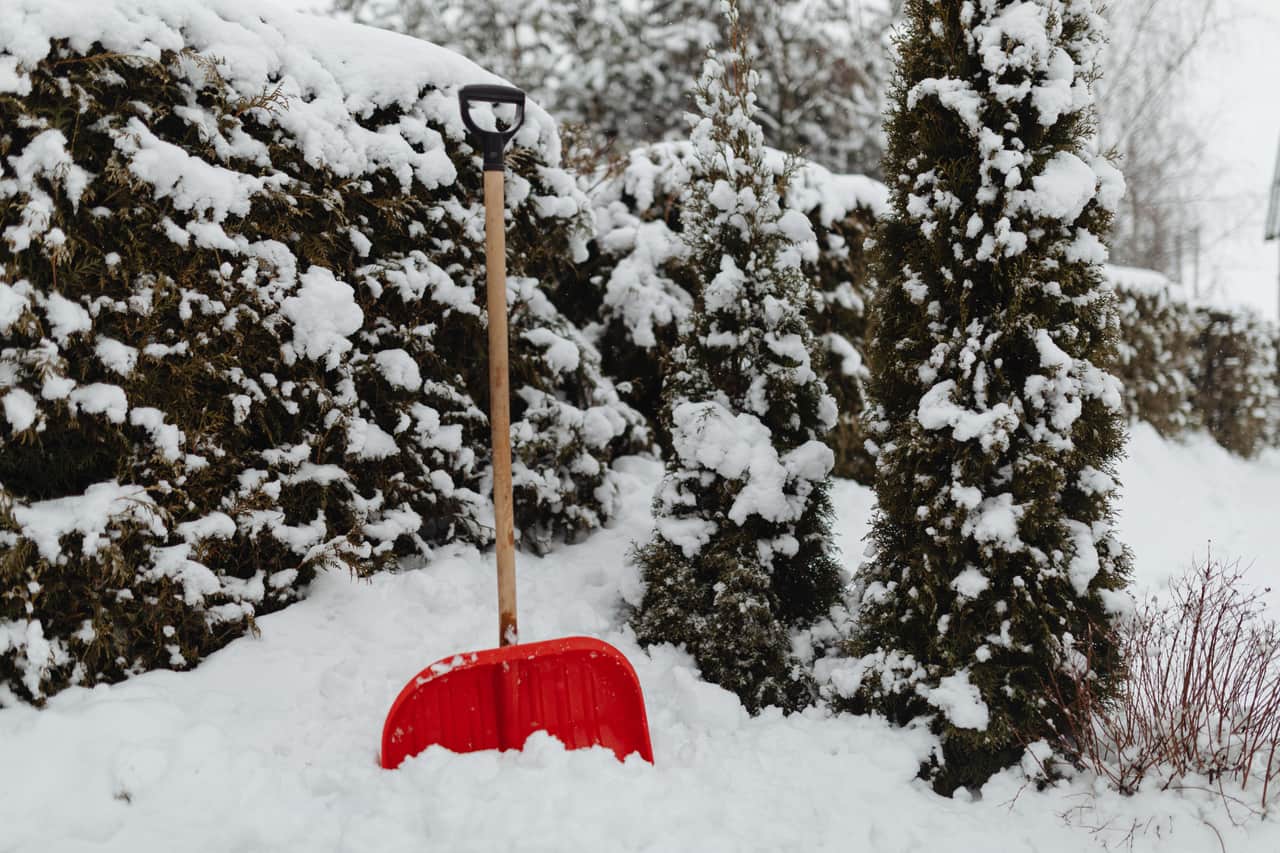
Blade Material Guide
Snow Shovel Blade Materials, Compared
Poly, aluminum-edged, UHMW and steel blades ranked on snow release, durability and surface safety.
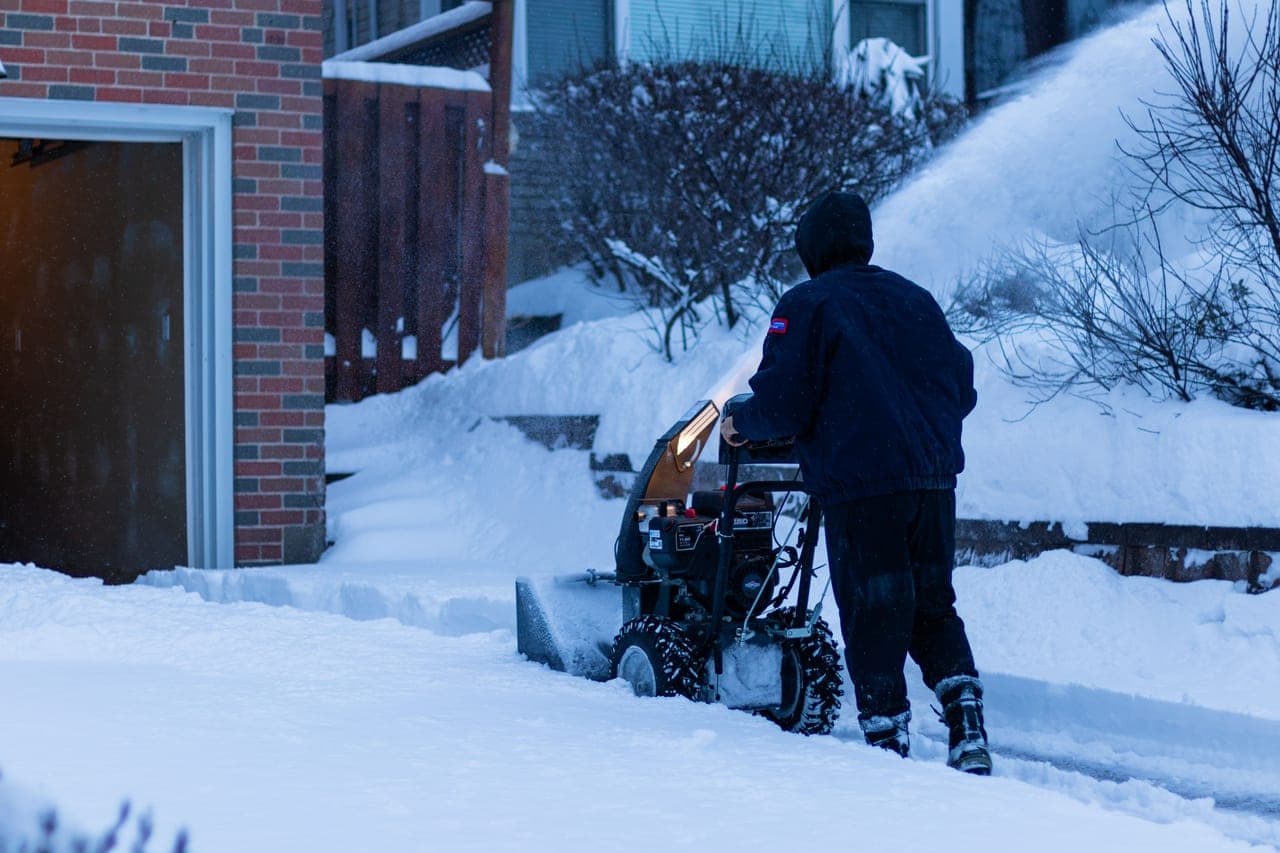
Best Electric Blower
Best Electric Snow Blowers
Corded and battery machines compared on stated throughput, intake depth and surface fit.