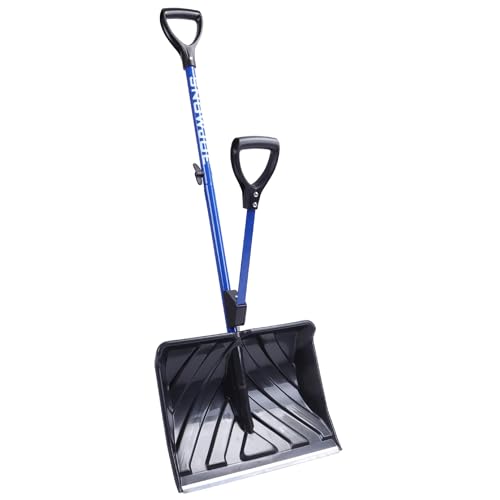
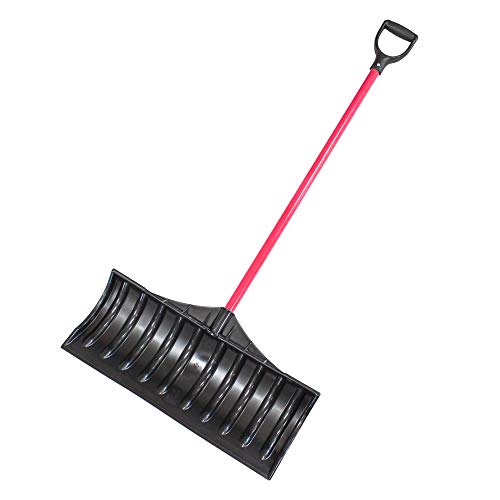
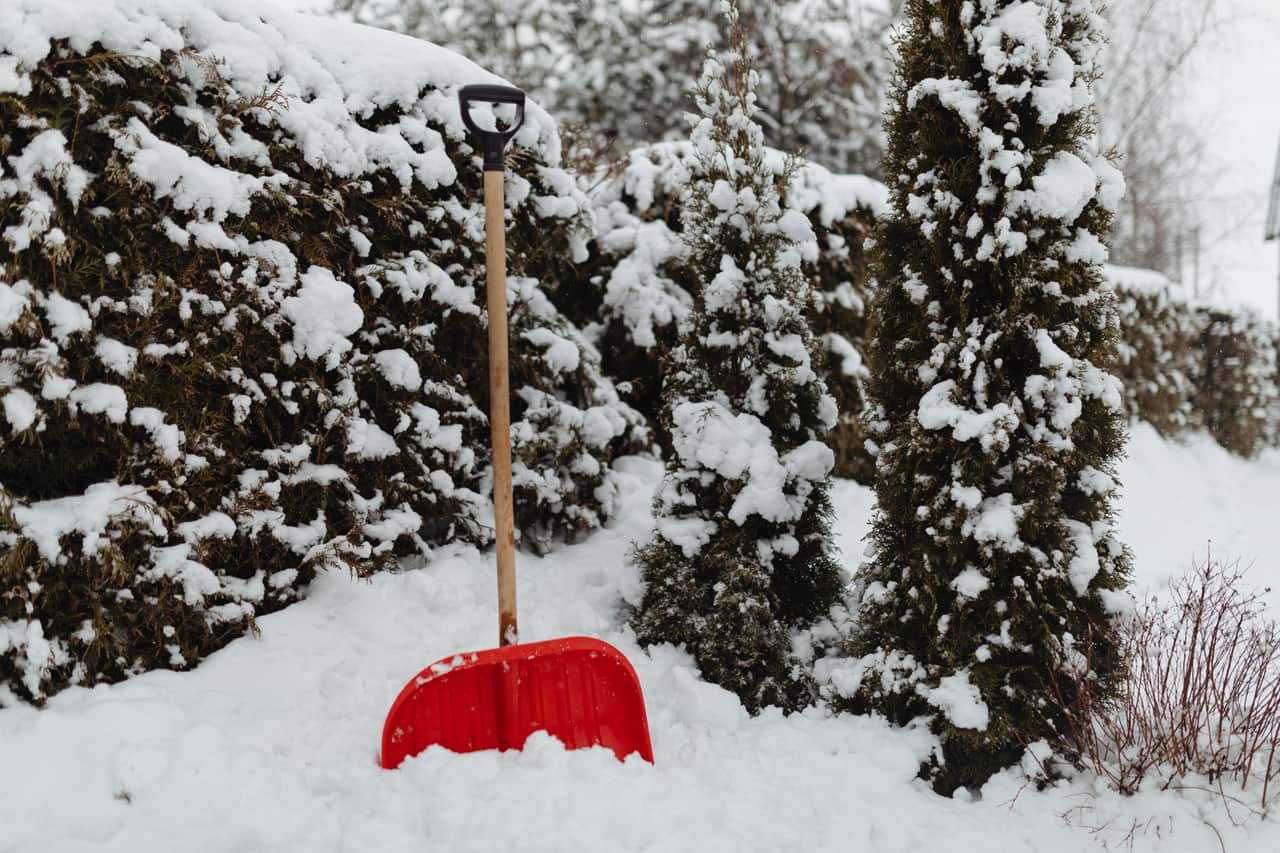
A snow shovel is a lever, and only three published numbers decide how hard it is to use: blade width, tare weight and shaft length. Width sets how much snow you lift per stroke, weight adds to every single lift, and shaft length decides how far you bend. Everything else is secondary.
The three numbers that matter
Almost every shovel marketing claim reduces to one of three published specifications. Learn to read them and you can choose a shovel from a spec sheet without ever holding one — which is fortunate, because we have not used any of these.
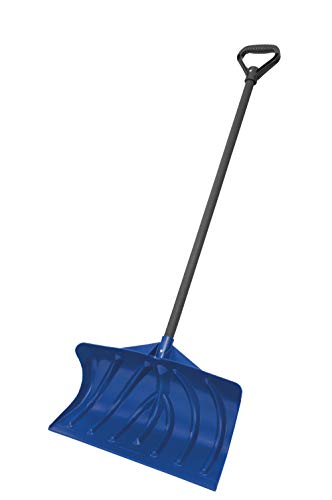
Blade width sets your pass count and your load per stroke. An 18-inch blade covers 50 percent more ground per pass than a 12-inch one, and holds roughly 50 percent more snow when you lift it. That second half is the part people forget. Width is only free when the snow is light.
Tare weight — the weight of the empty shovel — is added to every lift you make. A 3.5-pound shovel and a 6-pound shovel differ by two and a half pounds, which sounds trivial until you multiply by the three hundred lifts in a real driveway clear. Three hundred lifts times 2.5 pounds is 750 pound-lifts of pure tool. This is the spec most makers decline to publish, and its absence tells you something.
Shaft length decides your spine angle. A 48-inch shovel puts a six-foot adult into a stoop; a 52-inch one does not. If a listing does not publish an assembled length, you cannot tell whether it fits you.
Push, or lift, or both
Snow shovels split into three geometries and the difference is not cosmetic.
- Scoop blades are dished, hold a load, and are made for lifting and throwing. They are the wrong tool for moving snow twenty feet across a driveway.
- Pushers are flat, wide and made for sliding snow off a surface without ever picking it up. They remove the lifting motion entirely, which is the single biggest reduction in effort available. They cannot lift and they cannot chop.
- Combination blades do both at roughly 80 percent each. For a driveway under about 40 feet this is usually the right compromise, because you will push the loose snow and lift the ridge at the end.
If your back is the constraint, the honest recommendation is a wide pusher plus a small scoop, not one clever shovel. Our pusher picks cover the first half; the strain-reducing shovels cover the second. Two jobs need their own tools entirely: roof rakes and car snow tools — and on the car side, a windshield snow cover or a can of de-icer spray removes most of that job before it starts. If lifting is the problem and a pusher is not enough, wheeled snow shovels take the load off the ground entirely. And one surface needs a tool that cannot mark it: clearing snow off solar panels.
Blade material and the wear edge
Poly blades are light, cheap and kind to surfaces. Their weakness is cold: polymer stiffens and gets brittle as temperature drops, which is why cheap shovels almost always break while levering a frozen ridge rather than while shoveling snow.
Steel blades cut. They are the only manual tool that reliably breaks the compacted plow berm, and they are also perfectly capable of scoring sealed asphalt, chipping pavers and ruining composite decking. Buy steel for the ridge, not for the driveway.
An aluminum wear strip on a poly blade is the sensible middle: it keeps the leading edge from rounding off over seasons without adding the weight or the aggression of a full steel blade. UHMW polyethylene — the material in the better pushers — is a third option, low-friction enough that wet snow slides off instead of packing on. We compare all of it in blade materials.
Match the shovel to the surface
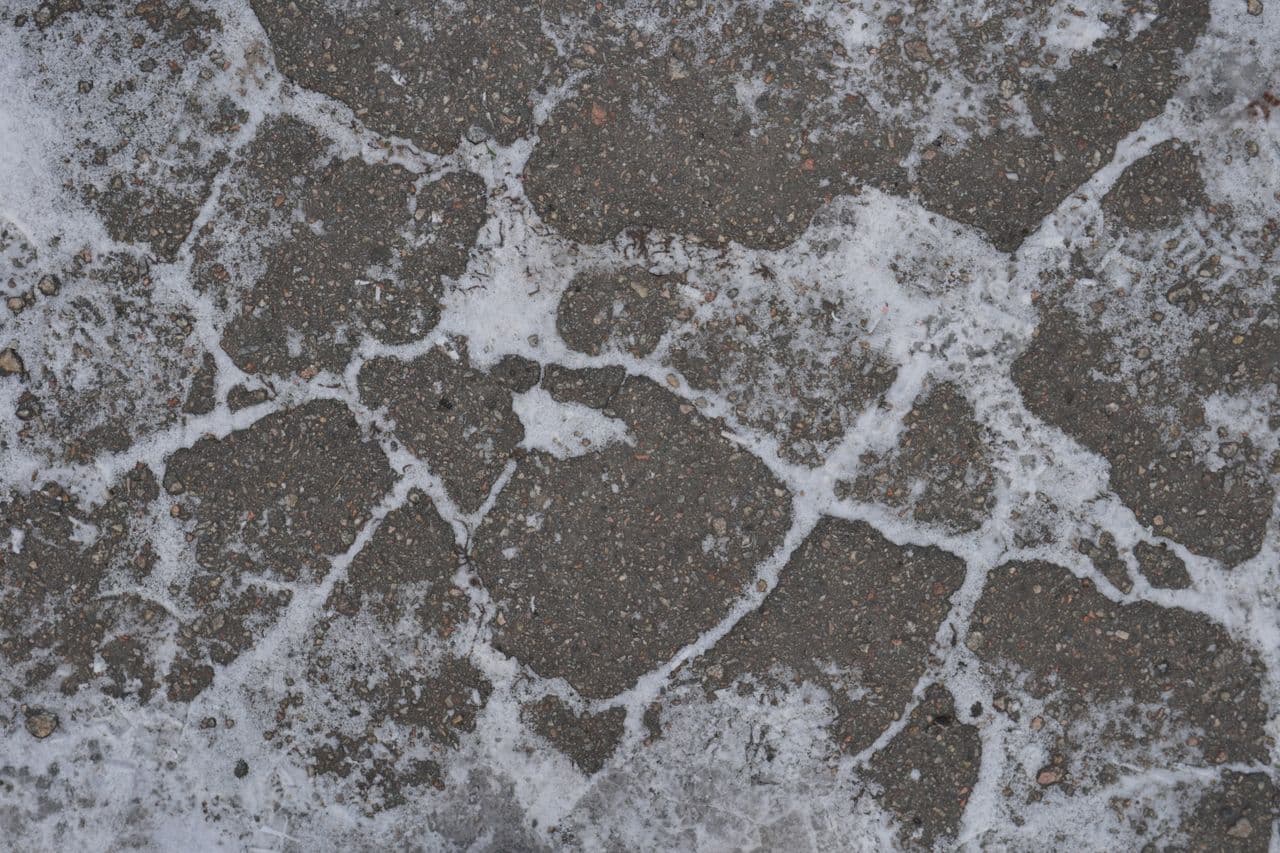
This is where most buying advice stops and where this site starts. A metal-edged shovel that is perfect on a poured concrete apron will scoop stone off a gravel drive and gouge a paver surface. A soft poly pusher that is safe everywhere will not touch the refrozen crust. There is no single correct shovel; there is a correct shovel for your surface.
Blade edge versus driveway surface
Clear early, clear twice
The largest single reduction in shoveling load costs nothing. Four inches cleared twice is dramatically easier than eight inches cleared once, because the weight you lift per stroke is proportional to depth and because snow compacts and bonds to the surface as it sits. Half a storm's worth of shoveling is a decision about timing, not about equipment.
Snow shoveling is also a genuine cardiac risk — cold air, sudden exertion and an isometric lift are a bad combination for an unconditioned heart. Read how to shovel snow properly before the first storm, not during it.