By Scooter M. · Last updated August 28, 2026
Reduce the distance between the load and your hips, and reduce the load. In practice: push instead of lifting, take half a blade, keep the shovel close to your body, step your feet to turn rather than twisting, and clear four inches twice rather than eight inches once.
The mechanics in one paragraph
A loaded shovel held in front of you is a lever, and your lumbar spine supplies the counter-moment. The force your back resists is roughly the load multiplied by its horizontal distance from your hips. Move the same 15 pounds from a foot in front of you to two feet in front of you and you roughly double what your spine is holding — without adding any weight at all.
That single relationship explains every piece of advice below. It is also why ergonomic handle designs work: they shorten the distance or share the load between two hands.
The second factor is repetition. A normal driveway is a few hundred lifts. Anything that reduces the per-lift load — including the empty weight of the shovel — gets multiplied by that number.
The five changes that matter most
- Push, do not lift. A wide pusher removes the lifting motion entirely for the open area of the driveway. This is the single biggest reduction available and it is bigger than any handle design.
- Take half a blade. Especially in wet snow. Nobody under-fills consistently at minute thirty, which is why a narrower blade is often the better purchase.
- Keep it close. Slide the load along the ground toward you before lifting, and keep the shovel near your body through the lift. The distance is what the arithmetic above is about.
- Step, do not twist. Turning your torso under load is close to a worst-case lumbar pattern. Move your feet to face where the snow is going. It feels slower and it is not.
- Clear early and twice. Four inches twice is far easier than eight inches once, because per-lift weight scales with depth — and because snow that sits compacts and bonds.
Before you start
Warm up. Shoveling is strenuous exertion in the cold, usually first thing in the morning, usually by someone who has not exercised since the last storm. Five minutes of walking and some gentle movement before you pick up the shovel is not fussy — it is the same preparation you would give any other sudden physical effort.
Dress in layers you can shed. Overheating leads to unzipping, which leads to cooling too fast when you stop. And wear footwear with real grip: a slip while holding a loaded shovel is one of the more effective ways to injure your back.
Snow shoveling is also a well-documented cardiac risk, not only a musculoskeletal one. If you have a heart condition, high blood pressure, or have been advised to avoid strenuous exertion, this is a job to delegate. The full picture is in how to shovel snow properly.
Quick picks
Ranked against the criteria below. Tap a row to jump to the full write-up; the price button goes straight to Amazon.
| # | Product | Best for | Score | Price |
|---|---|---|---|---|
| 1 |  The Snowplow Original Snow Pusher, 30 in A UHMW polyethylene blade that snow slides off rather than sticks to, in the width that actually changes your clearing time. | Wide, flat driveways | 8.9/10 | $69.99 - View on Amazon #ad affiliate link · Price as of October 16, 2026 |
| 2 | 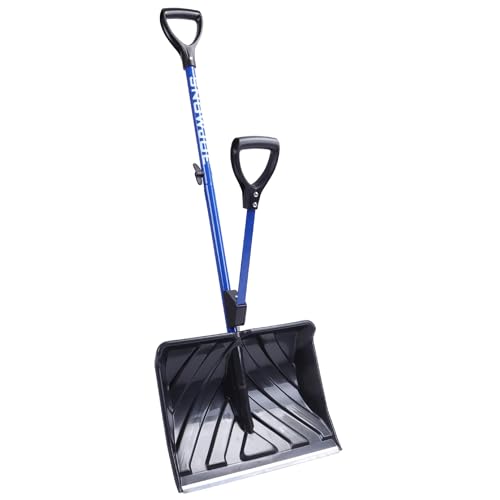 Snow Joe Shovelution SJ-SHLV01 A spring-assisted second handle moves the lifting load down the shaft, and at 3.5 lb the shovel itself adds almost nothing to what you lift. | Backs that already hurt | 8.6/10 | $39.97 - View on Amazon #ad affiliate link · Price as of October 16, 2026 |
| 3 |  McKraftis Ergonomic Snow Shovel with Assist Grip An ergonomic shovel with a separate assist grip and a D-grip — the two-handed leverage idea, with the shaft length and weight left unpublished. Our skip-this pick | A second grip without a spring mechanism | 6.7/10 | $58.98 - View on Amazon #ad affiliate link · Price as of October 16, 2026 |
Wide, flat driveways
The Snowplow Original Snow Pusher, 30 in
A UHMW polyethylene blade that snow slides off rather than sticks to, in the width that actually changes your clearing time.
UHMW — ultra-high-molecular-weight polyethylene — is the material specification that separates this from a $25 pusher. It is the same family of plastic used for conveyor wear strips and truck-bed liners, chosen for a very low coefficient of friction and high impact resistance at low temperature. The practical consequence is that snow slides off it, including the heavy wet snow that packs solid onto a cheap blade and turns pushing into scraping.
The maker states the edge self-sharpens with use and needs no maintenance, and lists the tool as usable on concrete, blacktop, pavers, decks, roofs and ice rinks. That surface list is unusually broad and is the reason we recommend it where a metal edge would be a liability.
Width is the other half of the argument. A 30-inch blade covers 67 percent more ground per pass than an 18-inch shovel. On a 20-by-30-foot driveway that is the difference between roughly 20 passes and roughly 12 — and each of those passes is a push, not a lift.
It is not a complete answer. Nothing that pushes deals with the plow berm, and on a long driveway you eventually run out of anywhere to push to. Pair it with a shovel, or with a machine.
What works
- UHMW is the reason wet snow releases instead of packing onto the blade
- 30 inches is the width where pass count drops noticeably on a two-car drive
- Rated by the maker for decking and pavers, unlike any steel-edged pusher
What does not
- Costs multiples of a hardware-store pusher
- Still cannot lift, and still cannot cut refrozen crust
- The wider the blade, the more it wanders on uneven ground
Backs that already hurt
Snow Joe Shovelution SJ-SHLV01
A spring-assisted second handle moves the lifting load down the shaft, and at 3.5 lb the shovel itself adds almost nothing to what you lift.
The physics here are simple enough to check without owning one. A snow shovel is a lever, and the load on your lumbar spine depends on how far the weight sits from your hips. A conventional straight-shaft shovel makes your upper hand the fulcrum and your lower back the counterweight. The Shovelution adds a second, spring-loaded grip partway down the shaft, so the lower hand takes the lifting and the spine straightens earlier in the throw.
Snow Joe states the design reduces back strain by up to 30 percent. That is the manufacturer's number and we cannot verify it. What we can verify is the tare weight: 3.5 pounds for an 18-inch blade, which is genuinely low. Weight matters more than it sounds. Twelve pounds of wet snow on a 3.5-pound shovel is a 15.5-pound lift; the same load on a 6-pound steel shovel is 18 pounds, and you are doing it three hundred times.
The blade is poly with an aluminum wear strip. That combination is the right compromise for most driveways: poly is light and does not stick as badly as bare steel, and the aluminum edge keeps the leading lip from rounding off after two seasons. It is not a gravel tool — the wear strip will scoop stone and fling it, and on a composite deck it can leave marks.
The 50-inch assembled height is the real limit. If you are over about six feet you will still bend more than you want, and a longer straight-shaft may serve you better even without the assist. See our straight shaft versus ergonomic comparison for how shovel length maps to user height.
What works
- 3.5 lb is among the lightest 18-inch blades we found published specs for
- The second handle is fixed to the shaft, so the lower hand carries the load instead of your lower back
- Aluminum wear strip on a poly blade — the durable combination at this weight
What does not
- The spring mechanism is one more thing that can fail, and it is not user-serviceable
- 18 inches is a lot of blade for wet snow if you insist on filling it
- 50 inches assembled is short for anyone much over 6 feet
A second grip without a spring mechanism
McKraftis Ergonomic Snow Shovel with Assist Grip
An ergonomic shovel with a separate assist grip and a D-grip — the two-handed leverage idea, with the shaft length and weight left unpublished.
Skip this one
The assist-grip geometry is right, but the listing publishes no shaft length, and length is what decides whether any shovel puts you into the stooped posture this guide is about avoiding. Check the length in hand against your height before buying it for back reasons.
The ErgieShovel we used to list here is no longer available. This is the closest comparable tool we can verify is in stock: a shovel built around the same idea of a second grip that lets you use two-handed leverage rather than lifting with your back.
That idea is sound and it is why the category exists. Holding the shaft low with one hand and a D-grip with the other means your arms and legs take the load instead of your lumbar spine, and a separate assist grip does that without a spring mechanism that can wear out or freeze.
The problem is documentation. The listing we read publishes no shaft length, no blade width, no blade material and no weight. Shaft length in particular is the specification that decides whether any shovel fits you — too short and you stoop on every stroke, and no grip design undoes that. We cannot tell you whether this one suits a tall user, and we would rather say so than guess.
If fit is your reason for buying, choose a shovel whose maker prints the length — snow shovels for your height lists the ones that do. If you can check it in hand first, the grip geometry here is the right idea.
What works
- A second grip lets your lower hand take the load instead of your lower back
- No spring or mechanism to wear out or ice up
- D-grip top handle keeps the wrist in a neutral position
What does not
- No published shaft length, which is the specification that decides whether a shovel fits your height
- No published blade width, material or weight
- Unverifiable on decorative surfaces until you can see the edge
- A newer brand with little published documentation
Equipment that supports the technique
A wide pusher is the tool that implements change number one. Poly or UHMW, 27 to 30 inches for a residential driveway. See snow pushers.
A light scoop with a second handle for the lifting you cannot avoid. Published tare weight matters because it is added to every lift; a second grip shortens the lever arm. See shovels for a bad back.
Shaft length matched to your height. A shovel that is too short forces the stoop that no other change can fix. If the listing does not publish an assembled length, you cannot check it. See ergonomic versus straight shaft.
When to stop
Stop at the first sign of back pain rather than working through it. Stop immediately for chest discomfort, breathlessness out of proportion to the effort, dizziness, or pain in the arm or jaw — those are cardiac symptoms and they need attention, not a rest.
And stop for the day if the snow has turned to slush and refrozen crust. Fighting a bonded crust with a shovel is where the acute injuries happen, and it is what a machine or a warmer afternoon is for.
Questions people ask
What is the correct way to shovel snow?
Why does shoveling snow hurt my lower back?
Is it better to push or lift snow?
Should I warm up before shoveling snow?
Sources
Next stage
The tools that support this
Technique does most of the work. Here are the shovels whose published weight and geometry make the technique easier to hold onto at minute thirty.
Keep goingAbout the author
Scooter M.
An enthusiast who is genuinely into this. I read the manuals, compile the published specs, and do the math on door clearances. No lab coat, no test bench, and nothing here is a product I have used - which is exactly why every claim carries a source.
Published by Slate Mill Group, with the Shovel Report team. Published August 15, 2026; last updated August 28, 2026. Editorial policy.
Read next
Best for a Bad Back
Best Snow Shovels for a Bad Back
Strain-reducing shovels ranked on published weight, leverage geometry and shaft length.
Safe Shoveling
How to Shovel Snow Properly
Cardiac and lumbar risk, the sequence that halves the work, and when to stop entirely.
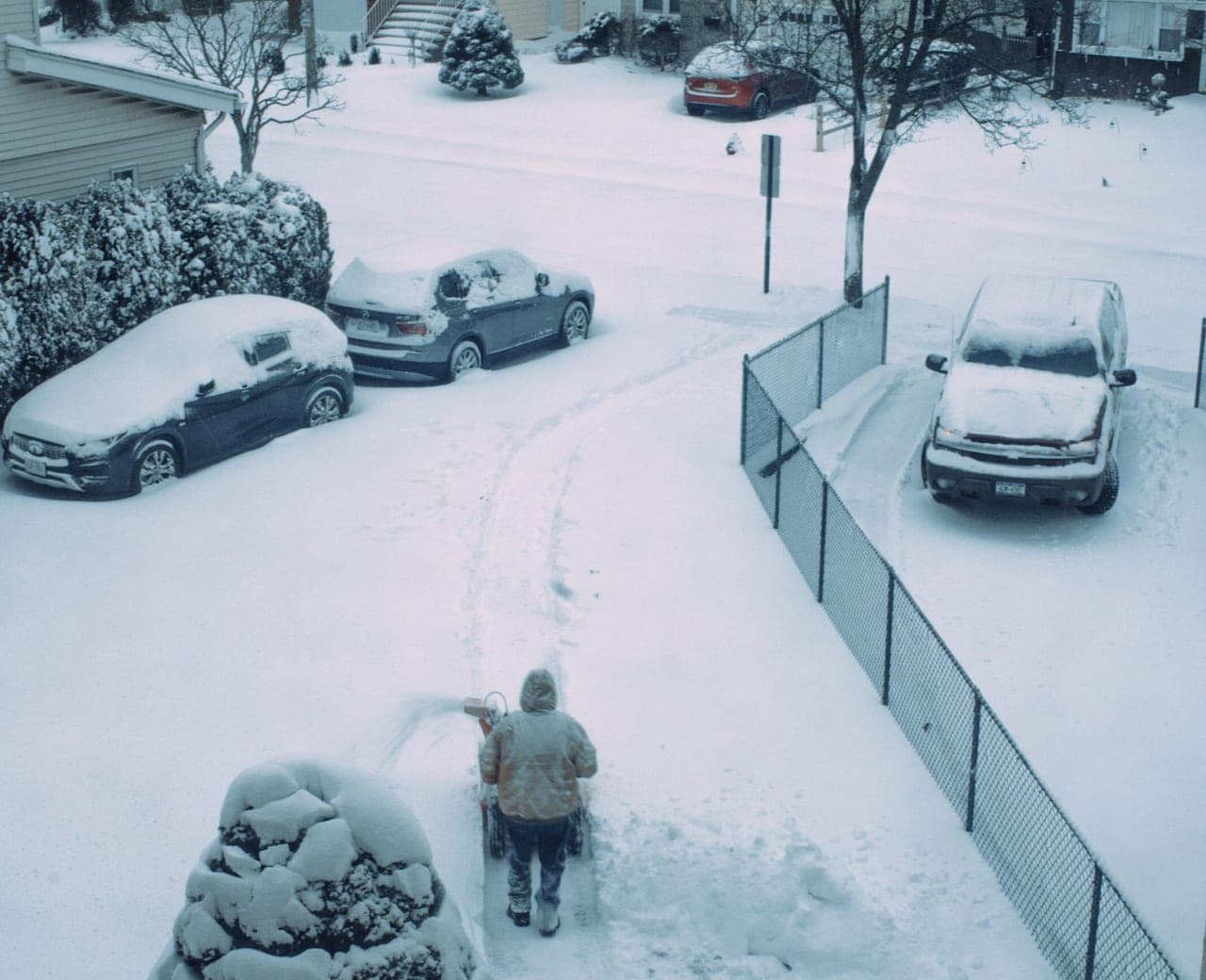
Best Pusher
Best Snow Pushers
Wide pusher blades from 27 to 42 inches, and why the widest is rarely the right buy.
Best for Older Adults
Best Snow Shovels for Seniors
Light, long-handled and push-first shovels, with honest limits on when to stop.