Snow gear is usually sorted by price tier. That is backwards. The surface you are clearing rules out entire categories of tool before price is relevant: gravel eliminates every single-stage machine, pavers eliminate steel edges, and length eliminates cords and small batteries. Choose on surface first.
Why nobody else organizes it this way
Open any "best snow blower" roundup and you will find best overall, best value, best budget, best for heavy snow. Those are useful categories for a writer with a fixed template and useless for a homeowner standing on a gravel drive, because the best-overall pick is a single-stage machine that will throw their driveway at their garage door.
The constraint that actually eliminates products is physical. A single-stage auger touches the ground; gravel is loose; the machine picks it up. No amount of price tiering changes that. The same is true of a steel shovel edge on a paver joint, or a 50-foot extension cord on a 200-foot driveway.
So this hub is organized the way the decision actually works: find your surface, get a complete answer — a shovel, a powered option and a de-icer that all suit it — and skip the products that were never candidates.
The four questions that size your driveway
- 01What is the surface? Concrete, asphalt, pavers or gravel. This is the first filter and the hardest constraint.
- 02How long is it? Under 40 feet you can push. Over 100 feet you need throughput and either a cord that reaches or serious battery capacity.
- 03How much snow, how wet? Dry powder forgives a small machine. Wet coastal snow at 34°F does not.
- 04Who is clearing it? Physical capacity is a real specification. A tool that is correct on paper and too heavy to use is the wrong tool.
Surface, at a glance
What each surface rules out
Length, and what it costs you
Length is the specification people most often underestimate, because it interacts with everything else. A 200-foot driveway is not a longer version of a 40-foot one; it is a different problem. Pushing stops working entirely, because you run out of anywhere to push to. Corded tools stop working, because voltage drop and cord handling make them impractical past about 100 feet. Battery machines become a capacity calculation rather than a preference.
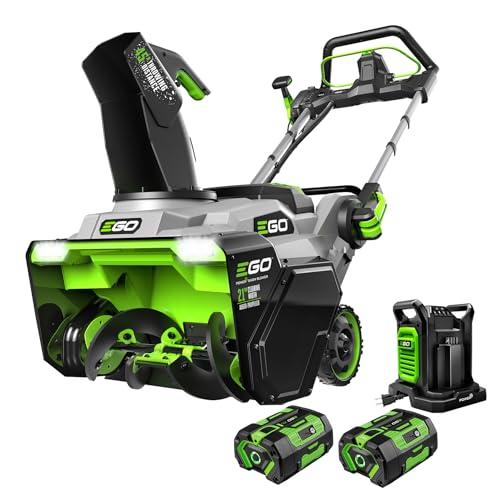
That calculation is simple arithmetic and worth doing before you spend: watt-hours equal volts times amp-hours, so a two-pack 56 V 5.0 Ah kit carries 560 Wh and a 7.5 Ah kit carries 840. Fifty percent more work available, for the price of two batteries. Full treatment on long driveways.
The cheapest right answer is often the smallest one
A 30-foot city driveway does not need a $900 machine. It needs a good pusher and ten minutes. We will say that on the page rather than route you to the highest-commission product, because a site that recommends a snow blower to everyone is not a site anyone should trust — and because we publish exactly how we make money.