By Scooter M. · Last updated August 28, 2026
Shovel Report earns a commission when you buy through the links on this page, at no extra cost to you. It does not change what we recommend, and we publish a skip-this verdict on products we could otherwise earn from. Full disclosure.
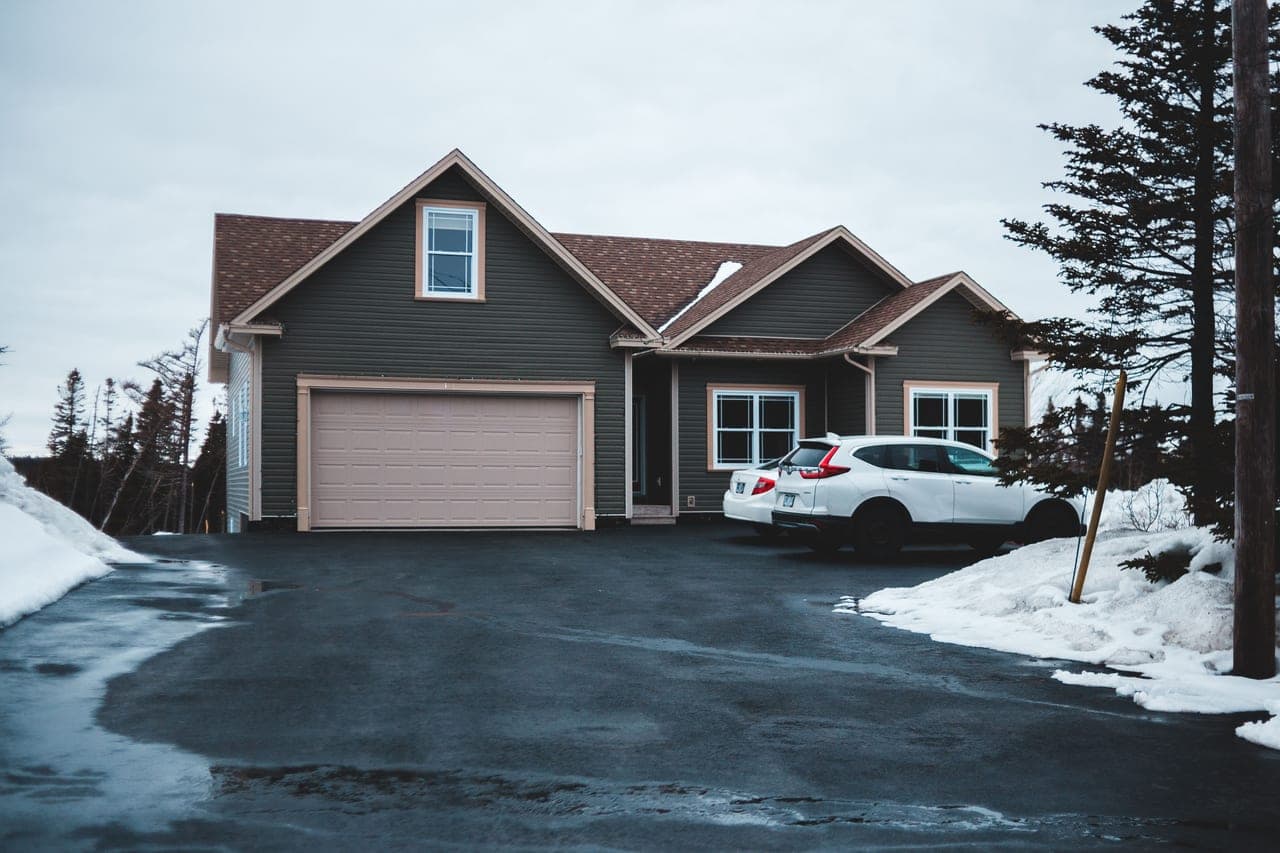
On pavers use only poly or UHMW blades, set snow blower skid shoes high, and prefer a two-stage machine whose auger never touches the units. The chemistry risk is not the pavers but the jointing sand between them and efflorescence on the surface — favor chloride-free products and a controlled application rate.
The flatness problem
An interlocking paver surface is made of many small units bedded on sand. Over time, frost heave and settlement leave small height differences between adjacent units — lips of a few millimeters that you walk over without noticing.
A rigid blade or a snow blower's scraper bar finds every one of them. At worst it catches, stops the tool and chips a unit edge; at best it drags the paver out of alignment. This is why paver driveways ask for soft edges and high clearance in a way flat poured concrete does not.
The wide-blade caveat applies here with particular force: a 36-inch rigid edge bridges dips and lands on high points, which on pavers means it catches on the high points specifically. Narrower is better on an uneven surface. See snow pushers.
How we picked
- Surface compatibility first — it eliminates entire product categories before any other spec matters
- Auger or blade clearance against what the surface can tolerate being scraped or picked up
- Throughput or blade width matched to the area, so the tool suits the job rather than the price tier
- De-icer chemistry chosen against the surface's actual failure mode, not a generic warning
- A complete answer: a shovel, a powered option and a de-icer that all work on the same surface
We have not physically tested these products. We do not own them, we have no lab, and we do not accept free product. Everything above is compiled from published manufacturer specifications, published manuals, published standards and live retailer data - and we tell you which is which on every claim. How we pick.
Quick picks
Ranked against the criteria below. Tap a row to jump to the full write-up; the price button goes straight to Amazon.
| # | Product | Best for | Score | Price |
|---|---|---|---|---|
| 1 |  The Snowplow Original Snow Pusher, 30 in A UHMW polyethylene blade that snow slides off rather than sticks to, in the width that actually changes your clearing time. | Wide, flat driveways | 8.9/10 | $69.99 - View on Amazon #ad affiliate link · Price as of October 15, 2026 |
| 2 | 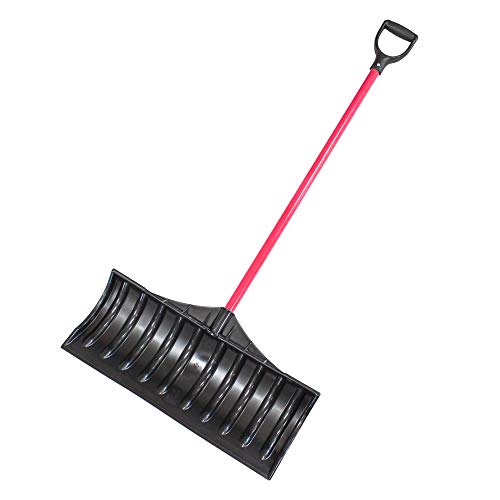 Bully Tools 92813 27-in Poly Snow Pusher A 27-inch poly scoop on a fiberglass D-grip handle — wide enough to matter, soft enough for pavers and decking. | A pusher that will not mark a surface | 8.2/10 | $51.94 - View on Amazon #ad affiliate link · Price as of October 15, 2026 |
| 3 |  EGO Power+ SNT2400 24-in Two-Stage A true two-stage, self-propelled 24-inch machine — the only configuration in this build that belongs on a gravel driveway. | Gravel, and everything else hard | 8.8/10 | $1,178.99 - View on Amazon #ad affiliate link · Price as of October 15, 2026 |
| 4 |  Safe Paw Ice Melt The one product here with no chloride in it at all — the right answer on composite decking, new concrete and around metal. | Chloride-free, on decks and new concrete | 8.2/10 | $84.95 - View on Amazon #ad affiliate link · Price as of October 15, 2026 |
| 5 |  Hathoro 18-in Steel Blade Snow Shovel An 18-inch steel blade on a 37-inch wooden D-grip handle — the cheap, honest way to own the one tool that can chop a refrozen plow ridge. Our skip-this pick | Cutting the frozen plow ridge | 7.0/10 | $39.50 - View on Amazon #ad affiliate link · Price as of October 15, 2026 |
Wide, flat driveways
The Snowplow Original Snow Pusher, 30 in
A UHMW polyethylene blade that snow slides off rather than sticks to, in the width that actually changes your clearing time.
UHMW — ultra-high-molecular-weight polyethylene — is the material specification that separates this from a $25 pusher. It is the same family of plastic used for conveyor wear strips and truck-bed liners, chosen for a very low coefficient of friction and high impact resistance at low temperature. The practical consequence is that snow slides off it, including the heavy wet snow that packs solid onto a cheap blade and turns pushing into scraping.
The maker states the edge self-sharpens with use and needs no maintenance, and lists the tool as usable on concrete, blacktop, pavers, decks, roofs and ice rinks. That surface list is unusually broad and is the reason we recommend it where a metal edge would be a liability.
Width is the other half of the argument. A 30-inch blade covers 67 percent more ground per pass than an 18-inch shovel. On a 20-by-30-foot driveway that is the difference between roughly 20 passes and roughly 12 — and each of those passes is a push, not a lift.
It is not a complete answer. Nothing that pushes deals with the plow berm, and on a long driveway you eventually run out of anywhere to push to. Pair it with a shovel, or with a machine.
What works
- UHMW is the reason wet snow releases instead of packing onto the blade
- 30 inches is the width where pass count drops noticeably on a two-car drive
- Rated by the maker for decking and pavers, unlike any steel-edged pusher
What does not
- Costs multiples of a hardware-store pusher
- Still cannot lift, and still cannot cut refrozen crust
- The wider the blade, the more it wanders on uneven ground
A pusher that will not mark a surface
Bully Tools 92813 27-in Poly Snow Pusher
A 27-inch poly scoop on a fiberglass D-grip handle — wide enough to matter, soft enough for pavers and decking.
The single largest reduction in shoveling effort available to a homeowner is not an ergonomic handle. It is not lifting at all. A pusher slides the snow off the surface instead of picking it up, which removes the entire lift-and-throw motion that hurts people.
The constraint is that pushing only works while the snow is loose and while you have somewhere to push it to. On a 60-foot driveway you are moving snow 30 feet, and at some point the windrow in front of the blade is bigger than the blade. The technique is to push at an angle across the drive, peeling snow to the side in strips, not to bulldoze the whole length.
Poly is the right material here specifically because it is soft. Nothing on this tool can scratch a paver or a composite board, which is why it is our default recommendation on paver driveways and on decks.
It cannot chop. When the plow berm freezes you will need a steel edge or an ice chisel — the pusher will ride over the top of it.
What works
- No metal edge means no scratches on pavers, sealed asphalt or composite decking
- 27 inches clears a two-car driveway in far fewer passes than an 18-inch shovel
- Fiberglass handle survives the leverage a wide pusher generates
What does not
- A pusher does not lift — you still need a shovel for the plow ridge
- Poly will not cut refrozen crust
- Wide blades wander on an uneven surface
Gravel, and everything else hard
EGO Power+ SNT2400 24-in Two-Stage
A true two-stage, self-propelled 24-inch machine — the only configuration in this build that belongs on a gravel driveway.
The single most useful thing to understand about snow blowers is the difference between one stage and two, because it decides which surfaces you can use the machine on at all.
A single-stage machine has one auger that both picks the snow up and throws it, and it does that by contacting the surface. That is why it clears down to bare pavement — and why it will pick up gravel and fling it at your garage door. A two-stage machine has a serrated auger that gathers snow and a separate impeller that throws it, and the whole assembly rides on adjustable skid shoes with the auger held above the ground. That gap is the entire reason two-stage machines work on gravel.
So on a gravel driveway this is not a preference, it is the requirement. Set the skid shoes so the auger clears the stone by roughly an inch, accept that you will leave a thin layer of packed snow, and stop expecting bare-surface results.
The catch is that it ships as a bare tool. EGO sells it without batteries or charger, and on a 56V two-stage machine you want large packs — so budget for them. See single-stage versus two-stage for the full decision.
What works
- Two-stage design keeps the auger off the ground, which is the requirement on gravel
- 24 inches is a genuine two-car-driveway width
- Self-propelled, so the machine's weight stops being your problem
What does not
- Sold as a bare tool — batteries and charger are a substantial extra
- Two-stage machines are heavy and take real storage space
- Overkill for a short concrete drive
Chloride-free, on decks and new concrete
Safe Paw Ice Melt
The one product here with no chloride in it at all — the right answer on composite decking, new concrete and around metal.
Almost every de-icer on a hardware store shelf is a chloride: sodium, calcium, magnesium or potassium. Chlorides are cheap and they work, and the chloride ion is also the thing that corrodes rebar, attacks metal fixings and gets blamed for spalled concrete. Safe Paw contains none of them.
The chemistry is a crystalline amide core carrying glycols, and the manufacturer states it is non-corrosive and effective to -2°F, with coverage of about 100 square feet per pound. That coverage figure is unusually useful: a 35-pound pail covers roughly 3,500 square feet at the stated rate, which is several storms on a normal driveway and walkway.
The -2°F floor is the honest trade. Calcium chloride keeps working far below that; this does not. On a genuinely cold night in a cold climate a chloride-free product will underperform, and pretending otherwise would be a disservice.
Where it wins outright is on surfaces where chloride is the risk rather than the temperature: composite decking, concrete poured within the last year, anything with exposed metal fasteners, and beds where salt-sensitive plants sit downhill of the runoff.
What works
- No chloride at all, which removes the entire concrete-and-metal argument
- 100 sq ft per pound is a published coverage figure you can budget from
- Traction agent included, so it does something even where it is too cold to melt
What does not
- -2°F is warmer than calcium chloride's floor — it is not the deep-cold answer
- Costs substantially more per pound than any chloride
- The glycol carrier can leave a residue that tracks indoors
Cutting the frozen plow ridge
Hathoro 18-in Steel Blade Snow Shovel
An 18-inch steel blade on a 37-inch wooden D-grip handle — the cheap, honest way to own the one tool that can chop a refrozen plow ridge.
Skip this one
A steel edge on an interlocking paver surface will chip unit edges and catch on any paver that has heaved. This is the one surface where a steel shovel has no legitimate role at all, including on the plow berm — chop that at the road, on the asphalt.
The Bully Tools 92814 that used to hold this slot is no longer available, and Bully Tools no longer sells a steel-bladed snow shovel on Amazon at all — its current snow line is poly and aluminium pushers. This is the closest live equivalent: a flat steel blade on a short wooden D-grip handle, at about the same price.
This is a tool for one job that plastic shovels genuinely cannot do: cutting the compacted, refrozen ridge the municipal plow leaves across the end of your driveway. That ridge is not snow by the time you get to it. It is a slab, and a poly blade skates off it.
A steel blade and a short, stiff handle give you the ability to chop. That capability comes with an obligation: steel is also perfectly capable of chewing the sealant off asphalt, scoring pavers and destroying a composite deck. This is a concrete tool. If your driveway is anything else, buy a poly blade and accept a slower fight with the ridge.
What you give up against the Bully Tools shovel is documentation. The listing states the blade is steel and the handle is 37 inches of wood, and that is all anyone publishes — no steel grade, no thickness, no weight, no origin. Treat the edge as a consumable rather than a lifetime purchase, and keep it off gravel.
The weight is unpublished and it will not be light. If you already have back trouble this is the wrong shovel, and the strain-reducing designs are the right ones. Keep this one for the ridge and use something else for the driveway.
What works
- A steel blade cuts through the crusted plow ridge that stops poly blades dead
- 18 inches is a narrower bite than the 22-inch steel shovels, which is the right direction when the snow is wet and heavy
- A wood handle does not pull the heat out of an ungloved hand the way a bare steel shaft does
- Cheap enough to own purely as the second tool for the ridge
What does not
- A steel blade on pavers, decking or sealed asphalt will leave marks
- Steel is heavy work in wet snow however narrow the blade is
- No published steel grade, thickness or weight, so edge durability and heft are both unknown
- A wood handle is the part that fails if it is stored wet or used as a pry bar
- No published origin or warranty, where the Bully Tools shovel it replaces published both
Machines on pavers
A two-stage machine is the better choice here for the same reason it is on gravel: the auger is held above the surface on adjustable skid shoes and never touches the units. Set the skids high, work at a slow walking pace, and the machine takes the snow and leaves the pavers alone.
A single-stage machine can be used, with care. Set it as high as the design allows, go slowly, and be aware that its scraper bar is designed to reach the ground — which on pavers is a lip-catching risk rather than a cleaning benefit. If you have a choice, choose the two-stage machine.
Powered snow shovels are fine on pavers: their paddle augers are plastic or rubber-edged and are not heavy enough to shift a unit. They are just too narrow for a driveway. See electric snow shovels.
Chemistry: the joints, not the units
Three risks, and only one is about the pavers themselves.
- Jointing sand washout. Meltwater carrying dissolved salt runs into the joints and takes sand with it. Lose enough and units start to shift — a structural issue, not a cosmetic one. Polymeric jointing sand resists this far better than plain sand.
- Efflorescence. Soluble salts migrating to the surface and crystallizing as a white haze. Adding salt gives the process more material. Cosmetic, stubborn, and much easier to prevent than remove.
- Surface scaling. Concrete pavers are cementitious, so freeze-thaw applies — though quality units are manufactured denser than poured driveway concrete and resist it better.
The defaults that follow: chloride-free where you can, controlled application everywhere, and sealing plus polymeric sand as the real protection. Product-level picks are on ice melt for pavers.
Where the runoff goes
Paver driveways usually slope, and the low end takes the concentrated runoff from the whole surface. That is where joint erosion shows up first and where efflorescence appears worst.
It is worth walking your drive in daylight and noticing where the meltwater actually goes. If it collects at one corner or drains into a planting bed, that is where to apply less, and where to check the joints each spring.
Questions people ask
Can you use a snow blower on a paver driveway?
What snow shovel is safe for pavers?
Will ice melt damage paver driveways?
How do I stop white haze on my pavers?
Sources
Next stage
The joint-safe chemistry
The tools are half of it. The other half is what your meltwater carries into the joints, and how to keep the sand where it belongs.
Keep goingAbout the author
Scooter M.
An enthusiast who is genuinely into this. I read the manuals, compile the published specs, and do the math on door clearances. No lab coat, no test bench, and nothing here is a product I have used - which is exactly why every claim carries a source.
Published by Slate Mill Group, with the Shovel Report team. Published August 15, 2026; last updated August 28, 2026. Editorial policy.
Read next
Best for Pavers
Best Ice Melt for Pavers
Jointing sand, efflorescence and sealed versus unsealed pavers — the real de-icer risks.
Blade Material Guide
Snow Shovel Blade Materials, Compared
Poly, aluminum-edged, UHMW and steel blades ranked on snow release, durability and surface safety.
Best for Concrete
Concrete Driveway Snow Removal
Clear to bare pavement safely, and pick the de-icer by the age and condition of the slab.
Best Pusher
Best Snow Pushers
Wide pusher blades from 27 to 42 inches, and why the widest is rarely the right buy.