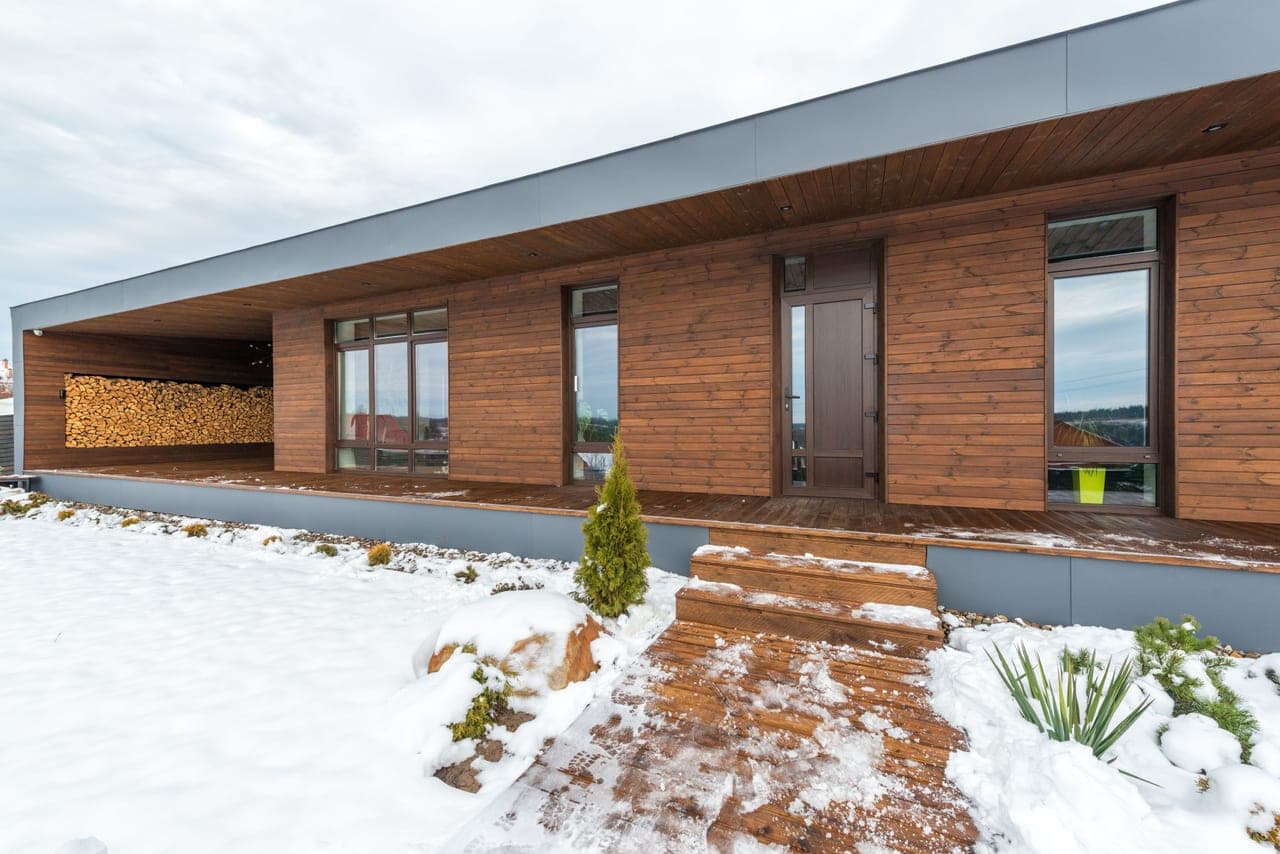
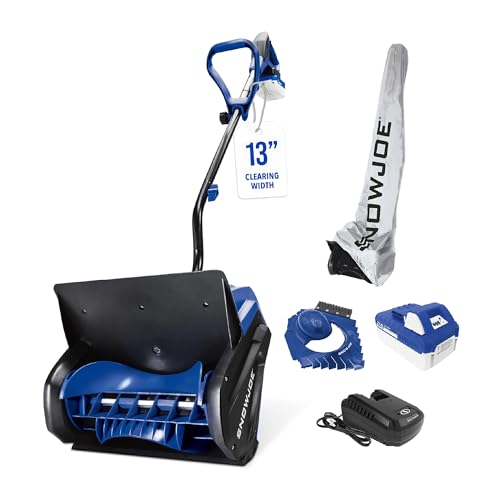
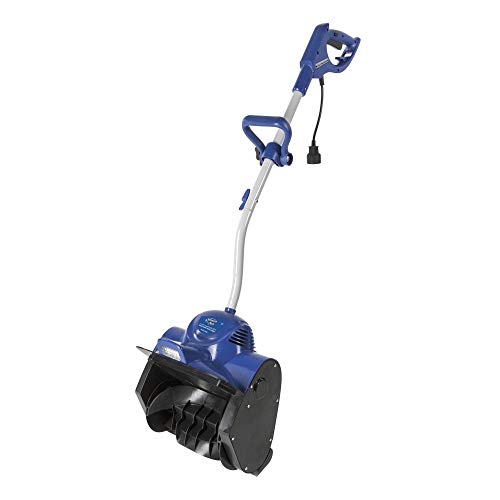
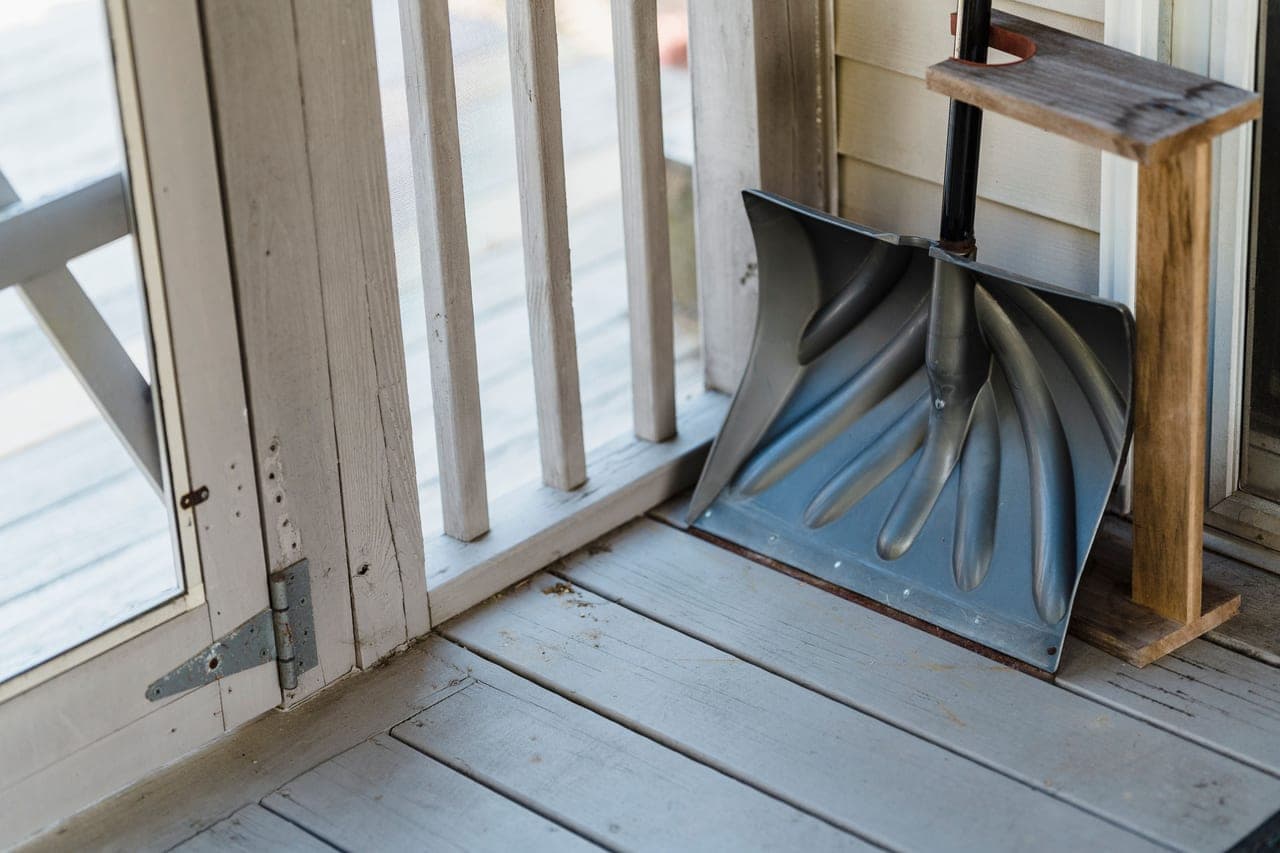
An electric snow shovel clears an 11- to 13-inch path about 6 to 8 inches deep, weighs roughly 13.6 to 23.3 pounds where a figure is published, and is carried rather than pushed. It is the right tool for walkways, steps, decks and a single-car apron. It is the wrong tool for a driveway, and the numbers say so before you buy one.
Do the arithmetic before you buy
The specification that settles this category is throughput, and one manufacturer publishes it for both kinds of tool. Snow Joe rates the 11-inch 324E powered shovel at up to 300 pounds of snow per minute, and its 22-inch corded blower at up to 840. That is a factor of nearly three, in the same aisle, at prices that are not three times apart.
Turn that into your driveway. A 20-by-30-foot drive under four inches of fresh snow holds very roughly 1,500 to 2,500 pounds of snow, depending heavily on how wet it is. At 300 pounds a minute that is 5 to 8 minutes of pure machine time — plus every minute you spend walking, turning and repositioning a tool you are holding in front of you. At 840 pounds a minute it is 2 to 3.
If those numbers make the shovel sound fine, buy the shovel. If your driveway is twice that size, or your snow arrives wet, they are telling you to buy a blower.
Weight is the spec that decides whether you finish
There are no wheels on any electric snow shovel. You carry it, held out in front of your body, for the entire clear — which is a posture that gets expensive fast. Published weights in this class run from 13.6 pounds (Snow Joe 324E) to 23.3 pounds (Wild Badger Power), and EGO declines to publish a figure for its powered shovel.
Treat an unpublished weight as a warning rather than a neutral gap. It is the single most relevant number for a hand-carried tool, and a maker who is proud of it prints it.
Corded or cordless is a tape-measure decision
This is not a technical debate. Measure from your outdoor outlet to the farthest point you need to clear, and let the number decide.
Under about 50 feet — corded wins outright. Constant power, no runtime limit, no charging, and roughly half the price of an equivalent cordless tool.
50 to 75 feet — workable corded, if you buy a heavy-gauge, cold-flexible outdoor extension cord. An ordinary indoor cord coils into a spring at 20°F and an undersized one causes voltage drop that makes the motor labor.
Over 75 feet — go cordless. Beyond that distance cord management dominates the job and you will stop using the tool.
The full comparison, including what gauge cord a 10- or 15-amp tool needs, is in corded versus cordless.
If you go cordless, you are buying a platform
The shovel is the cheap part of a cordless purchase; batteries and chargers are not. That makes this an ecosystem decision, and the ecosystems differ in a way you can compute: stored energy is volts times amp-hours. A 56 V 5.0 Ah pack holds 280 watt-hours. A 24 V 4.0 Ah pack holds 96. Both are "a battery".
Higher pack voltage also means the motor draws the same power at lower current, which generally means less sag under load in dense wet snow. If there is already a cordless mower or trimmer in your garage, the sensible move is usually to stay on that platform. We map the systems in battery platforms.
Surfaces: everything except gravel
Every tool in this class uses a paddle auger that contacts the ground — that is how it clears down to the surface. On concrete, asphalt, pavers and composite decking that is fine and is one of the category's genuine strengths. On gravel it makes the tool a stone thrower, which is bad for your garage door, your car and anyone standing nearby.
Questions people ask
+Can an electric snow shovel clear a driveway?
A short single-car apron, yes, slowly. A two-car driveway, not realistically — an 11- to 13-inch path at a few hundred pounds of snow per minute is a walkway rate. Run the arithmetic above against your actual square footage before you buy.
+How deep a snow can an electric snow shovel handle?
Published ratings in this class cluster around 6 to 7 inches of maximum bite. That is the depth per pass, not the maximum storm: in ten inches of snow you take two passes at different heights, which works fine and is how you should clear anyway.
+Is an electric snow shovel better than a regular shovel?
It is better at throwing snow off a walkway and worse at everything else, including cutting the plow berm and clearing a big area. It also costs several times as much. For a short concrete driveway, a 30-inch pusher is faster and cheaper.
+Will an electric snow shovel work on gravel?
No. The paddle auger contacts the ground by design, so on gravel it picks up stone and throws it up to 20 feet. On a gravel surface you need a two-stage snow blower with adjustable skid shoes — see gravel driveways.