By Scooter M. · Last updated September 19, 2026
Shovel Report earns a commission when you buy through the links on this page, at no extra cost to you. It does not change what we recommend, and we publish a skip-this verdict on products we could otherwise earn from. Full disclosure.
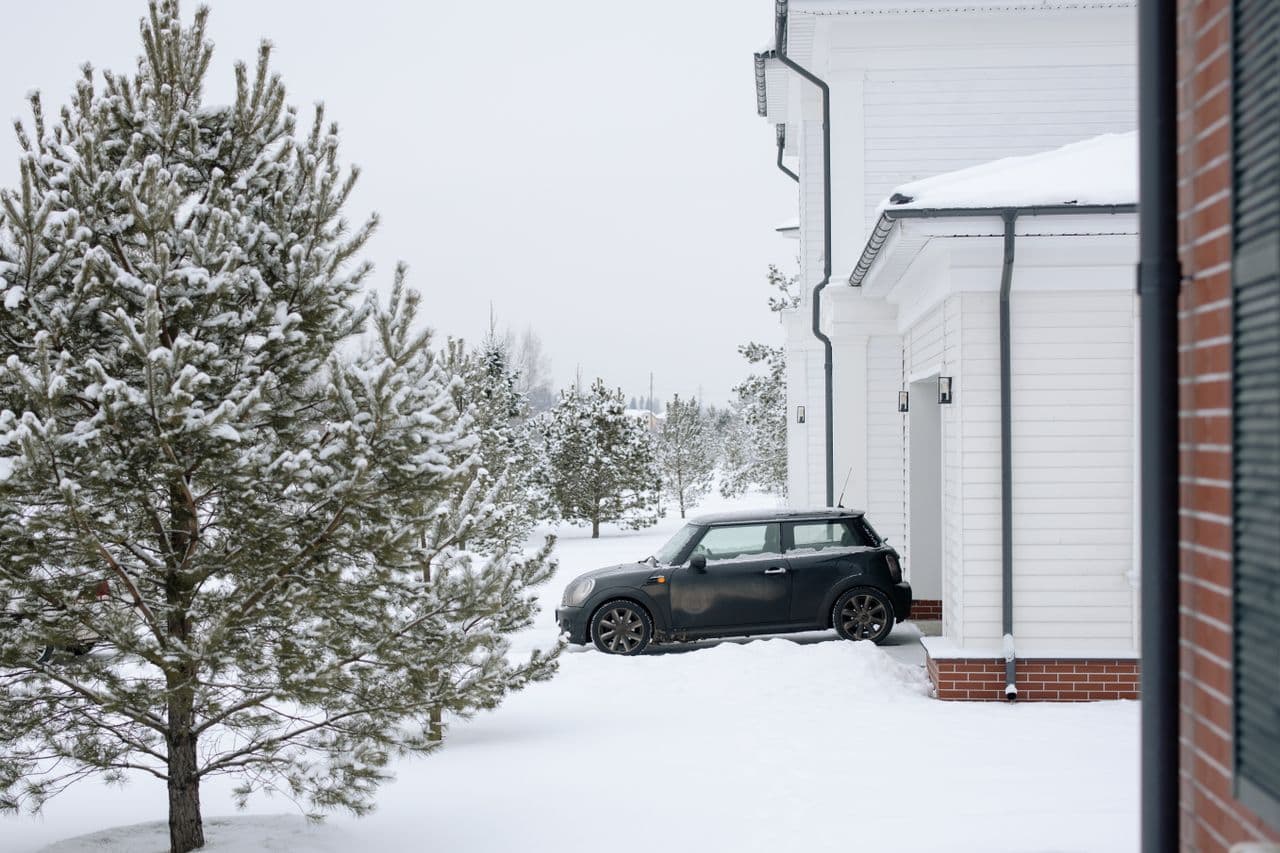
Driveway markers are flexible reflective rods set into the ground along a driveway edge so the pavement line can still be found under snow. For most driveways: 48-inch fiberglass at 5/16-inch diameter, orange with reflective tape, set 6 to 12 inches back from the pavement, installed before the ground freezes.
What a marker is actually for
Two jobs, and only one of them is about you. The first is telling a plow driver where your pavement stops — at night, in falling snow, on a driveway they have never walked in daylight. The second is telling you the same thing when you back out at 6 a.m. with a berm on both sides.
The economics are lopsided, which is why this is one of the easiest purchases in snow removal to justify. A bundle of rods costs less than a single visit to regrade a torn lawn edge, and far less than a sheared sprinkler head, a clipped mailbox post or a gouged asphalt lip. You are buying the cheap side of an asymmetric bet.
It is also worth knowing who is responsible when it goes wrong. The City of Brookfield, Wisconsin states that it "is not responsible for any damage to private markers during a plowing operation". The Town of Sandwich, Massachusetts will not repair lawn damage inside the town right-of-way. Marking the edge is the homeowner's job, and so is accepting that a rod occasionally gets flattened.
The specification that matters
Driveway markers look interchangeable in a listing photograph and are not. Five specifications separate a set that lasts several seasons from a bundle you re-buy every autumn.
What to look for on a driveway marker listing
If you want one rule: buy 5/16-inch diameter. Every other specification here is a genuine trade-off between competing goods, and that one is mostly a question of whether the seller cut a corner.
Where to put them, and how far apart
Placement is the part most people get wrong, and the sources that publish figures for it are municipal snow operations — the people who send the plows.
Distance from the pavement. The Town of Sandwich, Massachusetts asks residents to install markers "6 to 12 inches off the edge of pavement", and recommends "48-inch orange fiberglass markers with white reflective tape" for the job. Back from the edge but not far back: a marker in the middle of the lawn tells a driver nothing about where the asphalt is, and a marker on the pavement gets destroyed.
Spacing is where published advice genuinely disagrees. KAGE Innovation, which manufactures plow equipment, recommends stakes "every 20–30 feet" on straight runs and tightening to "10–15 feet" on curves and in high-snow areas. Several retailer guides recommend far closer spacing, in the 8-to-12-foot range. We have not found an independent standard that settles it, so we will not pretend there is one.
The principle underneath both is the same, and it is the one to design around: from any marker, the next one should be visible in headlights during falling snow. On a straight, flat run that allows a long gap. On a curve, over a crest, or anywhere the driveway edge is not where a driver would guess, it does not — tighten up until the line reads as a line.
- Both sides, always. A single line of markers tells a driver where one edge is and invites them to guess the other.
- Tighten at the apron, where the driveway meets the road and where a plow's wing does the most damage on the pass-by.
- Add one at every buried hazard: sprinkler heads, septic risers, culvert ends, low walls, the mailbox post, anything you would rather not replace in April.
- Mark the far side of a curve so the driver sees the shape of the turn, not just its start.
Fiberglass, not metal
This is the one place where the choice is close to a rule rather than a preference. The City of Brookfield, Wisconsin requires that guideposts "must be flexible and/or break-away type (usually plastic or fiberglass)" and states plainly that "Metal stakes are not allowed."
The reasoning is in the Sandwich guidance: fiberglass markers "will minimize damage to vehicles if accidently struck". A rigid steel rod does not yield to a plow blade, a car mirror or a child on a sled — something else absorbs that energy instead. A fiberglass rod bends flat and springs back, which is the entire design intent.
If your driveway meets a public road, check your own municipality's rules before buying. Several publish specific requirements for what may be placed near the right-of-way, and they are the ones plowing past it.
When to install them
Before the ground freezes. This is the single piece of timing advice every source agrees on, including KAGE, which lists "Install before the ground freezes" as its first placement rule.
The reason is mechanical. A tapered fiberglass rod pushes into soft autumn soil by hand. Once the top few inches have frozen, the same push either bows the rod or splits its tip, which is why the better packs include a steel drill bit for making a pilot hole. If you are reading this in January with frozen ground, buy a pack that includes the bit and expect the job to take an afternoon rather than twenty minutes.
Pull them in spring before the first mow. Fiberglass survives winter far better than it survives a mower blade, and the rods store flat for next season.
How we picked
- Published rod diameter, with 5/16 inch preferred over 1/4 inch for strike resistance
- Published length, read against how high plow banks build where you live
- Published reflective band length, and whether the rod carries one band or two at different heights
- Whether the maker states the rod is solid, hollow or sectional — most do not, and we say so where they do not
- What is in the box: a steel drill bit and gloves are the difference between staking frozen ground and abandoning the job
- Pack size against the length of driveway it realistically marks, rather than the headline count
We have not physically tested these products. We do not own them, we have no lab, and we do not accept free product. Everything above is compiled from published manufacturer specifications, published manuals, published standards and live retailer data - and we tell you which is which on every claim. How we pick.
Quick picks
Ranked against the criteria below. Tap a row to jump to the full write-up; the price button goes straight to Amazon.
| # | Product | Best for | Score | Price |
|---|---|---|---|---|
| 1 |  Sunnyglade Driveway Markers, 50-Pack, 48 in x 5/16 in Fifty 48-inch fiberglass rods at the full 5/16-inch diameter, with a steel drill bit and gloves in the box — enough to stake both sides of most driveways and the right tools to do it. | Marking a whole driveway in one purchase | 8.3/10 | $49.99 - View on Amazon #ad affiliate link · Price as of September 19, 2026 |
| 2 | 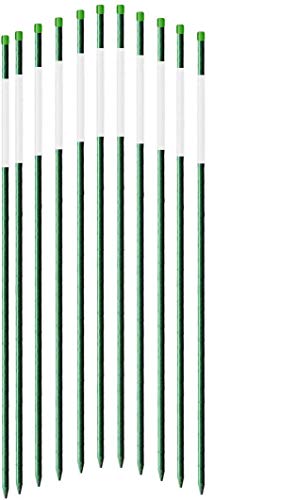 FiberMarker Reflective Driveway Markers, 20-Pack, 48 in, Dark Green Solid 5/16-inch fiberglass in dark green rather than safety orange — the pick when you want the plow to find the edge without lining your lawn with traffic cones. | A marked driveway that does not look marked | 7.6/10 | $36.88 - View on Amazon #ad affiliate link · Price as of September 19, 2026 |
| 3 | 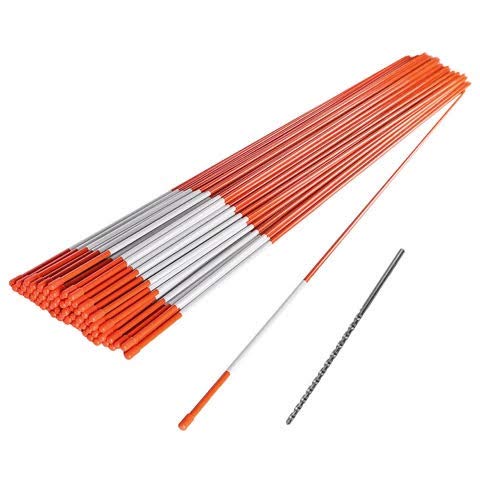 Polar Snow Products Plow Stakes, 20-Pack, 72 in x 5/16 in Six-foot orange fiberglass with a 9-inch reflective strip and a 12-inch install bit in the box — the specification for places where plow banks swallow a 48-inch rod by January. | Deep-snow country, where a 4-foot marker disappears | 8.0/10 | $49.99 - View on Amazon #ad affiliate link · Price as of September 19, 2026 |
| 4 |  The ROP Shop Reflective Driveway Markers, 10-Pack, 48 in x 5/16 in Ten orange 48-inch rods at the full 5/16-inch diameter with a 9-inch reflective band — the small pack to buy when you are marking a few hazards rather than a whole driveway. | A short apron, a mailbox and a hydrant | 7.4/10 | $22.99 - View on Amazon #ad affiliate link · Price as of September 19, 2026 |
| 5 | 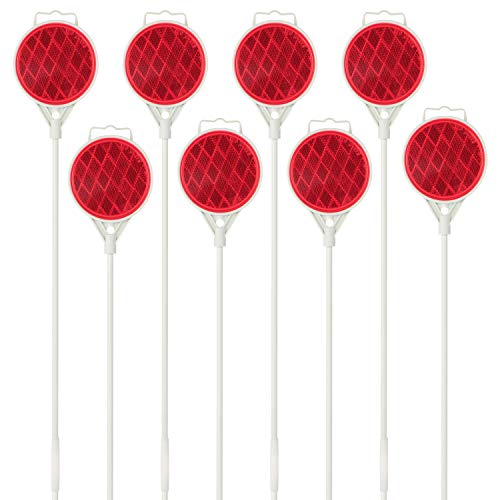 DXSIGN Double-Sided Driveway Reflectors, 8-Pack, 51 in Sectional fiberglass rods topped with two-way reflector heads rather than tape — brighter head-on at an entrance, and the wrong tool for staking a driveway edge. Our skip-this pick | Marking an entrance, not guiding a plow | 6.3/10 | $28.99 - View on Amazon #ad affiliate link · Price as of September 19, 2026 |
Marking a whole driveway in one purchase
Sunnyglade Driveway Markers, 50-Pack, 48 in x 5/16 in
Fifty 48-inch fiberglass rods at the full 5/16-inch diameter, with a steel drill bit and gloves in the box — enough to stake both sides of most driveways and the right tools to do it.
Driveway markers are bought by the driveway, not by the marker, and this is the pack size that matches the job. A 100-foot driveway staked down both sides at a sensible spacing needs somewhere between twenty and thirty rods; fifty covers that with enough left for the mailbox, the hydrant and the two you will snap.
The specification is the mainstream one: 48 inches long, 5/16 inch in diameter, fiberglass. That diameter is the thicker of the two common sizes and it is the one to buy — a quarter-inch rod costs less and flexes more, which sounds harmless until a plow wing brushes it at speed.
The reflective treatment is better thought out than most. Sunnyglade states two silver-gray tapes per rod at 4.7 inches each rather than one long band. Two bands at different heights means that when a plow bank buries the bottom of the rod — which is the normal state of a marker in February — there is still tape above the snow line catching headlights.
The kit is what makes this the default pick. A steel drill bit and a pair of gloves sound like padding until you try to push a fiberglass rod into ground that froze last week. The bit lets you make a pilot hole; the gloves exist because fiberglass sheds fine splinters that find your palms.
What we cannot tell you is whether the rod is solid or hollow. Sunnyglade calls it a fiberglass rod and leaves it there. A solid rod takes a strike better, and if that matters more to you than the pack economics, the FiberMarker rods below say plainly that they are solid.
What works
- Fifty markers covers both sides of a typical driveway with spares for the mailbox and hydrant
- The steel drill bit is the difference between staking in November and giving up in December
- Two tapes per rod means a reflective band at two heights, so a partly buried marker still shows
- Lowest cost per marker of anything on this page
What does not
- The listing does not say whether the rod is solid or hollow, and that decides how it handles a direct hit
- 48 inches is short for a region that builds tall plow banks
- Gloves are genuinely needed — fiberglass splinters — and the included pair is thin
- Orange and white is conspicuous from the road all winter, which not everyone wants
A marked driveway that does not look marked
FiberMarker Reflective Driveway Markers, 20-Pack, 48 in, Dark Green
Solid 5/16-inch fiberglass in dark green rather than safety orange — the pick when you want the plow to find the edge without lining your lawn with traffic cones.
Every other marker on this page is safety orange, and there is a good reason for that: orange is what a plow driver expects to see. This one is dark green, and it is here because the objection to driveway markers is almost never that they do not work. It is that they turn a front lawn into a work zone from October to April.
The trade is real and worth stating plainly. In daylight, dark green against snow is far less conspicuous than orange, and that is the entire point of buying it — but it is also a genuine cost if your driveway is plowed by someone else in poor visibility. At night the difference narrows, because what a driver actually sees is the reflective tape rather than the rod.
That tape is the specification we would push FiberMarker on. Six inches is the shortest band here; the ROP Shop and Polar rods publish nine. A longer band gives a bigger target and survives being partly buried by a plow bank.
Where this rod is unambiguously better is the rod itself. FiberMarker says it is solid fiberglass, where most listings say only "fiberglass rod" and leave you guessing. Solid stock takes a strike from a car mirror better than a hollow tube, and the maker's claim that the pole rebounds rather than breaking is the behavior that municipalities are after when they require flexible markers.
For a short driveway that a homeowner clears themselves, this is the civilized choice. For a long rural driveway that a contractor plows at 2 a.m., buy the orange ones — long driveways explains why the calculus changes with distance.
What works
- States plainly that the rod is solid, which most listings in this category do not
- Dark green disappears against a treeline in daylight and still reflects at night
- The maker says the pole rebounds after a vehicle strike rather than snapping
- A poly cap on top means you can tap it in without splitting the rod
What does not
- 6 inches of tape is the shortest reflective band on this page — some rivals publish 9 or 10
- Dark green is genuinely harder to see in daylight, which matters for a plow driver working a whiteout
- No drill bit or gloves, so frozen ground is your problem
- 20 markers may not stake a long driveway, and the per-marker price is higher than the 50-pack
Deep-snow country, where a 4-foot marker disappears
Polar Snow Products Plow Stakes, 20-Pack, 72 in x 5/16 in
Six-foot orange fiberglass with a 9-inch reflective strip and a 12-inch install bit in the box — the specification for places where plow banks swallow a 48-inch rod by January.
Height is the specification nobody thinks about until the first big storm, and it is the one that decides whether markers still work in February. A 48-inch rod set in the lawn has maybe 40 inches above ground. A plow that has passed a dozen times has built a bank alongside the driveway that can bury most of that, and a marker you cannot see is decoration.
This is the answer to that problem: six feet of bright orange fiberglass with a nine-inch reflective band. KAGE Innovation, which makes plow equipment, recommends taller stakes of 48 to 60 inches specifically for high-snow areas; at 72 inches this sits above even that.
The 12-inch drill bit in the box matters more here than on a shorter marker, because a six-foot rod needs to go deep enough that it does not lean. Depth is what stops the rod pivoting in soft ground once there is a foot of heavy snow leaning on it.
The honest limits are cost and proportion. You pay a premium per marker over a 48-inch pack, twenty rods will not stake a long rural driveway, and in a region where snow rarely banks above your knees you are buying height you will never use. There is also nowhere sensible to store six-foot rods in a normal garage.
Buy these if your plow banks reach chest height, if your driveway is plowed by a contractor who has never walked it in daylight, or if you are marking a curve where getting it wrong means a wheel in a ditch.
What works
- 72 inches keeps a reflective band above the snowbank where 48-inch rods vanish
- A 9-inch strip is among the longest reflective bands here
- Bright orange is the color plow operators are trained to look for
- The 12-inch drill bit is sized for the job rather than thrown in as an afterthought
What does not
- Costs more per marker than the 48-inch packs, and 20 will not stake a long drive
- Six feet of rod is a lot of leverage in wind — it needs to go deep or it leans
- Overkill in a region that rarely banks snow above knee height
- Storage is awkward: these do not fit a normal garage shelf
A short apron, a mailbox and a hydrant
The ROP Shop Reflective Driveway Markers, 10-Pack, 48 in x 5/16 in
Ten orange 48-inch rods at the full 5/16-inch diameter with a 9-inch reflective band — the small pack to buy when you are marking a few hazards rather than a whole driveway.
Not every marking job is a driveway. Plenty of people need four rods and buy fifty because that is what the listings push, and the rest sit in the garage for a decade.
This is the small pack worth buying, and the reason is that it does not cut the specification to hit a price. It is the same 5/16-inch diameter as the 50-pack, with a nine-inch reflective band that is actually longer than what several bigger packs publish. The cheap way to make a small pack is to drop to a quarter-inch rod; this does not.
The fittings are right too. A tapered end goes into soft ground under hand pressure, and the seller states the capped top is made for hammer installation, which is the honest answer for ground that has already started to freeze.
What you pay for that is a per-marker price roughly double the 50-pack. That is the correct trade when you need ten, and the wrong one when you need forty.
The jobs it fits: the mailbox post a plow keeps clipping, a fire hydrant, the lip of a culvert, the corner where the lawn meets the apron, and the one bend in a short driveway that a contractor always cuts. For a full driveway, buy in bulk instead.
What works
- A 9-inch reflective band on a full-diameter 5/16-inch rod — the specification, in the smallest useful quantity
- The cap is rated by the seller for hammer installation, which is what frozen ground requires
- Ten markers is the right number for a mailbox, a hydrant, a culvert and a short apron
- The lightest, least awkward pack here to store
What does not
- Per marker it costs roughly twice what the 50-pack does
- Ten rods will not stake both sides of anything longer than an apron
- No drill bit or gloves in the box
- 48 inches is short where plow banks build high
Marking an entrance, not guiding a plow
DXSIGN Double-Sided Driveway Reflectors, 8-Pack, 51 in
Sectional fiberglass rods topped with two-way reflector heads rather than tape — brighter head-on at an entrance, and the wrong tool for staking a driveway edge.
Skip this one
Buy these to mark the two sides of an entrance, a gate post or a culvert head, where a driver meets them face-on. Do not buy them to stake a driveway edge for plowing: the sectional joints, the 51-inch ceiling and the eight-marker pack are all wrong for that job, and plain reflective rods cost less and survive more.
This is the other thing sold as a driveway marker, and it is a different product with a different job. Instead of a reflective band wrapped around a rod, each marker carries two round reflectors sealed into a plastic head, facing opposite ways.
Head-on, that head is brighter than tape. A sealed reflector is engineered to throw light straight back at the source, which is why the same part is used on guardrails and gateposts. If the question is how to make the entrance of a driveway obvious to a car turning in off a dark road, this answers it well.
The problem is what happens along the rest of the driveway in February. A reflector head is a single point of light near the top of the rod. When the plow banks snow over it, the marker goes dark all at once — where a rod with tape bands keeps showing whatever height the snow reaches.
The construction is the other reservation. DXSIGN states the rod combines in sections to a maximum of 51 inches. Joints are the weak point on a rod that is meant to bend flat and spring back, and 51 inches is under the height of a plain 4-foot marker in the first place.
So: a pair at the entrance, yes. Twenty down the length of a driveway, no. If you are marking for a plow, the rods above do that job for less money — and the snow plow versus snow blower comparison covers when a plow is the right answer at all.
What works
- A sealed reflector head throws back more light head-on than a strip of tape
- Two-way, so it reads coming and going — useful either side of an entrance
- Sectional rods mean you can run them shorter where full height is not wanted
What does not
- Sectional rods have joints, and joints are where a rod fails when a plow wing catches it
- 51 inches is the stated maximum, and only with every section fitted
- Eight markers is an entrance accent, not a staked driveway
- The highest cost per marker on this page, for the least rod
- A reflector head is a discrete target: bury it in a plow bank and the marker goes dark, where tape bands keep showing
How many markers you actually need
Work it out before you buy, because the pack sizes in this category are chosen for the seller rather than for your driveway.
Take the length of the driveway, divide by the spacing you have settled on, add one, and double it for two sides. A 120-foot driveway at 20-foot spacing is seven markers a side, so fourteen — plus a handful for the curve, the mailbox and the sprinkler heads, and two or three spares for the ones that get flattened. Call it twenty.
The same driveway at 10-foot spacing is twenty-six markers before spares. That is the practical consequence of the disagreement in the spacing guidance above, and it is why we would rather you decided the spacing first and then bought the pack.
Long rural driveways change the arithmetic completely: a 500-foot drive at 20-foot spacing needs about fifty markers, which is why the bulk packs exist. Long driveways covers the rest of what distance does to snow removal, and if a contractor plows for you, ask which color and height they prefer before ordering.
What markers will not do
- They do not stop a plow from hitting your lawn. They tell an operator where the edge is. A driver working fast in a whiteout can still misjudge it, and the municipalities above are explicit that the damage is not theirs to repair.
- They do not protect anything inside the public right-of-way. That strip between your pavement and the road usually is not yours, and what happens to it in a storm is not covered by marking it.
- They do not help with ice. A marker shows the edge; it does nothing about the sheet on top of it. That is how to get ice off a driveway.
- They do not survive a mower. Pull them every spring.
- They do not fix a driveway that is hard to plow. If the real problem is a gravel surface tearing up every pass, the fix is in using a snow blower on gravel and gravel driveways.
Questions people ask
How tall should driveway markers be?
How far apart should driveway markers be?
How far from the driveway should markers be placed?
When should I put out driveway markers?
Can I use metal stakes as driveway markers?
Are 1/4-inch or 5/16-inch driveway markers better?
Do driveway markers actually prevent plow damage?
Sources
- Town of Sandwich, MA DPW — install markers 6 to 12 in off the edge of pavement; 48-inch orange fiberglass with white reflective tape
- City of Brookfield, WI — guideposts must be flexible or break-away (plastic or fiberglass); metal stakes not allowed; city not responsible for damage to private markers
- KAGE Innovation — plow stake placement: 20-30 ft straight, 10-15 ft on curves and in high-snow areas, 48-60 in stakes, install before the ground freezes
- Amazon listing — Sunnyglade 50-pack, 48 in x 5/16 in, two 4.7 in tapes per rod, drill bit and gloves
- Amazon listing — FiberMarker 20-pack, 48 in x 5/16 in solid fiberglass, dark green, 6 in tape
- Amazon listing — Polar Snow Products 20-pack, 72 in x 5/16 in, 9 in reflective strip, 12 in install bit
- Amazon listing — The ROP Shop 10-pack, 48 in x 5/16 in, 9 in tape, capped top
- Amazon listing — DXSIGN 8-pack double-sided reflectors, sectional fiberglass rod to 51 in
Next stage
The long-driveway problem
Markers are the cheap half of managing distance. Here is the rest of it: which machine, how many passes, and where a contractor becomes the rational answer.
Keep goingAbout the author
Scooter M.
An enthusiast who is genuinely into this. I read the manuals, compile the published specs, and do the math on door clearances. No lab coat, no test bench, and nothing here is a product I have used - which is exactly why every claim carries a source.
Published by Slate Mill Group, with the Shovel Report team. Published September 19, 2026; last updated September 19, 2026. Editorial policy.
Read next

Best for Long Drives
Best Snow Removal for a Long Driveway
Capacity, not width — sizing battery watt-hours and throughput to distance rather than to price.
Best for Gravel
Gravel Driveway? Start Here.
The two-stage requirement, the skid-shoe setup, and the tools that will not throw stone.
Plow vs Blower
Snow Plow vs Snow Blower
Pushing versus throwing, the ground conditions a plow needs, and where each one fails.
Best for Tractors and ATVs
Tractor and ATV Snow Attachments
Plows and 3-point blowers sorted by the machine you already own — and why the mount, not the blade, is the actual purchase.
Ice Already Formed
How to Get Ice Off a Driveway
The sequence for ice that has already bonded — and why doing it in the wrong order costs you hours.