By Scooter M. · Last updated October 18, 2026
Shovel Report earns a commission when you buy through the links on this page, at no extra cost to you. It does not change what we recommend, and we publish a skip-this verdict on products we could otherwise earn from. Full disclosure.
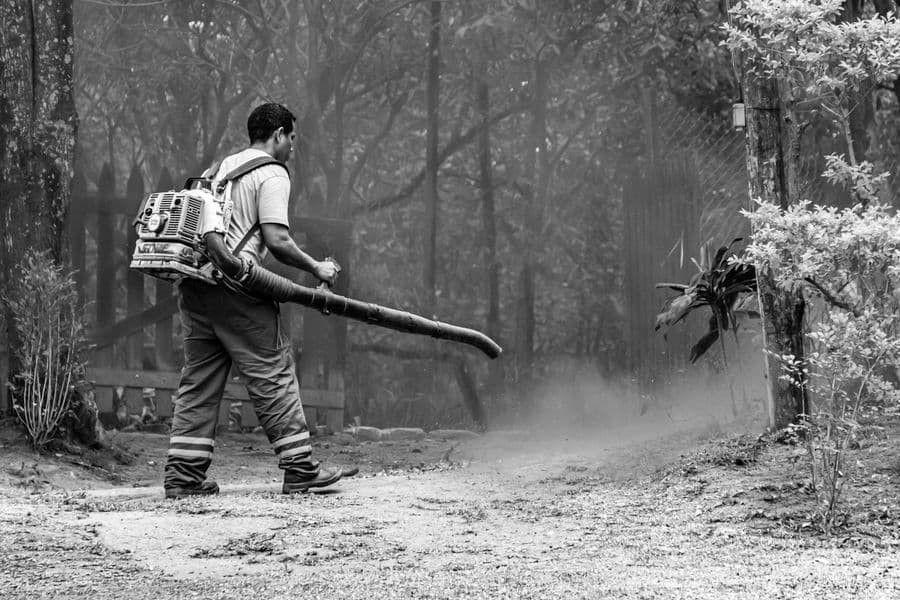
A leaf blower clears fresh, dry, powdery snow up to roughly two inches deep from a hard surface - a deck, a set of steps, a car, a short path. It will not clear wet snow, settled snow, or anything deep enough to hold its own shape, because a blower moves air and snow that has started to bond is not a loose particle any more. Do not buy one for snow; use the one you own, and buy a pusher or a powered shovel for everything else.
Why it works at all, and the number that decides when it stops
A leaf blower works on leaves because a leaf is light, loose and presents a large surface to moving air. Fresh powder behaves the same way: individual crystals, no bonding, almost no mass per unit volume. Blow air across it and it goes.
What changes is density, and there is a clean way to put a number on it. Snow depth divides into liquid water at a ratio meteorologists call the snow-to-liquid ratio. A 30-year climatology of US National Weather Service observations by Baxter, Graves and Moore at Saint Louis University found a mean ratio of about 13 to 1 across the contiguous United States - notably higher than the 10 to 1 that the Weather Bureau handed observers as a rule of thumb back in 1875, and told them in 1894 was only a rough approximation.
Water weighs 62.4 pounds per cubic foot. Divide by the ratio and you get the weight of a cubic foot of snow, which is the number that decides whether moving air can move it:
Snow density derived from the published snow-to-liquid ratio
The useful part of that table is not the exact figures - it is the spread. The same four inches of snow can weigh under four pounds per cubic foot in Colorado and close to seven on the coast, and a leaf blower cares enormously about which one landed on your path. Baxter and colleagues found mean ratios of 15 to 18 through Colorado, Wyoming and Montana, 14 to 16 on the lee side of the Great Lakes, and an abrupt drop to 9 to 11 along the West Coast.
The four conditions that all have to be true
- Fresh. Snow begins bonding to itself and to the surface within hours. The window is during or immediately after the snowfall, not the next morning.
- Dry. If it packs into a snowball it will not blow. That is the simplest field test there is.
- Shallow. Roughly two inches. Past that you are pushing a wall of snow with a column of air, and the snow wins.
- On a hard, visible surface. A deck, steps, a path, a car. Not gravel, which the blower will fire at your windows, and not grass, where it achieves nothing.
Miss any one of those and the result is the same: a lot of noise, a thin plume of spray, and a path that is still covered. This is the single most common disappointment reported with the technique and it is entirely predictable from the conditions.
Where it is genuinely the best tool you own
It is worth being clear that this is not a debunking. There are jobs where a blower you already own beats everything in the shed:
- A composite or wood deck under fresh powder. No edge touches the boards at all, which is the gentlest possible way to clear decking - gentler even than a plastic shovel. Clearing decks, steps and walkways covers the dimensional problem a deck presents.
- A car, before you touch it with anything. Blowing powder off paint cannot scratch it, and scratching is what car snow tools actually risk. The mechanism is explained on best snow removal tools for cars.
- Steps and a short front walk during the storm. Little and often is the correct strategy for snow, and a blower is the lowest-effort way to do a quick pass.
- Finishing. Clearing the last dusting off an already-shovelled surface, where there is no mass left to move.
Two things not to do
Do not use a corded electric blower in falling snow or standing slush. Wet conditions and mains voltage through an extension cord is a combination to avoid, and most blowers are not rated for it. If you are going to do this at all, do it with a battery tool.
Do not buy a leaf blower in order to clear snow. This is our actual recommendation and the reason this page ends in picks that are not leaf blowers. A blower is a tool with one narrow snow use case that depends on your climate, and spending money on it for that purpose means buying a tool that may do nothing all winter. If you own one, try it. If you do not, the money goes further elsewhere - and the comparison between the real options is on snow shovel vs snow blower.
What a snow tool does that a blower cannot
The reason a powered snow shovel exists is that it does not rely on air. A paddle auger makes mechanical contact with the snow and throws it, so density stops being the limiting factor. Snow Joe publishes up to 300 pounds per minute for its 324E powered shovel and up to 840 pounds per minute for its 22-inch corded blower. Those are mass figures. A leaf blower has no equivalent number because it does not move mass - it moves air and hopes the snow is light enough to come along.
That is also why a blower has no depth rating. A powered shovel publishes six to seven inches of intake depth; a blower publishes nothing, because its usable depth depends on the snow rather than on the tool.
How we picked
- Whether the tool moves snow mechanically or depends on the snow being light enough to carry in air
- Published throughput in pounds per minute or clearing depth, where a maker states one - a blower states neither for snow
- Suitability for the surfaces where the blower technique genuinely works: decks, steps, cars, short paths
- Cost against how often the tool will actually be used in a winter, which is where buying a blower for snow fails
- Honest sizing: the proportionate tool for a small area, not the biggest machine that would also work
We have not physically tested these products. We do not own them, we have no lab, and we do not accept free product. Everything above is compiled from published manufacturer specifications, published manuals, published standards and live retailer data - and we tell you which is which on every claim. How we pick.
Quick picks
Ranked against the criteria below. Tap a row to jump to the full write-up; the price button goes straight to Amazon.
| # | Product | Best for | Score | Price |
|---|---|---|---|---|
| 1 | 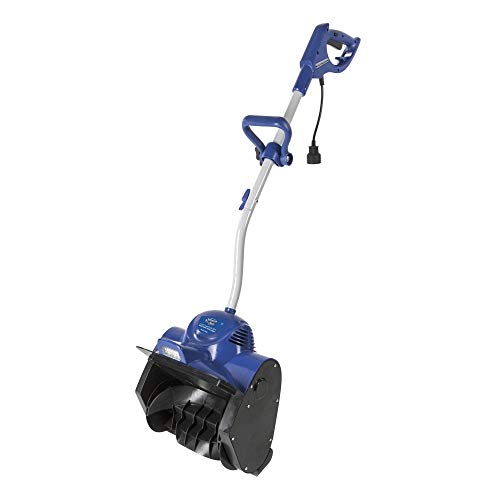 Snow Joe 324E Electric Snow Shovel A corded 11-inch shovel that publishes the two numbers that matter — 13.6 pounds and 300 lb/min — and a 20-foot throw. | The lightest powered shovel with published numbers | 8.1/10 | $124.99 - View on Amazon #ad affiliate link · Price as of October 18, 2026 |
| 2 |  EGO Power+ SNS1201 12-in Snow Shovel A 12-inch 56V shovel with 60 degrees of chute control, on the battery platform with the most tools to grow into. | The best cordless platform | 8.0/10 | $359.00 - View on Amazon #ad affiliate link · Price as of October 18, 2026 |
| 3 |  The Snowplow Original Snow Pusher, 30 in A UHMW polyethylene blade that snow slides off rather than sticks to, in the width that actually changes your clearing time. | Wide, flat driveways | 8.9/10 | $69.99 - View on Amazon #ad affiliate link · Price as of October 18, 2026 |
| 4 |  Snow Joe SJ627E 22-in Corded Snow Blower 840 pounds of snow a minute from a wall socket, at 35 pounds and a fraction of a cordless machine's price. Our skip-this pick | Most snow moved per dollar | 8.6/10 | $249.99 - View on Amazon #ad affiliate link · Price as of October 18, 2026 |
The lightest powered shovel with published numbers
Snow Joe 324E Electric Snow Shovel
A corded 11-inch shovel that publishes the two numbers that matter — 13.6 pounds and 300 lb/min — and a 20-foot throw.
Weight is the specification that decides whether a powered shovel gets used, because you carry it in front of your body for the whole clear, and it is the number most makers in this class decline to print. Snow Joe prints it: 13.6 pounds. That is the lightest published figure of any powered snow tool we can verify is currently in stock.
It also publishes throughput, which is rarer still. Snow Joe states up to 300 pounds of snow a minute through an 11-by-6-inch path, with a throw of up to 20 feet. That is roughly a third of what a 15-amp corded blower moves, which is exactly the right expectation: this is a tool for steps, decks, walkways and short aprons, not a driveway.
A note on the width, because listings disagree. Some retail listings describe this model as clearing a 14-inch path; Snow Joe's own product page says 11 inches, and we go with the maker. Eleven inches is also the useful number, because a standard stair tread is 10 to 11 inches deep.
The cost of being corded is the cord. Snow Joe specifies a 12-gauge extension cord no longer than 100 feet, and a heavy cord trailing around a spinning auger is a genuine trip hazard, particularly for an older user. If that matters more than weight, a cordless tool is the better buy — corded vs cordless works through the distance question.
What works
- 13.6 lb is the lightest published weight of any powered snow tool we can verify is in stock
- Publishes throughput — 300 lb/min — which almost nothing else in this class does
- 11-inch head fits a standard stair tread
- Corded, so there is no battery to buy, charge or replace
What does not
- Corded: a stiff, cold extension cord around a spinning auger is a real trip hazard
- Maker requires a heavy 12-gauge cord, and no more than 100 feet of it
- 6-inch depth means two passes in a real storm
- Far too narrow for a driveway
The best cordless platform
EGO Power+ SNS1201 12-in Snow Shovel
A 12-inch 56V shovel with 60 degrees of chute control, on the battery platform with the most tools to grow into.
Buying a cordless snow shovel is mostly a decision about which battery ecosystem you are joining, because the shovel is the cheap part and the batteries are not. EGO's 56V line is the strongest argument in this category: the same pack that runs this shovel runs their 21-inch two-battery snow blower, so the natural upgrade path costs you a tool and not a tool plus a battery set.
The tool itself is a 12-inch paddle auger with a directional chute the maker rates at 60 degrees of adjustment and a throw of up to 25 feet. Chute control matters more than it sounds: without it you throw snow wherever the machine points, which on a walkway means onto the part you just cleared.
Twelve inches is the honest limitation. That is a path width for steps, a deck, a walk to the mailbox, and the strip in front of a garage door. It is not a driveway machine. Point a 12-inch shovel at a two-car drive and you will be there a long time, and the battery will not last.
EGO does not publish a weight on the listing we read. For a tool you carry in front of you, that is the number we most wanted. See how the class compares to a real machine in snow shovel versus snow blower.
What works
- Directional chute control, which most electric shovels in this class do not have
- 56V EGO packs also run their blowers, mowers and the 21-inch snow blower
- Cordless removes the extension-cord problem that makes corded shovels miserable
What does not
- 12 inches is a walkway and step tool, not a driveway tool
- A 2.5 Ah battery is small for sustained snow work
- Costs more than a corded shovel with more clearing width
Wide, flat driveways
The Snowplow Original Snow Pusher, 30 in
A UHMW polyethylene blade that snow slides off rather than sticks to, in the width that actually changes your clearing time.
UHMW — ultra-high-molecular-weight polyethylene — is the material specification that separates this from a $25 pusher. It is the same family of plastic used for conveyor wear strips and truck-bed liners, chosen for a very low coefficient of friction and high impact resistance at low temperature. The practical consequence is that snow slides off it, including the heavy wet snow that packs solid onto a cheap blade and turns pushing into scraping.
The maker states the edge self-sharpens with use and needs no maintenance, and lists the tool as usable on concrete, blacktop, pavers, decks, roofs and ice rinks. That surface list is unusually broad and is the reason we recommend it where a metal edge would be a liability.
Width is the other half of the argument. A 30-inch blade covers 67 percent more ground per pass than an 18-inch shovel. On a 20-by-30-foot driveway that is the difference between roughly 20 passes and roughly 12 — and each of those passes is a push, not a lift.
It is not a complete answer. Nothing that pushes deals with the plow berm, and on a long driveway you eventually run out of anywhere to push to. Pair it with a shovel, or with a machine.
What works
- UHMW is the reason wet snow releases instead of packing onto the blade
- 30 inches is the width where pass count drops noticeably on a two-car drive
- Rated by the maker for decking and pavers, unlike any steel-edged pusher
What does not
- Costs multiples of a hardware-store pusher
- Still cannot lift, and still cannot cut refrozen crust
- The wider the blade, the more it wanders on uneven ground
Most snow moved per dollar
Snow Joe SJ627E 22-in Corded Snow Blower
840 pounds of snow a minute from a wall socket, at 35 pounds and a fraction of a cordless machine's price.
Skip this one
Listed because it is the upgrade the arithmetic actually points to, not because it is the right first purchase. A corded 22-inch blower is a bigger, louder, more capable machine than most people who came here looking to avoid buying anything want. If your snow is light and your area is small, the pusher or a powered shovel is the proportionate answer and this is overkill.
This machine exists to make a point about arithmetic. Snow Joe states it moves up to 840 pounds of snow per minute through a 22-inch by 13-inch intake. The best-documented electric shovel in this build, the Toro Power Shovel, is rated at 300 pounds per minute through a 12-by-6-inch path. That is not a small difference in degree; it is a different job.
Work through a driveway with it. A 20-by-40-foot drive under 6 inches of fresh snow contains very roughly two to four thousand pounds of snow depending on density. At the stated 840 lb/min that is a few minutes of actual throughput — the clock is dominated by walking and turning, not by the machine.
The 13-inch intake depth is the underrated spec. Most single-stage machines in this price class top out around 8 to 10 inches, which means a foot of snow needs layered passes. Thirteen inches takes most storms in one.
The cord is the price. Fifteen amps over a long, thin extension cord is a voltage-drop problem, so you need a heavy-gauge, cold-flexible outdoor cord, and you spend the whole clear aware of where it is. Measure your outlet-to-far-corner distance before you buy — beyond about 100 feet, go cordless.
What works
- 840 lb/min is roughly triple what the best electric shovel here moves
- 13 inches of intake depth handles a real storm in one pass
- 35 lb published weight makes it manageable to turn and store
What does not
- Corded, so your working radius is a cord length
- 15 amps needs a properly rated cold-weather extension cord
- Single-stage: no gravel, and limited on steep grades
The short version, by what you are trying to clear
Which tool for which job
If your honest answer is a driveway, this page has pointed you in the wrong direction on purpose: go to best electric snow blowers or work out the size you need on what size snow blower do I need. If it is a path, a deck and a set of steps, try the blower you already own first - and if your snow turns out to be the wet kind, the powered shovel at the top of our picks is the tool built for that job.
Questions people ask
Can you use a leaf blower to clear snow?
How deep can a leaf blower clear snow?
Will a leaf blower work on wet snow?
Is a leaf blower better than a snow blower?
Should I buy a leaf blower for snow removal?
Can I use a leaf blower on a gravel driveway in winter?
Sources
Next stage
The tool built for the job a blower almost does
A powered shovel moves snow mechanically rather than hoping it is light enough to carry in air. Here is where that is worth the money and where it is not.
Keep goingAbout the author
Scooter M.
An enthusiast who is genuinely into this. I read the manuals, compile the published specs, and do the math on door clearances. No lab coat, no test bench, and nothing here is a product I have used - which is exactly why every claim carries a source.
Published by Slate Mill Group, with the Shovel Report team. Published October 18, 2026; last updated October 18, 2026. Editorial policy.
Read next

Shovel vs Blower
Snow Shovel vs Snow Blower
The throughput arithmetic that decides whether a machine earns its price on your driveway.

Worth It, Or Not
Are Electric Snow Shovels Any Good?
The honest case for and against the category, with the published numbers that decide it.
Best for Decks & Steps
Clearing Decks, Steps and Walkways
Narrow heads and non-marking edges for stair treads, composite decks and tight walkways.

Best for Cars
Best Snow Removal Tools for Cars
Foam versus bristles for paint safety, plus the reach a truck roof actually needs.