By Scooter M. · Last updated September 21, 2026
Shovel Report earns a commission when you buy through the links on this page, at no extra cost to you. It does not change what we recommend, and we publish a skip-this verdict on products we could otherwise earn from. Full disclosure.
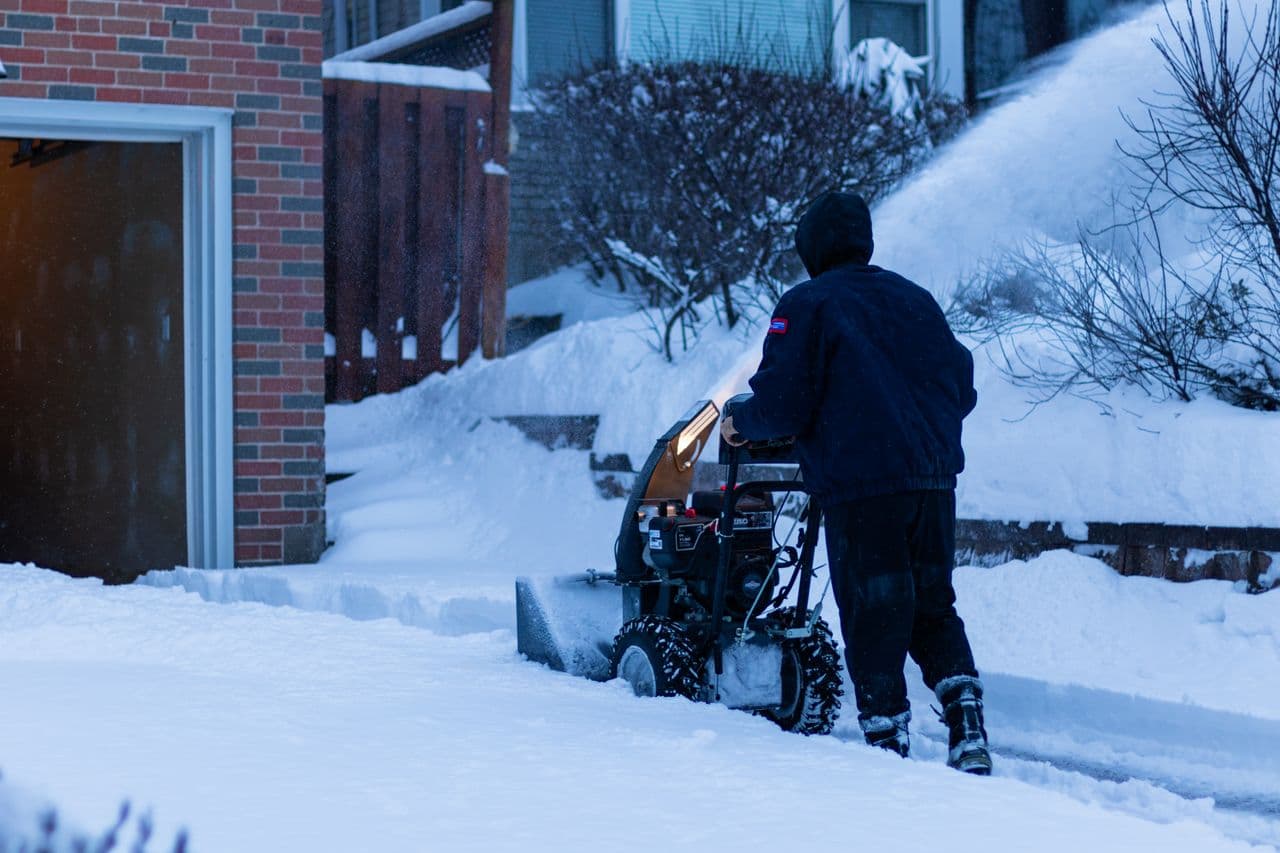
Snow blower tire chains give a machine grip on slopes and on packed, refrozen snow where the stock turf tires spin. Buy by the exact tire size printed on the sidewall — never by machine model. Two-link ladder chains suit most drives; net or diamond patterns grip better on aggressive treads and cost more.
When chains are worth it, and when they are not
Most residential machines on most driveways do not need chains. The stock tires are adequate on a flat, paved drive cleared while the snow is fresh.
Chains earn their keep in three situations, and it is worth being honest about whether you are in one of them.
- A sloped driveway. This is the main case. A machine that cannot hold its line on a grade is both useless and unsafe, and steep driveways covers the wider problem.
- Packed or refrozen snow. After a thaw and refreeze, a driveway is essentially ice, and turf tread has nothing to bite.
- Heavy, self-propelled machines on gravel, where the surface moves under the tire.
If your machine spins on a flat drive in fresh snow, chains are treating a symptom. More likely you are taking too deep a bite, or the tires are underinflated — check pressure first, because it is free.
Reading your tire size
This is the step that decides whether the chains fit, and it takes thirty seconds.
Look at the sidewall. You will find something like 15x5.00-6 or 16x6.5-8. The first number is the overall tire diameter in inches, the second is the section width, and the third is the rim diameter. All three have to match the chain listing — a 15x5.00-6 and a 15x6.00-6 are different tires, and Grizzlar's listing is unusually blunt about this: every number has to match exactly, in the same order.
Do not buy by machine model. Manufacturers change tire sizes across model years within the same model name, which is exactly how people end up with chains that will not close.
Ladder against net patterns
Chain patterns compared
For most machines a two-link ladder chain is the sensible buy. The net pattern is the upgrade for a steep drive or a machine with deep lug tread that the ladder chain tends to skate across.
What chains do to your driveway
Chains bite whatever is under them. On snow and ice that is the point; on the bare concrete that appears behind the machine, it is wear — and on decorative concrete or pavers it is damage.
So chains are a seasonal or conditional fitment, not a permanent one. Fit them when the slope or the ice demands it; take them off when the driveway is clear. Nobody enjoys that, which is the honest argument against chains for anyone whose need is marginal.
How we picked
- Published tire sizes, stated exactly rather than as a machine-model list
- Pattern — ladder against net — and what it suits
- Published link gauges and cross-chain count where a seller gives them, because that is the only real quality signal
- Whether tensioners are included or recommended, since a loose chain can wrap an axle
- Weight, which decides how manageable the chains are to fit in the cold
- Clearance warnings, which most sellers omit and which decide whether the chains foul the frame
We have not physically tested these products. We do not own them, we have no lab, and we do not accept free product. Everything above is compiled from published manufacturer specifications, published manuals, published standards and live retailer data - and we tell you which is which on every claim. How we pick.
Quick picks
Ranked against the criteria below. Tap a row to jump to the full write-up; the price button goes straight to Amazon.
| # | Product | Best for | Score | Price |
|---|---|---|---|---|
| 1 | 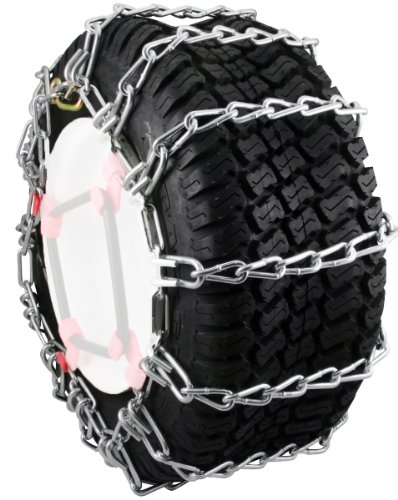 Security Chain Company Max Trac Tire Chains, 1061756 Two-link zinc-plated chains from a company that only makes traction products, covering four of the most common small-wheel sizes. | The common small sizes, from a chain specialist | 8.1/10 | $45.12 - View on Amazon #ad affiliate link · Price as of September 21, 2026 |
| 2 |  Grizzlar GTN-524 Net-Style Alloy Tire Chains, 15x5.00-6 A net-and-diamond pattern in manganese steel with D-shaped links — far more chain in contact with the ground than a two-link ladder, for the single size it fits. | Maximum grip on one exact tire size | 8.0/10 | $101.52 - View on Amazon #ad affiliate link · Price as of September 21, 2026 |
| 3 | 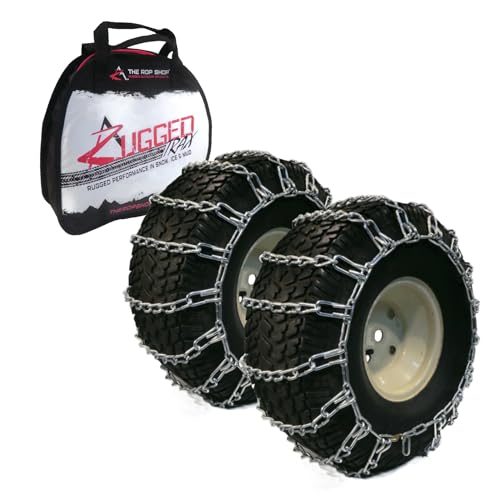 The ROP Shop Two-Link Tire Chains, 16x6.5x8 Two-link zinc-plated chains for the 16x6.5 sizes, with the link gauges and cross-chain count published — unusually specific for this end of the market. | The larger 16-inch wheel on mid-size two-stage machines | 7.8/10 | $54.99 - View on Amazon #ad affiliate link · Price as of September 21, 2026 |
| 4 |  OakTen Two-Link Tire Chains, 16x6.5x8 Zinc-plated alloy two-link chains for 16x6.5x8 at the lowest price here, with a clearance warning the pricier listings leave out. Our skip-this pick | The budget pair for a 16-inch wheel | 7.5/10 | $42.62 - View on Amazon #ad affiliate link · Price as of September 21, 2026 |
The common small sizes, from a chain specialist
Security Chain Company Max Trac Tire Chains, 1061756
Two-link zinc-plated chains from a company that only makes traction products, covering four of the most common small-wheel sizes.
Tire chains turn a snow blower that spins its wheels into one that climbs. On a flat driveway they are unnecessary; on a sloped drive, or on the packed layer that forms after a thaw and refreeze, they are the difference between clearing and sliding.
SCC makes traction products and nothing else, and this pair covers four of the sizes most commonly fitted to residential machines. That matters, because the single most common mistake in this category is ordering by machine model instead of tire size.
Read the sidewall of your own tire before you buy. It will say something like 15x5.00-6, and every number has to match — a 15x6.00-6 is a different tire from a 15x5.00-6 and the chain that fits one is wrong on the other.
Budget for the tensioner the maker recommends. A chain that works loose can ride off the tire and wrap the axle, which turns a traction upgrade into a repair. And take them off once the slope is clear: a chain running on bare pavement wears fast and marks the surface.
If the reason you are here is that the machine cannot hold the slope at all, the chains may be treating a symptom — steep driveways covers what else changes on a grade.
What works
- From a dedicated traction-chain manufacturer rather than a general parts seller
- Four listed tire sizes, which covers a large share of single-stage and small two-stage machines
- Two-link spacing is the right density for a machine that is walking, not driving
- Zinc plating is what keeps chains from rusting solid between seasons
What does not
- No tensioner included, and the maker says to buy one — a loose chain can wrap the axle
- Fitment is by tire size only: buying by machine model is how people order the wrong pair
- Chains will mark a bare concrete or asphalt surface
- Fitting them in the cold, on a machine you cannot easily lift, is genuinely unpleasant work
Maximum grip on one exact tire size
Grizzlar GTN-524 Net-Style Alloy Tire Chains, 15x5.00-6
A net-and-diamond pattern in manganese steel with D-shaped links — far more chain in contact with the ground than a two-link ladder, for the single size it fits.
There are two chain patterns worth knowing about. A ladder chain runs cross-links straight across the tread, so grip arrives in pulses as each link comes around. A net or diamond chain keeps steel under the contact patch continuously.
On a car that difference is about ride smoothness. On a snow blower on a slope it is about whether the machine walks steadily or grabs and slips, and the net pattern is clearly better — particularly on the aggressive tread most two-stage machines wear, where a ladder chain tends to bridge the lugs.
The cost of that is specificity and money. This fits 15x5.00-6 and nothing else, and it costs roughly double the four-size ladder pair. Grizzlar's own listing puts the warning bluntly: every number in your tire size has to match theirs exactly.
It is also eight pounds of steel, which on a small machine is noticeable when you are turning it at the end of a run. That is the honest trade for the grip.
What works
- A net pattern keeps chain under the tire continuously, where a ladder chain grips in pulses
- Manganese steel and D-links are a genuine step up in wear resistance
- Best choice for an aggressive tread, where ladder chains sit on the lugs and skate
- The maker is explicit that every number in the size must match, which is the right warning to give
What does not
- One size only — if your tire is not exactly 15x5.00-6, this is not your chain
- Roughly twice the price of the two-link pair above
- Eight pounds of chain on a small machine changes how it handles
- More contact area also means more marking on bare pavement
The larger 16-inch wheel on mid-size two-stage machines
The ROP Shop Two-Link Tire Chains, 16x6.5x8
Two-link zinc-plated chains for the 16x6.5 sizes, with the link gauges and cross-chain count published — unusually specific for this end of the market.
Sixteen-inch wheels turn up on mid-size and larger two-stage machines, and they are the size the small-wheel chain packs do not cover. This is the straightforward option for them.
What sets the listing apart is that it publishes the numbers that decide chain quality: 4 mm outside links, 6 mm crosslinks, thirteen cross chains. Most chains at this price tell you a size and nothing else, and 6 mm crosslinks are meaningfully heavier than the garden-tractor chains that often get sold for snow duty.
The seller's own instruction is the important one: check your exact tire size, and do not buy by machine model. Manufacturers change tire sizes across model years, and a chain that is one size out is unusable.
One limitation to respect: the listing says turf tires only. If your machine wears a deep-lug snow tire, the net-pattern chains sit better than a ladder pattern does.
What works
- Publishes link gauges and cross-chain count, so you can compare it against a cheaper pair properly
- 6 mm crosslinks are heavier than typical garden-tractor chains
- Covers the 16-inch sizes that the small-wheel chains miss
- Explicit instruction not to buy by machine model — exactly the right advice
What does not
- 12.4 pounds is the heaviest pair here
- Stated for turf tires only, which rules out some aggressive snow treads
- No tensioners included in this listing
- The same seller lists many near-identical model-specific pairs, which makes choosing harder than it needs to be
The budget pair for a 16-inch wheel
OakTen Two-Link Tire Chains, 16x6.5x8
Zinc-plated alloy two-link chains for 16x6.5x8 at the lowest price here, with a clearance warning the pricier listings leave out.
Skip this one
The cheap pair, and the one to skip if your driveway is steep or you clear after every storm. It publishes no link gauges, and at six pounds against the ROP Shop's twelve for the same tire size, you can infer lighter chain throughout. On a flat drive used occasionally it is fine; on a grade it is the pair you replace in two seasons.
The budget end of a category where budget is usually a bad idea — chains take real load — but this pair earns its place by publishing the one warning everyone else omits.
Three inches of clearance between the tire and the frame or fender is a genuine requirement. Chains add diameter and width, and on a machine with tight fender clearance they rub, then catch, then damage something. Measure before ordering; it takes a minute.
What you are giving up is documented steel. There are no link gauges on this listing, and at six pounds against the ROP Shop's twelve, you can assume lighter chain throughout. On a flat drive used occasionally that is fine. On a steep drive cleared after every storm, the heavier pair will outlast two of these.
Whatever you buy, fit them with the machine off and the plug out, tension them properly, and check them again after the first run — chains bed in and always need a second tightening.
What works
- The cheapest way onto a 16-inch wheel, at half the weight of the ROP Shop pair
- States the clearance requirement, which is the check most buyers skip and then discover on the driveway
- Lighter chains are easier to handle when fitting in the cold
- Alloy steel with zinc plating at this price is reasonable value
What does not
- No published link gauges, so you cannot compare its steel against heavier chains
- One size only
- Lighter chain means shorter life on abrasive surfaces
- No tensioners, and a light chain is the kind most likely to work loose
Fitting them without losing an afternoon
- Engine off, plug lead disconnected. You will have hands near the auger and the wheels.
- Check clearance first. OakTen states a minimum of 3 inches between the tire and the frame or fender; if you have less, chains will rub and eventually catch.
- Lay the chains out flat and untwist them before they go anywhere near the machine — a twisted chain fitted tight is a chain that damages a tire.
- Drape over the tire, join the inside first, then the outside, and take up the slack evenly.
- Tension them properly, and fit the tensioner if the maker recommends one — SCC calls for its own QG20025.
- Run the machine a few feet and re-tension. Chains bed in, and the second tightening is the one that keeps them on.
Alternatives worth considering first
- Check tire pressure. Underinflated turf tires deform and lose bite, and this costs nothing to fix.
- Add weight over the wheels if your machine has a weight kit — traction is load times friction, and chains only address the second half.
- Take a shallower bite on a grade. A machine fighting a full-depth cut has less grip in reserve for the slope.
- Clear downhill where you can, and use the machine's drive to walk it back up unloaded.
Questions people ask
Do snow blowers need tire chains?
What size tire chains do I need for my snow blower?
Will tire chains damage my driveway?
What is the difference between ladder and net tire chains?
Do I need tensioners for snow blower tire chains?
Can you leave tire chains on a snow blower all winter?
Sources
- Amazon listing — SCC 1061756 Max Trac chains, two-link, four listed sizes, tensioner sold separately
- Amazon listing — Grizzlar GTN-524 net/diamond alloy chains, 15x5.00-6
- Amazon listing — The ROP Shop two-link chains 16x6.5x8, 4 mm/6 mm links, 13 cross chains
- Amazon listing — OakTen two-link chains 16x6.5x8, 3 in clearance required
Next stage
The slope problem in full
Chains are one answer to a grade. Here is the rest of what changes when a driveway goes uphill.
Keep goingAbout the author
Scooter M.
An enthusiast who is genuinely into this. I read the manuals, compile the published specs, and do the math on door clearances. No lab coat, no test bench, and nothing here is a product I have used - which is exactly why every claim carries a source.
Published by Slate Mill Group, with the Shovel Report team. Published September 21, 2026; last updated September 21, 2026. Editorial policy.
Read next
Best for Steep Drives
Steep Driveway Snow Removal
Traction, self-propulsion and pre-treatment timing — the slope changes every priority.

Best for Deep Snow
Best Snow Blowers for Heavy, Wet Snow
Deep and dense snow shifts the priorities to intake depth, steel augers and throughput.
Best Skid Shoes
Best Snow Blower Skid Shoes
Skid shoes judged on material, published geometry and whether the bolts are in the box.
Best for Gravel
Gravel Driveway? Start Here.
The two-stage requirement, the skid-shoe setup, and the tools that will not throw stone.