
By Scooter M. · Last updated September 6, 2026
Snow and water are not ferromagnetic, so a magnetic field does not attract, repel or move them. Devices advertised as clearing snow electromagnetically are not supported by the physics, and none of the marketing we have seen publishes a mechanism, a power rating or an independent measurement. Heated systems, which genuinely work, do it with resistance heat and are sold as such.
What is actually being claimed
The searches that bring people here are looking for reviews of products advertised as removing snow with electromagnetic or magnetic fields, generally described as having no moving parts, needing no fuel, and working passively once installed.
We want to be precise about scope, because there is a real technology in the neighborhood. Heated driveway systems, heat cables and snow-melting mats are real, they work, and they are sold openly as resistance heating. They consume meaningful electricity, they publish watt-per-square-foot ratings, and installers quote running costs. Nothing on this page is about those.
The claims at issue are the ones that assert snow clearing from a magnetic or electromagnetic effect rather than from heat — and that is where the physics stops cooperating.
Why the physics does not support it
Magnetic fields exert force on ferromagnetic materials — iron, nickel, cobalt and their alloys. Snow is water in crystalline form. Water is not ferromagnetic; it is very weakly *diamagnetic*, meaning it is repelled by a magnetic field so feebly that demonstrating the effect at all requires laboratory superconducting magnets producing fields many orders of magnitude beyond anything a consumer device generates.
The famous laboratory demonstration of levitating a drop of water needs a field strength that no mains-powered household product approaches, and even then it moves a droplet — not a hundred square feet of snowpack. There is no scaling path from that experiment to a driveway.
The other possible mechanism would be heat: an alternating field can induce currents in a conductor and warm it. But that is induction heating, it requires a conductive target, and any device doing it is consuming electricity in proportion to the heat produced. It would be a heated system wearing different words, and it would carry the same running cost — which is precisely the number these products do not publish.
What to ask before buying anything in this category
- What is the stated mechanism, in physical terms? "Electromagnetic technology" is not a mechanism. Resistance heating at a stated wattage is.
- What is the power draw? Anything that melts snow moves a large amount of energy. A product that melts snow and draws almost no power is claiming something that does not happen.
- Is there an independent measurement? Not a testimonial, not a video — a measurement someone else can reproduce.
- What is the coverage area and the running cost per hour? Real heated-system vendors publish both.
- Is there a return path? The honest answer to an untestable claim is a refund policy you can actually use.
We have not bought or tested any such device, and we are not going to name specific products we cannot verify. That is consistent with the rest of this site: we do not test, and we say so. What we can do is check a claim against physics that is not in dispute, and this one does not survive it.
What actually clears snow
Three things, and all of them are unglamorous: mechanical removal, heat, and chemistry that lowers the freezing point.
Quick picks
Ranked against the criteria below. Tap a row to jump to the full write-up; the price button goes straight to Amazon.
Most snow moved per dollar
Snow Joe SJ627E 22-in Corded Snow Blower
840 pounds of snow a minute from a wall socket, at 35 pounds and a fraction of a cordless machine's price.
This machine exists to make a point about arithmetic. Snow Joe states it moves up to 840 pounds of snow per minute through a 22-inch by 13-inch intake. The best-documented electric shovel in this build, the Toro Power Shovel, is rated at 300 pounds per minute through a 12-by-6-inch path. That is not a small difference in degree; it is a different job.
Work through a driveway with it. A 20-by-40-foot drive under 6 inches of fresh snow contains very roughly two to four thousand pounds of snow depending on density. At the stated 840 lb/min that is a few minutes of actual throughput — the clock is dominated by walking and turning, not by the machine.
The 13-inch intake depth is the underrated spec. Most single-stage machines in this price class top out around 8 to 10 inches, which means a foot of snow needs layered passes. Thirteen inches takes most storms in one.
The cord is the price. Fifteen amps over a long, thin extension cord is a voltage-drop problem, so you need a heavy-gauge, cold-flexible outdoor cord, and you spend the whole clear aware of where it is. Measure your outlet-to-far-corner distance before you buy — beyond about 100 feet, go cordless.
What works
- 840 lb/min is roughly triple what the best electric shovel here moves
- 13 inches of intake depth handles a real storm in one pass
- 35 lb published weight makes it manageable to turn and store
What does not
- Corded, so your working radius is a cord length
- 15 amps needs a properly rated cold-weather extension cord
- Single-stage: no gravel, and limited on steep grades
Wide, flat driveways
The Snowplow Original Snow Pusher, 30 in
A UHMW polyethylene blade that snow slides off rather than sticks to, in the width that actually changes your clearing time.
UHMW — ultra-high-molecular-weight polyethylene — is the material specification that separates this from a $25 pusher. It is the same family of plastic used for conveyor wear strips and truck-bed liners, chosen for a very low coefficient of friction and high impact resistance at low temperature. The practical consequence is that snow slides off it, including the heavy wet snow that packs solid onto a cheap blade and turns pushing into scraping.
The maker states the edge self-sharpens with use and needs no maintenance, and lists the tool as usable on concrete, blacktop, pavers, decks, roofs and ice rinks. That surface list is unusually broad and is the reason we recommend it where a metal edge would be a liability.
Width is the other half of the argument. A 30-inch blade covers 67 percent more ground per pass than an 18-inch shovel. On a 20-by-30-foot driveway that is the difference between roughly 20 passes and roughly 12 — and each of those passes is a push, not a lift.
It is not a complete answer. Nothing that pushes deals with the plow berm, and on a long driveway you eventually run out of anywhere to push to. Pair it with a shovel, or with a machine.
What works
- UHMW is the reason wet snow releases instead of packing onto the blade
- 30 inches is the width where pass count drops noticeably on a two-car drive
- Rated by the maker for decking and pavers, unlike any steel-edged pusher
What does not
- Costs multiples of a hardware-store pusher
- Still cannot lift, and still cannot cut refrozen crust
- The wider the blade, the more it wanders on uneven ground
Dogs, at real winter temperatures
Green Gobbler Pet Safe Ice Melt
Magnesium chloride pellets rated to -15°F — the mildest of the working chlorides, and the sensible default around pets.
Every de-icer works the same way: dissolve something in the thin film of water on the ice and you lower that water's freezing point, so the ice melts at a temperature it otherwise would not. The differences between products are which salt does the dissolving, how cold it keeps working, and what it does to concrete, plants and paws.
Magnesium chloride is the mild end of the working chlorides. Green Gobbler publishes an effective temperature of -15°F, which is genuinely useful — plain rock salt stops doing meaningful work somewhere around 15 to 20°F, so on a cold night rock salt is decoration and this is not.
The pet claim deserves a precise reading. Magnesium chloride is less likely to irritate paws and less likely to cause stomach upset than rock salt, which is why the maker positions it that way. It is not food, and "pet safe" is not "pet edible". Wipe paws after walks regardless of what you spread.
It is still a chloride, so it belongs in the same conversation as every other chloride when it comes to concrete: keep it off concrete poured within the last twelve months, and understand the actual damage mechanism before you decide it is safe. We explain it in does ice melt damage concrete. For a genuinely chloride-free option, see our pet-safe picks.
What works
- -15°F published working temperature is far below rock salt's practical floor
- Pellets penetrate an ice layer instead of sitting on top of it like flakes
- Magnesium chloride is the least paw-irritating of the common working chlorides
What does not
- "Pet safe" means less irritating, not edible — it is still a chloride salt
- Attracts moisture and can leave a slick residue if over-applied
- Costs several times what bulk rock salt does per pound
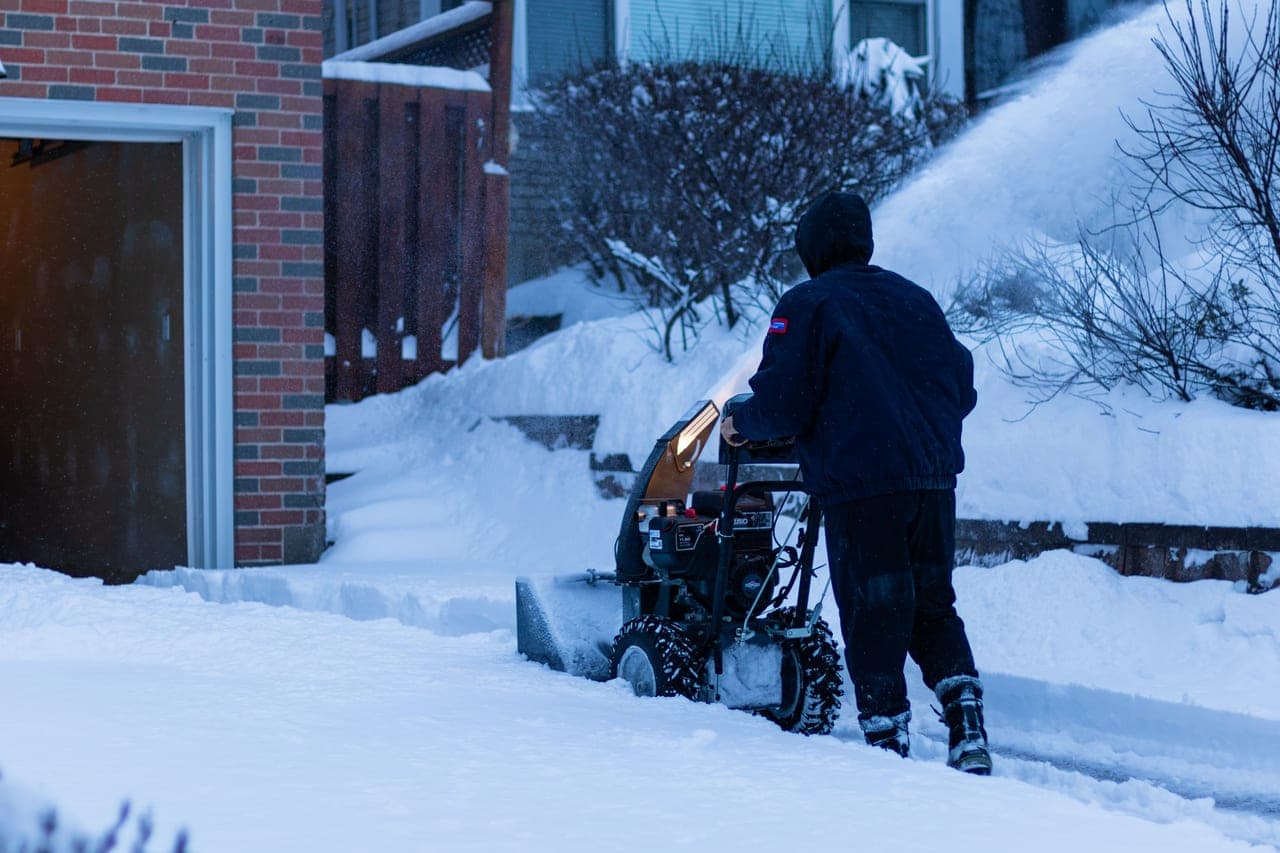
Mechanical is the cheapest and the most reliable. A corded snow blower moves a maker-stated 840 pounds of snow a minute for a fraction of the price of any heated installation, and a wide pusher clears a short driveway in about ten minutes with no power at all — snow shovel versus snow blower has the arithmetic.
Chemistry does not remove snow; it breaks the bond between ice and pavement so you can. Every product has a published working temperature and applying below it does nothing, which is exactly the sort of checkable specification the electromagnetic claims lack — see the temperature guide.
Heat works and costs what heat costs. If a snow-free surface with no effort is genuinely what you want, that is a heated system, installed properly, with the electricity bill it implies. It is a real product category and nobody in it claims to defy thermodynamics.
Why this page exists
Because the search volume is real and the honest answer is short, and because a site funded by affiliate commission ought to be willing to tell you that a category is not worth your money. There is nothing for us to sell you here.
If we are wrong — if a manufacturer publishes a mechanism, a power rating and an independent measurement that holds up — we will say so on this page, dated, per our corrections policy.
Questions people ask
Does electromagnetic snow removal work?
Are magnetic snow removal devices a scam?
What about heated driveways — are those real?
What is the cheapest thing that actually clears snow?
Sources
Next stage
The boring things that do work
Drainage, clearing habits and pre-treatment reduce how much ice forms at all — no technology required, and no claims to check.
Keep goingAbout the author
Scooter M.
An enthusiast who is genuinely into this. I read the manuals, compile the published specs, and do the math on door clearances. No lab coat, no test bench, and nothing here is a product I have used - which is exactly why every claim carries a source.
Published by Slate Mill Group, with the Shovel Report team. Published September 6, 2026; last updated September 6, 2026. Editorial policy.
Read next

Ice Prevention
How to Prevent Ice on a Driveway
Drainage, clearing habits and pre-treatment — reducing how much ice forms at all.

Shovel vs Blower
Snow Shovel vs Snow Blower
The throughput arithmetic that decides whether a machine earns its price on your driveway.

By Temperature
What Temperature Does Ice Melt Stop Working?
Published working temperatures by chemistry, and what to spread below them.
Best Electric Blower
Best Electric Snow Blowers
Corded and battery machines compared on stated throughput, intake depth and surface fit.