By Scooter M. · Last updated September 21, 2026
Clear early and in shallow layers, push rather than lift, warm up first, work in sessions rather than continuously, and stop immediately for chest discomfort or breathlessness. Snow shoveling combines cold air, sudden strenuous exertion and an isometric lift, which is why emergency departments see a spike after major snowfalls.
The risk nobody puts on the packaging
Snow shoveling carries a documented cardiac risk, and the mechanism is a combination rather than any one factor.
Cold air causes peripheral blood vessels to constrict, which raises blood pressure and increases the work the heart is doing before you have moved anything. The exertion itself is sudden and strenuous, typically in someone who has not exercised since the last storm. And lifting a loaded shovel has a large isometric component — holding a static load — which spikes blood pressure further than rhythmic exercise does.
Add that it is usually done first thing in the morning, when cardiac events are already more common, and the combination explains why hospitals see a rise after heavy snowfalls.
This is not a reason for a healthy adult to avoid shoveling. It is a reason to warm up, work in sessions, and take symptoms seriously rather than working through them.
Before you start
- Warm up for five minutes. Walking and gentle movement. The same preparation you would give any sudden physical effort.
- Dress in layers you can shed. Overheating leads to unzipping, which leads to chilling fast when you stop.
- Wear real footwear. Traction devices over boots if there is ice. A slip while holding a loaded shovel is a common route to injury.
- Skip the coffee-and-cigarette start. Both are vasoconstrictors, which is precisely the wrong preparation for strenuous exertion in the cold.
- Have a plan for where the snow goes. By February the piles matter, and rethinking mid-job costs you double handling.
The clearing sequence
Order of operations makes more difference than most people expect.
- Start where you need access. The path to the car, the steps, the mailbox route. If you have to stop early, you have cleared what mattered.
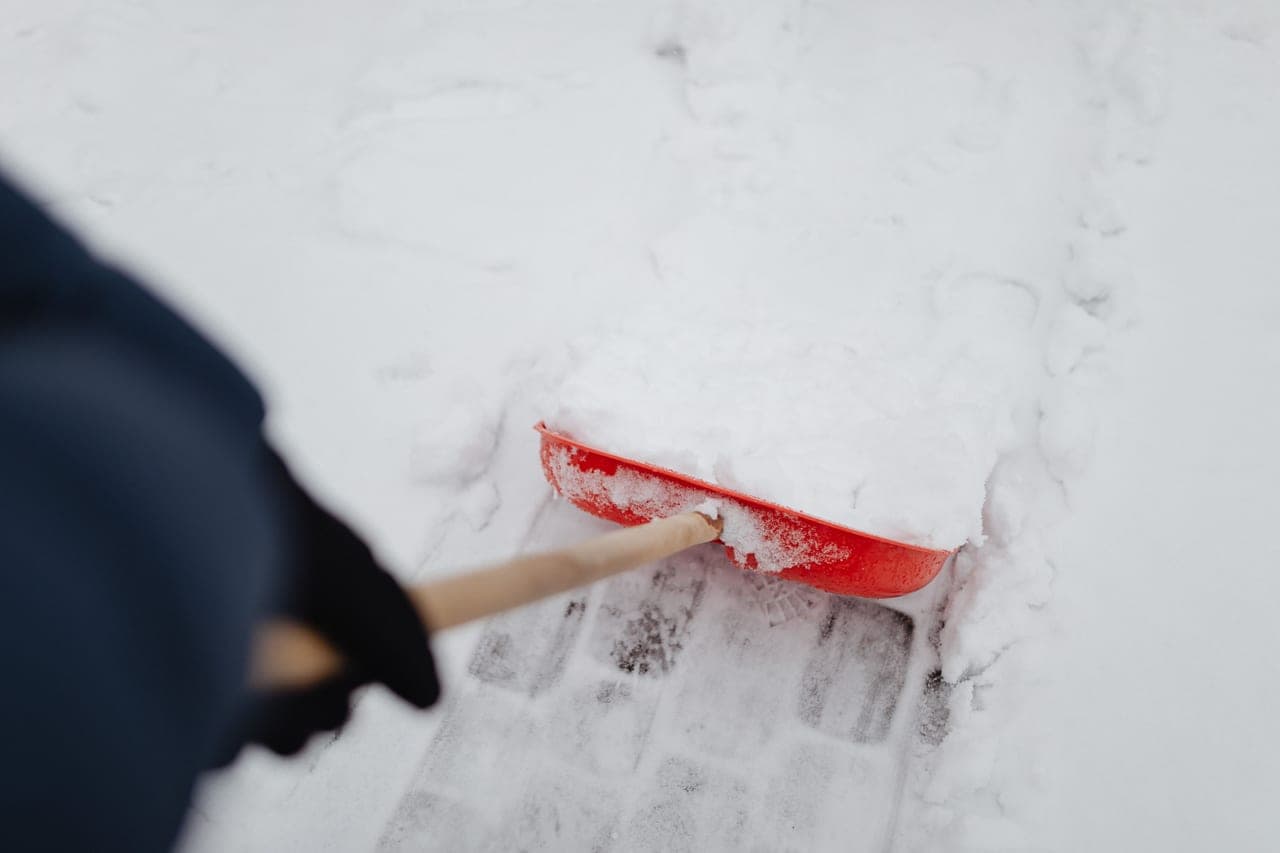
- Work in strips, pushing at an angle. Peel snow off to the side in strips rather than bulldozing the length of the drive, so the load in front of the blade never exceeds what you can move.
- Throw downwind and downhill. Both save you re-clearing.
- Leave the plow berm until the plow has been. Clearing the end of the drive before the municipal plow passes means doing it twice.
- Take the berm early once it exists. It compacts and refreezes into a slab, and that is where people get hurt.
Clear early, and clear twice
The single most effective thing you can do costs nothing. Clearing four inches twice is dramatically easier than clearing eight inches once, for two independent reasons.
First, per-lift weight scales with depth, so shallower snow means lighter lifts. Second, snow that sits compacts under its own weight and bonds to the pavement, so what was a push becomes a scrape and then a chisel job.
The same logic is why pre-treating a surface before a storm is worth so much: it prevents the bond forming at all. See when to apply ice melt.
When to stop, and when not to start
Stop immediately and seek attention for chest discomfort or pressure, breathlessness out of proportion to the effort, dizziness, nausea, or pain radiating into the arm or jaw. Those are not signs to push through.
Stop for the day at the first back pain rather than working through it, and stop if the snow has turned to refrozen crust that you are fighting rather than moving.
Do not start at all if you have a diagnosed heart condition, uncontrolled high blood pressure, or have been advised to avoid strenuous exertion. Arrange for someone else to clear the drive. That is the correct answer and it is not a failure — it is the same judgment you would apply to any other sudden heavy exertion.
Where the physical demand is the issue rather than the risk, a machine removes the lifting entirely, and a wide pusher removes most of it for far less money.
Questions people ask
Is shoveling snow dangerous?
How often should I shovel during a storm?
Should I clear the end of the driveway before or after the plow?
Who should not shovel snow?
Sources
Next stage
The lumbar half of it
Cardiac risk is one hazard; your lower back is the other. Here are the mechanics and the five changes that reduce spinal load most.
Keep goingAbout the author
Scooter M.
An enthusiast who is genuinely into this. I read the manuals, compile the published specs, and do the math on door clearances. No lab coat, no test bench, and nothing here is a product I have used - which is exactly why every claim carries a source.
Published by Slate Mill Group, with the Shovel Report team. Published August 16, 2026; last updated September 21, 2026. Editorial policy.
Read next
Best Non-Stick Fix
How to Stop Snow Sticking to Your Shovel
Why wet snow sticks, which coatings help, and the technique that matters more than any of them.
Back-Safe Technique
How to Shovel Snow Without Back Pain
The lever mechanics of shoveling, and the five changes that reduce spinal load most.
Best for Older Adults
Best Snow Shovels for Seniors
Light, long-handled and push-first shovels, with honest limits on when to stop.
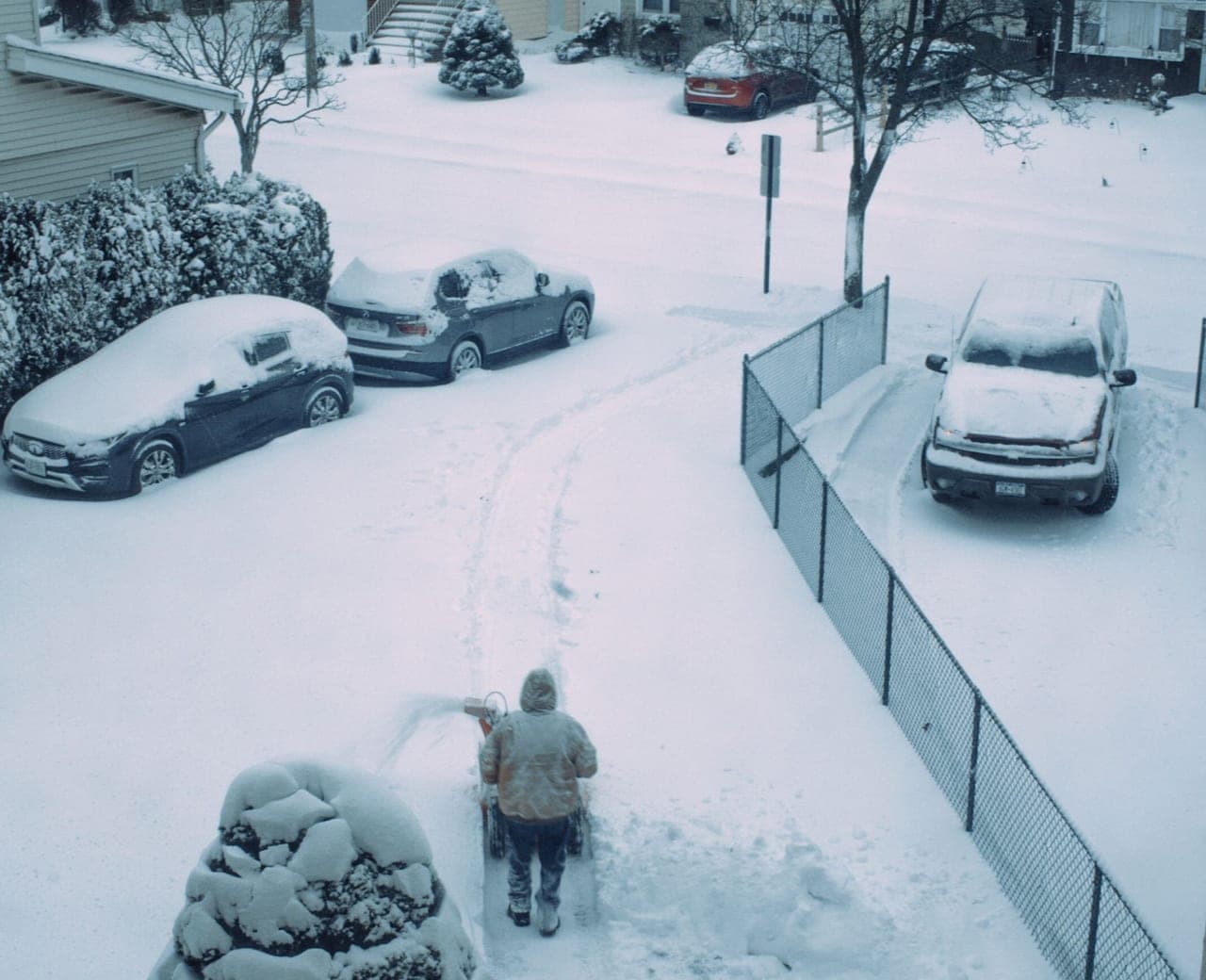
Best Pusher
Best Snow Pushers
Wide pusher blades from 27 to 42 inches, and why the widest is rarely the right buy.
Timing Guide
When to Apply Ice Melt
Pre-treat, then clear, then spot-treat — the sequence that uses least product for most effect.
Best Roof Rake
Best Roof Rakes for Snow
Reach against shingle safety — the poly-versus-aluminum blade decision, and honest weight limits.