
By Scooter M. · Last updated September 21, 2026
Shovel Report earns a commission when you buy through the links on this page, at no extra cost to you. It does not change what we recommend, and we publish a skip-this verdict on products we could otherwise earn from. Full disclosure.
Snow sticks to a shovel when wet snow meets a cold, slightly rough surface and refreezes to it. Three fixes work: coat the blade with a non-stick spray or wax before the season, keep the blade moving and throw before the load packs, and use a smooth poly or UHMW blade rather than scratched plastic or bare steel.
Why it happens at all
Snow sticks in a narrow band of conditions, which is why it seems random: it is worst at temperatures near freezing, when snow is wet enough to have liquid water at its surface, and it barely happens at all in dry, cold powder.
The mechanism is refreezing. Wet snow pressed against a blade that is colder than freezing loses heat, and the liquid film at the contact point freezes into a thin bond. The next shovelful presses onto that layer and does the same thing, so what starts as a dusting becomes a packed slab that is heavier than the snow you are trying to move.
Two surface properties make it worse. Roughness gives the ice mechanical keys to grip — which is why a scratched plastic blade sticks far worse than a new one, and why pitted steel is the worst of all. Thermal conductivity matters too: a steel blade pulls heat out of the snow faster than plastic, so it builds a bonded layer sooner.
The three fixes, in order of how much they help
1. Technique, which is free. Do not let the load sit. Snow packs onto a blade during the pause between lifting and throwing, so a smooth continuous motion collects far less than a stop-and-consider one. Tap the blade edge-down on the ground at the end of each throw. And on genuinely wet days, take smaller loads — a half-full blade thrown cleanly beats a full one that arrives with a passenger.
2. A coating, which costs about the price of lunch. A non-stick spray lowers the surface energy so the film cannot get a grip. It is genuinely effective and genuinely temporary — expect it to fade through a season and to need reapplying, and expect nothing to work perfectly in the worst wet-snow conditions.
3. The right blade, which costs the most and lasts longest. A smooth poly blade sheds snow better than steel and far better than a scratched blade of any material. UHMW — the slick white plastic used for wear strips — is the best of the common surfaces. This is the structural fix, and snow shovel blade materials compares them properly.
What about cooking spray and car wax?
Both are widely recommended online and both are worse than the purpose-made products, for different reasons.
Cooking spray works briefly — it is an oil film, and an oil film does reduce adhesion. It also oxidizes into a sticky residue, washes off within a few throws, and leaves a greasy blade that collects grit. It is the definition of a stopgap.
Car wax lasts longer than cooking spray and is a reasonable improvised option on a plastic blade. It was not formulated for sub-freezing abrasion, and it needs a clean, dry, above-freezing surface to cure properly — which means doing it in the fall, not in a storm.
Silicone spray sits between the two: cheap, effective for a short while, and thinner-lasting than a fluoropolymer coating. If you already have a can for door seals, it is worth trying before buying anything else.
Blower chutes are the same problem with a bigger cost
Wet snow bridging across a chute is the single most common complaint about single-stage and small two-stage machines, and the physics is identical: the first layer freezes onto the metal, and everything after that packs onto the first layer.
Coating the inside of the chute and the auger housing is a real mitigation, and it is why both sprays here list it. What it cannot fix is a machine being asked to take too deep a bite of heavy snow — for that, narrow the pass, keep the engine at full throttle, and let the auger clear between passes.
And never, ever clear a clog by hand. Shut the engine off, pull the plug lead, and use a clearing tool — the auger can hold tension and move when the jam releases.
How we picked
- What the coating actually is — fluoropolymer, polymer or silicone — rather than a marketing word
- Whether the maker names the surfaces it is formulated for, quoted rather than assumed
- Breadth of use: whether one can covers shovels, chutes and door gaskets or only one of them
- Durability information, and saying plainly when none is published — which is the norm here
- Whether the product leaves a residue that transfers onto a driveway or a floor
- The structural alternative: a blade that does not need a coating in the first place
We have not physically tested these products. We do not own them, we have no lab, and we do not accept free product. Everything above is compiled from published manufacturer specifications, published manuals, published standards and live retailer data - and we tell you which is which on every claim. How we pick.
Quick picks
Ranked against the criteria below. Tap a row to jump to the full write-up; the price button goes straight to Amazon.
| # | Product | Best for | Score | Price |
|---|---|---|---|---|
| 1 |  DuPont Teflon Snow and Ice Repellant, 10 oz A clear non-stick coating of Teflon fluoropolymer and silicone that the maker lists for snow blowers, shovels and door gaskets — the most broadly useful can here. | Shovels, chutes and door gaskets alike | 8.1/10 | $16.98 - View on Amazon #ad affiliate link · Price as of September 21, 2026 |
| 2 |  Stens 752-102 Snowblower Non-Stick Spray, 11 oz A non-stick polymer treatment formulated for the auger housing and chute, from an outdoor-power-equipment parts house, with a stated one-year warranty. Our skip-this pick | Auger housings and chutes specifically | 7.5/10 | $16.95 - View on Amazon #ad affiliate link · Price as of September 21, 2026 |
| 3 | 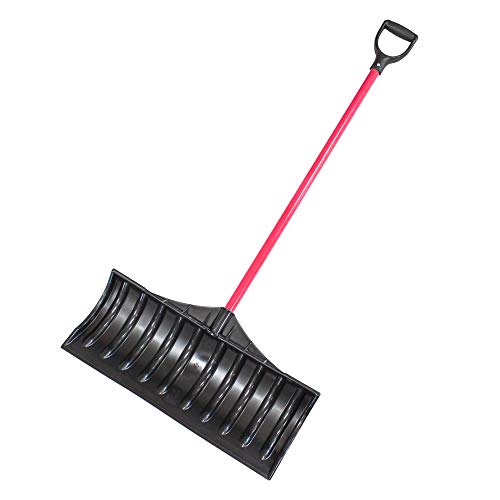 Bully Tools 92813 27-in Poly Snow Pusher A 27-inch poly scoop on a fiberglass D-grip handle — wide enough to matter, soft enough for pavers and decking. | A pusher that will not mark a surface | 8.2/10 | $51.94 - View on Amazon #ad affiliate link · Price as of September 21, 2026 |
Shovels, chutes and door gaskets alike
DuPont Teflon Snow and Ice Repellant, 10 oz
A clear non-stick coating of Teflon fluoropolymer and silicone that the maker lists for snow blowers, shovels and door gaskets — the most broadly useful can here.
Snow sticking to a shovel is not a minor irritation — it is a compounding one. A blade carrying three pounds of packed snow is a blade you are lifting three extra pounds with on every throw, and the load grows through the clear until you stop to knock it off.
A non-stick coating attacks the cause, which is friction and surface energy: snow bonds to a cold, slightly rough surface and releases from a slick one. Teflon fluoropolymer with silicone is the more durable version of that idea, and it goes on clear.
The breadth is what makes this the pick. The same can does the shovel blade, the inside of a blower chute where wet snow bridges, and the rubber door gaskets that freeze a car shut overnight — three different winter annoyances, one aerosol.
Two rules. Apply it to a clean, dry tool before the season, because it will not bond to a wet blade in a storm. And never spray it where you walk: the whole point of the product is that things slide off it.
If your shovel is steel and pitted, or plastic and scratched, the coating is a patch on a surface problem — snow shovel blade materials covers which blades shed snow without help.
What works
- One can covers the shovel, the blower chute and the car door gaskets that freeze shut
- Teflon plus silicone is a more durable combination than plain silicone spray
- Clear, so it leaves no residue to transfer onto a light-colored surface
- A named chemical brand with a published formulation type, which most non-stick sprays lack
What does not
- No published durability — nobody says how many passes or hours the coating lasts
- Wet snow will still stick once the coating wears thin, usually sooner than you expect
- Overspray on a walking surface is genuinely dangerous
- Needs a dry, clean tool to bond to, which means doing it before the season rather than mid-storm
Auger housings and chutes specifically
Stens 752-102 Snowblower Non-Stick Spray, 11 oz
A non-stick polymer treatment formulated for the auger housing and chute, from an outdoor-power-equipment parts house, with a stated one-year warranty.
Skip this one
Skip it if what you are trying to fix is a shovel. It is formulated for the auger housing and chute of a machine, the listing says so, and the DuPont can does that job as well as shovels and door gaskets for the same money. Buy the Stens can only if you are treating a blower and want a product aimed squarely at it.
Wet snow clogging the chute is the most common complaint about single-stage and small two-stage machines, and it is only partly a power problem. Snow bridges across the chute opening, packs against the housing, and the machine keeps running while throwing nothing.
A polymer coating on those internal surfaces is a real, cheap mitigation. It will not add power, but it lowers the friction that lets the first layer stick, and the first layer is what the bridge builds on.
Stens sells into the outdoor-power-equipment trade, which is the reason to trust this over an unbranded aerosol — though the listing is thin enough that we cannot tell you what the polymer is, how far a can goes, or how often to reapply.
It is also not a substitute for technique. If the chute clogs on every pass, take a narrower bite, keep the engine at full throttle, and let the auger clear itself between passes. Best snow blowers for heavy wet snow covers the machines that handle it without help.
What works
- Formulated for the specific place blowers clog — the chute and housing
- Stens is an established replacement-parts supplier for outdoor power equipment
- A stated warranty on a consumable spray is unusual
- Polymer coatings tend to outlast plain silicone on a surface taking constant abrasion
What does not
- Thin listing: no chemistry named beyond "polymer", no coverage, no durability figure
- Aimed only at the machine, where the DuPont can also does shovels and gaskets
- A coating cannot fix a chute that clogs because you are taking too deep a bite in wet snow
- Needs reapplying through the season, and nobody says how often
A pusher that will not mark a surface
Bully Tools 92813 27-in Poly Snow Pusher
A 27-inch poly scoop on a fiberglass D-grip handle — wide enough to matter, soft enough for pavers and decking.
The single largest reduction in shoveling effort available to a homeowner is not an ergonomic handle. It is not lifting at all. A pusher slides the snow off the surface instead of picking it up, which removes the entire lift-and-throw motion that hurts people.
The constraint is that pushing only works while the snow is loose and while you have somewhere to push it to. On a 60-foot driveway you are moving snow 30 feet, and at some point the windrow in front of the blade is bigger than the blade. The technique is to push at an angle across the drive, peeling snow to the side in strips, not to bulldoze the whole length.
Poly is the right material here specifically because it is soft. Nothing on this tool can scratch a paver or a composite board, which is why it is our default recommendation on paver driveways and on decks.
It cannot chop. When the plow berm freezes you will need a steel edge or an ice chisel — the pusher will ride over the top of it.
What works
- No metal edge means no scratches on pavers, sealed asphalt or composite decking
- 27 inches clears a two-car driveway in far fewer passes than an 18-inch shovel
- Fiberglass handle survives the leverage a wide pusher generates
What does not
- A pusher does not lift — you still need a shovel for the plow ridge
- Poly will not cut refrozen crust
- Wide blades wander on an uneven surface
Applying a coating so it actually lasts
- Do it in the fall, before the first storm, indoors and above freezing. None of these bond to a wet blade in a snowstorm.
- Clean the blade first. Salt, grit and old residue stop the coating keying to the surface. Warm soapy water, then dry it completely.
- Scuff nothing. Smoothness is the point; do not sand a plastic blade to "help it key".
- Spray a thin, even film and let it flash off. Two thin coats beat one thick one, which stays tacky and collects grit.
- Reapply through the season. Every few storms is realistic, and after any wash.
- Keep it off the handle — a slick shaft is genuinely dangerous when you are throwing a loaded blade.
When the answer is a different tool entirely
- Wet snow, every storm, on a big driveway. No coating changes the fact that you are lifting water. Snow shovels for heavy wet snow is the tool page; a machine is the real answer.
- A blade that is scratched white all over. Coatings sit on top of damage rather than filling it. Replace it.
- Bare, pitted steel. Steel conducts heat away fastest and holds ice in the pits. A poly or UHMW-edged blade solves it structurally.
- Pushing rather than lifting. Snow cannot pack onto a blade you never lift — a pusher sidesteps the whole problem on a flat drive.
And if the reason you are researching this is that shoveling has started to hurt, the sticking snow is a symptom of a heavier problem: how to shovel snow without hurting your back is the page to read next.
Questions people ask
How do you keep snow from sticking to a shovel?
Does cooking spray stop snow sticking to a shovel?
Why does snow stick to my shovel but not my neighbor's?
Can you use WD-40 on a snow shovel?
What stops snow sticking in a snow blower chute?
Do you need to reapply non-stick shovel spray?
Sources
Next stage
The permanent fix
Coatings wear off. A blade material that sheds snow on its own does not — here is how poly, steel and UHMW compare.
Keep goingAbout the author
Scooter M.
An enthusiast who is genuinely into this. I read the manuals, compile the published specs, and do the math on door clearances. No lab coat, no test bench, and nothing here is a product I have used - which is exactly why every claim carries a source.
Published by Slate Mill Group, with the Shovel Report team. Published September 21, 2026; last updated September 21, 2026. Editorial policy.
Read next
Blade Material Guide
Snow Shovel Blade Materials, Compared
Poly, aluminum-edged, UHMW and steel blades ranked on snow release, durability and surface safety.

Best for Wet Snow
Best Snow Shovels for Heavy, Wet Snow
Wet, dense snow changes the math — smaller blades, stiffer shafts, harder edges.
Safe Shoveling
How to Shovel Snow Properly
Cardiac and lumbar risk, the sequence that halves the work, and when to stop entirely.

Best Snow Blower Cover
Best Snow Blower Covers
Covers judged on fabric weight, published dimensions, fastening system and whether they vent.
Best Pusher
Best Snow Pushers
Wide pusher blades from 27 to 42 inches, and why the widest is rarely the right buy.