By Scooter M. · Last updated September 6, 2026
Shovel Report earns a commission when you buy through the links on this page, at no extra cost to you. It does not change what we recommend, and we publish a skip-this verdict on products we could otherwise earn from. Full disclosure.
Buy the shortest rake that reaches your eave, with a poly blade rather than aluminum, and use it standing on the ground. Reach is a lever: every extra foot multiplies the load on your shoulders. A metal blade cuts packed snow better and strips the mineral granules that protect asphalt shingles — which is the roof's wear layer, not a cosmetic detail.
Why anyone rakes a roof at all
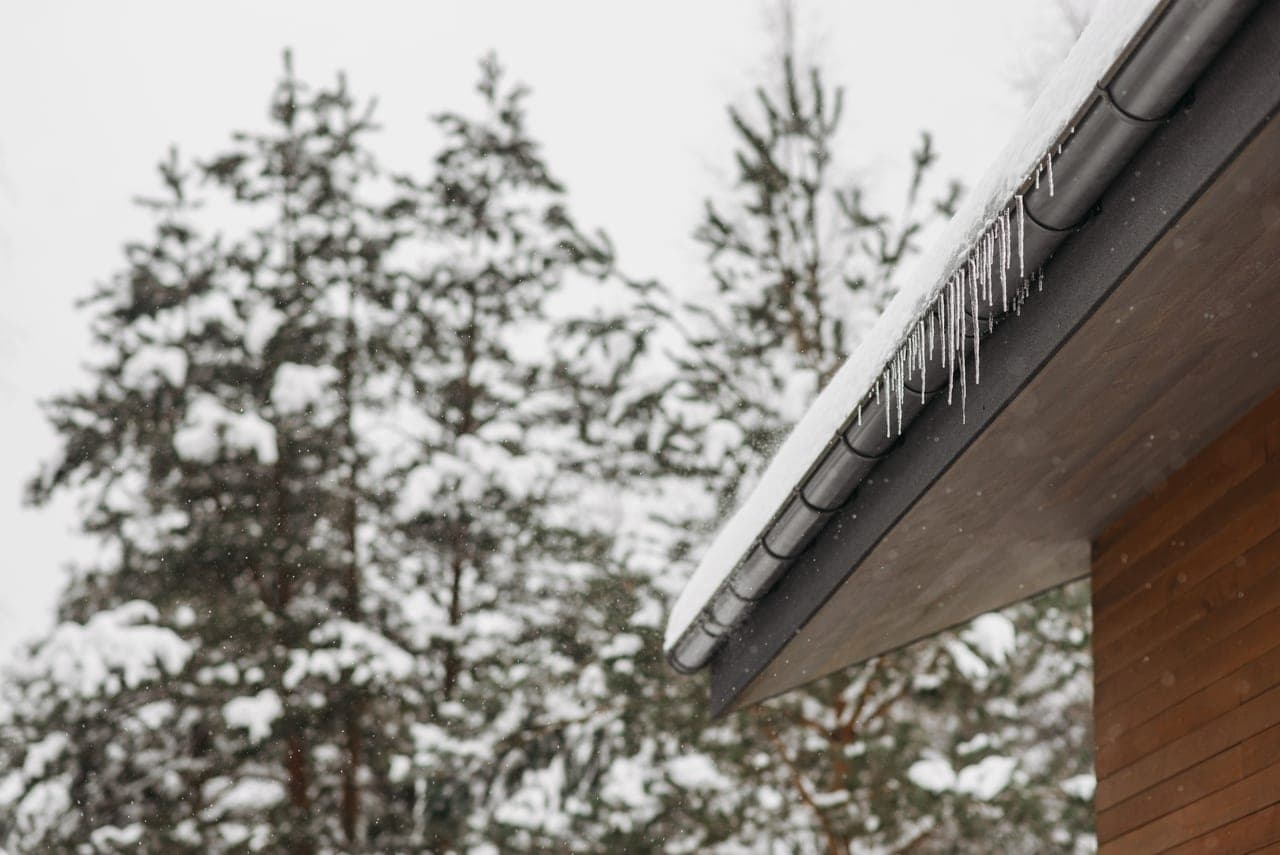
Not for the look of it. The two reasons are structural load and ice dams. Snow is heavy, wet snow is much heavier, and a roof carries a design load it was engineered for and not much more. The second reason is the one most people meet first: an ice dam forms when heat escaping through the roof melts snow, the meltwater runs to the cold eave and refreezes there, and the resulting ridge backs water up under the shingles.
Clearing the lower few feet of roof removes the material that feeds the dam. It does not fix the underlying cause, which is heat loss through the ceiling into the attic — that is an insulation and air-sealing problem, not a rake problem. We are not going to pretend a rake solves it; it manages the symptom while you fix the building.
The blade decides whether you damage the roof
This is the same argument this site makes about driveways, transplanted: the softer edge is the one that does not wreck the surface. On a driveway the surface is concrete or pavers. On a roof it is asphalt shingle, and shingles are protected by a layer of mineral granules bonded to the surface.
Those granules are the shingle's wear layer and its UV protection. A metal blade dragged across them under pressure takes granules with it. The damage is cumulative, invisible from the ground, and shortens the roof's life — which is a far more expensive outcome than the snow was ever going to be.
So the default is a poly blade, accepting that it will skate over crusted snow rather than cut it. Aluminum is the specialist choice for genuinely packed or refrozen snow, used to pull material down the slope rather than to scrape the shingle clean. Our blade materials comparison works through the same trade at ground level.
Roof rake blade material against roofing
How we picked
- Blade material first, because it decides whether the tool damages the roof it is clearing
- Published reach, checked against what a normal eave actually needs rather than bought at maximum
- Published weight — the entire load is held overhead at the end of a long lever
- Whether a debris slide is included, which decides if the snow lands on you or beside you
- Collapsed length, because a 21-foot tool that does not shorten is a storage problem all summer
We have not physically tested these products. We do not own them, we have no lab, and we do not accept free product. Everything above is compiled from published manufacturer specifications, published manuals, published standards and live retailer data - and we tell you which is which on every claim. How we pick.
Quick picks
Ranked against the criteria below. Tap a row to jump to the full write-up; the price button goes straight to Amazon.
Shingle-safe reach
Snow Joe RJ204M Telescoping Roof Rake
A poly blade on a 21-foot telescoping handle — the shingle-safe choice, and the lightest published weight of the roof rakes here at 4.8 lb.
The single decision on a roof rake is blade material, and it is the same argument this site makes about driveways: the softer edge is the one that does not damage the surface. On a roof the surface is asphalt shingle, and shingles wear by losing their mineral granules. A metal blade dragged across them takes granules with it, and granule loss is what shortens a roof's life.
This is the poly-bladed rake in Snow Joe's line, and that is the reason to choose it. It gives up some scraping bite against packed or frozen snow, which is a real cost — but a roof rake is not supposed to scrape a roof clean. It is supposed to remove the mass of snow that is loading the structure and leave the last inch alone.
The other spec that matters is the one people ignore until they are holding it: weight. At a published 4.8 pounds this is the lightest rake here, and every ounce is held overhead at the end of a 21-foot lever. A pound of difference at the head end is not a pound of difference in your shoulders.
It has no debris slide, so the snow you pull comes down more or less on top of you. Stand out of the fall line, work in strips, and never rake a roof while standing on a ladder — the whole point of a 21-foot handle is that your feet stay on the ground.
What works
- A poly blade cannot tear asphalt shingle granules the way a metal edge can
- 4.8 lb is the lightest published weight here, and weight is what you hold overhead
- 27 ft of stated overhead reach covers a normal two-story eave from the ground
What does not
- Poly gets more brittle as temperature falls, which is exactly when you use it
- No debris slide, so snow comes down on you rather than sliding clear
- Telescoping joints are the usual failure point on every rake in this class
Getting the snow off you
Snow Joe RJ207M Roof Rake with Debris Slide
26 feet of stated reach plus a 20-foot debris slide, so the snow travels down the chute instead of onto your head.
Everyone who has used a plain roof rake has had the same experience: you pull, the snow releases all at once, and it lands on you. A debris slide is a length of sheeting that hangs below the head and guides the snow down and out, and it is the difference between a job you finish and one you abandon after two pulls.
Snow Joe publishes 26 feet of reach and a 20-foot slide for this model. The reach figure matters if you have a taller single-story eave or a two-story wall you are working from the ground — the 21-foot rakes run out before some rooflines do.
The listing does not publish a weight or a blade width, which is a real gap on a tool you hold above your head. Treat the missing weight as the reason to buy the lighter rake if your roof is within reach of it: on a roof rake, published weight is the spec that predicts whether you will actually finish.
As with every rake here, this is a ground tool. Getting on a ladder or the roof itself to use it defeats the entire purpose and is where roof-clearing injuries come from.
What works
- The 20-foot slide is the feature that separates a pleasant job from a miserable one
- 26 ft of stated reach handles a taller eave than the 21-foot rakes
- Snow lands away from you rather than down your collar
What does not
- Neither weight nor blade width is published on the listing we read
- A slide adds bulk and one more thing to assemble in the cold
- More reach means more leverage against your shoulders at full extension
The tallest reach here
Snow Joe RJ208M Roof Rake, 28 ft
28 feet of stated reach across four adjustable extension poles — the longest on this page, and the most leverage working against you.
Reach is the spec people shop on and the one that punishes them. A roof rake is a lever with the load at the far end, so the force your shoulders and wrists resist grows with every pole you add. At 28 feet — the longest stated figure here — that lever is substantial even before there is snow on the blade.
The sectional design is the mitigation, and it is a good one. Four adjustable poles mean you can assemble only as much rake as the roofline actually needs: run two poles for a low eave and add the rest for the high wall. Buying long does not force you to use long.
As with the RJ207M, Snow Joe does not publish a weight on the listing we read. On a 28-foot tool that is the omission that matters most, and we are not going to estimate it.
Buy this one only if you have measured and the shorter rakes genuinely do not reach. Extra reach you do not need is extra leverage against you on every pull, and the honest default for most houses is the shortest rake that gets to the eave.
What works
- 28 ft is the longest stated reach of the rakes we track
- Sectional poles let you run it short for a low eave and long for a high one
- Includes the 20-foot debris slide
What does not
- Every foot of extension multiplies the load on your shoulders and wrists
- Four poles is four joints, and joints are where these tools fail
- No published weight, which matters more here than on any shorter rake
Packed snow and ice dams
Snow Joe RJ205M 2-in-1 Roof Rake
An aluminum 6 x 25-inch blade on the same 21-foot Twist-N-Lock handle — more bite on packed snow, and a real risk to shingle granules.
Skip this one
Skip the aluminum blade if your roof is asphalt shingle and you only ever face fresh, light snow. You are buying cutting power you do not need and accepting granule risk to get it — the poly-bladed version does that job without the downside.
This is the same handle as the poly RJ204M with an aluminum head bolted to it, and the whole buying decision sits in that swap. Snow Joe publishes the blade as 6 by 25 inches and the assembled weight as 5.7 pounds against the poly model's 4.8.
What the metal buys you is bite. Snow that has thawed and refrozen into a crust, or that has been sitting long enough to compact under its own weight, is a job a poly blade will slide across. An aluminum edge cuts into it.
What it costs you is the roof. Asphalt shingles are protected by a mineral granule layer, and that layer is what a metal edge scrapes off when you press. Granule loss is cumulative and invisible from the ground until it is not. If you buy this, use it to pull snow down the slope rather than to scrape the shingle clean, and accept leaving the last inch.
The 6.2-foot collapsed length is worth noting for storage — a 21-foot rake that does not collapse is a garage problem all summer. And the standing rule for every tool on this page applies: rake from the ground, never from a ladder.
What works
- Aluminum cuts packed and partly refrozen snow that a poly blade skates over
- Published handle range of 6.2 to 21 ft, so it collapses small enough to store
- The 6-inch blade depth takes a meaningful bite per pull
What does not
- A metal edge on asphalt shingles risks granule loss — the roof's wear layer
- 0.9 lb heavier than the poly RJ204M, and that weight is overhead
- Aggressive enough to catch a lifted shingle edge if you rake upward
Reach is a lever, not a feature
Reach is what people shop on and it is the spec that punishes them. A roof rake holds its load at the far end of a long pole, so the force at your hands scales with how far out that load sits. At 28 feet the lever is substantial before there is any snow on the blade at all.
The practical method is to measure rather than guess. Stand where you will actually work, and estimate the distance from your hands to the highest point you need to touch. Most single-story eaves are reachable with a 21-foot rake; two-story walls are where the 26- and 28-foot models earn their place.
Then buy the shortest rake that clears that number. Sectional models help here — running two poles instead of four for a low eave gives you the short tool and the long one in the same purchase.
The safety rule that is not negotiable
- Never touch a power line. Aluminum rakes conduct, and a service drop into the house is often at eave height. Look up before you extend.
- Stand out of the fall line. Snow releases all at once, and without a debris slide it lands where you are standing.
- Work in strips, from the edge upward. Pulling from the bottom of the slope lets the snow above slide into the space you made.
- Leave the last inch. Trying to scrape a roof bare is exactly how blades meet shingles.
- Stop in high wind or if there is ice overhead. Neither is worth it.
When a rake is the wrong answer
If snow is regularly loading your roof to the point of worry, or ice dams form every single winter in the same place, the rake is treating a symptom. Persistent ice dams are a heat-loss problem: warm air leaking into the attic melts snow from below. Insulation and air sealing fix that permanently; raking does not.
And if the roof is steep, tall or complicated, this is legitimately a job to hire out. There is no rake on this page worth a fall from a ladder.
Questions people ask
Will a roof rake damage my shingles?
What length roof rake do I need?
Can I use a roof rake from a ladder?
Do I need to clear the whole roof?
Will raking snow off my roof stop ice dams?
Sources
Next stage
The same argument at ground level
Poly against metal is the decision on a roof and on a driveway alike. Here is how the four blade materials behave on every surface you own.
Keep goingAbout the author
Scooter M.
An enthusiast who is genuinely into this. I read the manuals, compile the published specs, and do the math on door clearances. No lab coat, no test bench, and nothing here is a product I have used - which is exactly why every claim carries a source.
Published by Slate Mill Group, with the Shovel Report team. Published September 6, 2026; last updated September 6, 2026. Editorial policy.
Read next
Blade Material Guide
Snow Shovel Blade Materials, Compared
Poly, aluminum-edged, UHMW and steel blades ranked on snow release, durability and surface safety.
Best for Cars
Best Snow Removal Tools for Cars
Foam versus bristles for paint safety, plus the reach a truck roof actually needs.
Safe Shoveling
How to Shovel Snow Properly
Cardiac and lumbar risk, the sequence that halves the work, and when to stop entirely.
Best Pusher
Best Snow Pushers
Wide pusher blades from 27 to 42 inches, and why the widest is rarely the right buy.