By Scooter M. · Last updated September 21, 2026
Shovel Report earns a commission when you buy through the links on this page, at no extra cost to you. It does not change what we recommend, and we publish a skip-this verdict on products we could otherwise earn from. Full disclosure.
A snow blower cover protects a machine through the eight months it is not used. Buy on four things: fabric weight (600D minimum, 900D or better if it lives outdoors), published length, width and height rather than a diagonal, a fastening system with straps rather than elastic alone, and vents — because the machine always goes away damp.
What you are actually protecting against
Not rain. The machine spent all winter in falling snow and survived it. The damage happens in storage, and it comes from four places.
- Trapped moisture. A blower put away wet, then covered, spends the summer in its own humidity. That is how augers rust and scraper bars pit.
- UV. Sunlight through a garage window or on an open carport fades and embrittles the chute plastics and the control cables' sheathing over a few seasons.
- Dust and grit, which settles into the auger bearings and the chute rotation ring.
- Rodents. A quiet machine under a loose cover is an attractive place to nest, and mice eat wiring and fuel lines.
Notice that the first of those is made *worse* by a cover — specifically by a sealed one. That is why ventilation is on the criteria list and not a nice-to-have.
Denier is the only comparable number
Fabric weight is quoted in denier, written as 600D, 900D or 1200D. It measures yarn thickness, and it is the closest thing this category has to an objective durability figure.
What the D number means in practice
Ignore layer counts and "lasts 2 to 3 times longer" claims. Neither has a method behind it, and none of the makers here publish one.
Fit: measure the machine, not the box
Snow blowers are awkward shapes and the dimension people get wrong is height, because the chute stands up.
Measure three things with the machine parked as it will be stored: overall length from the auger housing to the back of the handles, width across the housing, and height to the top of the chute. Then compare against a cover that publishes all three. A cover quoted only as a diagonal, or as "fits up to 70 inches", is telling you almost nothing.
Oversizing is not free either. Surplus fabric flaps in wind, and flapping is what wears covers out at the contact points.
Fastening, and why elastic alone is not enough
Covers rarely fail in the middle of the sheet. They fail at the corners, after a season of being lifted and dropped by gusts.
An elastic shock cord around the hem is the minimum and is fine in a sheltered spot. Adjustable side straps with buckles are meaningfully better, because they take the load into webbing instead of into the fabric and let you tension the cover rather than hoping it holds.
How we picked
- Published fabric weight in denier, preferred over layer counts and lifespan multiples
- Published length, width and height — not a diagonal measurement alone
- Fastening system: cinch cord at minimum, straps and buckles preferred
- Ventilation, because the machine is always put away damp and a sealed cover holds that moisture against steel
- Reflective detail, for a machine stored where someone could reverse into it
- Whether a storage bag is included, which is what stops the cover living in a heap
We have not physically tested these products. We do not own them, we have no lab, and we do not accept free product. Everything above is compiled from published manufacturer specifications, published manuals, published standards and live retailer data - and we tell you which is which on every claim. How we pick.
Quick picks
Ranked against the criteria below. Tap a row to jump to the full write-up; the price button goes straight to Amazon.
| # | Product | Best for | Score | Price |
|---|---|---|---|---|
| 1 |  GOTRUTH Snow Blower Cover, 900D, Strapped and Vented 900D Oxford with dual vents, a cinch cord *and* adjustable side straps with buckles — the most securely fastened cover here, in the largest published size. | Windy, exposed storage | 8.6/10 | $32.99 - View on Amazon #ad affiliate link · Price as of September 21, 2026 |
| 2 |  WardWolf Snow Blower Cover, 1200D, Vented The heaviest fabric here at 1200D, with two side vents, an elastic hem and a reflective strip — the best-specified cover on this page, and the cheapest of the four. | Outdoor storage in wind, where ventilation matters | 8.5/10 | |
| 3 | 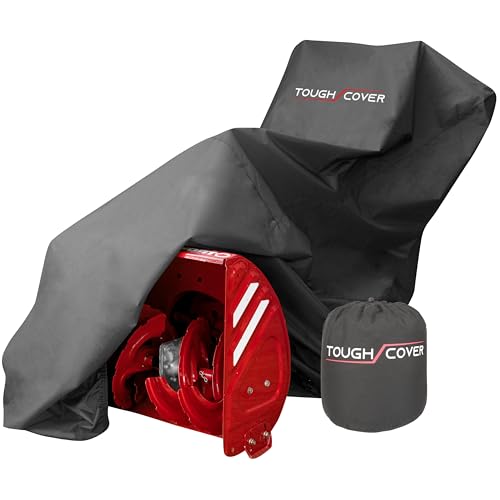 Tough Cover Snow Blower Cover, Premium 600D, Multi-Brand Fit 600D marine-grade fabric at a published 54 by 30 by 19 inches with an integrated tightening system — the cover here that states the size it actually fits. | A two-stage machine stored under a lean-to | 7.9/10 | $42.95 - View on Amazon #ad affiliate link · Price as of September 21, 2026 |
| 4 |  Tough Cover Snow Blower Cover, Extreme 600D, Standard Fit The bigger Tough Cover, stated to take snow blowers up to 70 inches, with double-stitched seams and a storage bag. Our skip-this pick | Large machines up to 70 inches | 7.3/10 | $59.95 - View on Amazon #ad affiliate link · Price as of September 21, 2026 |
Windy, exposed storage
GOTRUTH Snow Blower Cover, 900D, Strapped and Vented
900D Oxford with dual vents, a cinch cord *and* adjustable side straps with buckles — the most securely fastened cover here, in the largest published size.
Covers fail in wind, not in rain. The fabric is rarely the thing that gives out first — the stitching at the corners does, after a season of the cover being lifted and dropped a thousand times by gusts.
This one is built against that failure. A cinch cord pulls the hem under the machine, adjustable side straps take the load off the fabric, and buckles let you tension it rather than hoping elastic holds. On an exposed driveway that combination is the difference between a cover and a kite.
It is also the largest here — 55 by 35 by 56 inches — which suits a big two-stage with the chute up, and is too much cover for a small single-stage. Surplus fabric flaps, and flapping is what wears covers out, so size it honestly.
Along with the WardWolf it is one of only two covers on this page with vents, and that is the feature worth paying for. Machines go under covers wet; the cover's job is to shed the weather without sealing yesterday's slush against the steel.
What works
- Straps and buckles plus a cinch cord — the most complete fastening system on this page
- 80-inch diagonal and 35 inches of width make it the roomiest cover here
- Vented and heavy at 900D: the combination most covers make you choose between
- Reflective webbing on a cover parked near a driveway is a genuine safety detail
What does not
- Roomy means loose on a compact single-stage, and loose covers wear at the contact points
- 4.28 pounds of cover is heavy to wrestle into place one-handed in the cold
- The maker's claim of two to three times the life of ordinary covers has nothing behind it we can check
- No storage bag listed
Outdoor storage in wind, where ventilation matters
WardWolf Snow Blower Cover, 1200D, Vented
The heaviest fabric here at 1200D, with two side vents, an elastic hem and a reflective strip — the best-specified cover on this page, and the cheapest of the four.
If you only read one specification on a snow blower cover, read the fabric weight. Denier — the D number — is a measure of yarn thickness, and it is the difference between a cover that survives three winters against a wall and one that shreds at the corners in one.
At 1200D this is the heaviest here, and it is also the cheapest of the four, which is unusual enough to be worth saying plainly.
The vents are the other reason it wins. Every argument about waterproof fabric misses the real failure mode: the water that matters is already on the machine when you cover it. A sealed cover holds that against the auger and the chute all summer; two side vents let it evaporate.
What you give up is the fastening. An elastic shock cord around the hem is fine in an ordinary winter and less convincing in an exposed, windy spot than buckles and straps. If your machine sits on a corner that funnels wind, the strapped covers are worth the trade.
What works
- 1200D is twice the fabric weight of the 600D covers and it shows in how it hangs
- Vents are the feature that actually protects the machine, by letting trapped moisture out
- Full dimensions published, including height — the figure that catches people out
- Reflective strip, for a machine parked where someone could back into it
What does not
- An elastic hem alone holds less well in wind than a strap-and-buckle system
- Heavy fabric is stiff in deep cold and awkward to refit at -10°F
- "5-layer" is a construction claim with no independent meaning
- No storage bag listed
A two-stage machine stored under a lean-to
Tough Cover Snow Blower Cover, Premium 600D, Multi-Brand Fit
600D marine-grade fabric at a published 54 by 30 by 19 inches with an integrated tightening system — the cover here that states the size it actually fits.
A snow blower spends about four months working and eight months sitting, and the sitting is what rusts the auger, perishes the fuel lines and fades the plastics. A cover is the cheapest maintenance in the category.
Tough Cover's premium version is the one to buy if your machine lives outdoors under a lean-to or against a wall, because it does the two things that decide whether a cover survives: heavy enough fabric, and a way to cinch it tight. A loose cover flogs itself to pieces against the handlebars in a week of wind.
The size — 54 by 30 by 19 inches — is worth measuring against your own machine before ordering. A 28-inch two-stage with the chute standing up is taller than people estimate, and forcing a short cover over it puts all the load on the seams.
The gap in the specification is ventilation. No vents are listed, and a sealed cover over a machine that went away wet holds that water against bare metal all summer. If you cover a damp blower, this is not the cover for you; the vented ones below are.
What works
- Publishes real dimensions rather than a diagonal measurement, so you can check it against your machine
- 600D marine-grade is the right weight for a cover that lives outdoors all season
- A tightening system is what stops a cover becoming a sail in the first gale
- UV protection matters more than people expect — a cover left on through summer is what usually kills it
What does not
- No vents listed, and an unvented cover on a machine put away damp traps that moisture
- 54 inches is a snug fit on a 28-inch two-stage with the chute upright
- No reflective detail, which the cheaper covers here include
- Costs more than heavier-fabric covers from marketplace brands
Large machines up to 70 inches
Tough Cover Snow Blower Cover, Extreme 600D, Standard Fit
The bigger Tough Cover, stated to take snow blowers up to 70 inches, with double-stitched seams and a storage bag.
Skip this one
The most expensive cover here and the least specified. "Fits snow blowers up to 70 inches" is a single capacity figure with no length, width or height published, and there are no vents listed — so on a machine put away damp, which in February is every machine, it seals the moisture in. If you need a large cover, the GOTRUTH is bigger on published numbers, vented, and cheaper.
Big two-stage and three-stage machines are the ones most likely to live outside — they are too large for a crowded garage — and they are exactly the machines most covers do not fit.
This is the large-format answer, stated to take blowers up to 70 inches with the same 600D fabric and double-stitched seams as the premium cover.
The specification is thinner than we would like: one capacity figure and no width or height. If your machine is genuinely large, measure it with the chute in its stored position and compare against the 70-inch claim before ordering.
The same ventilation caveat applies. If the machine goes under the cover wet — and after a February clear it always does — open it up on the next dry day rather than leaving the moisture sealed in until spring.
What works
- A stated 70-inch capacity covers the big three-stage machines that most covers will not
- Double-stitched seams are where cheap covers fail first
- Same fabric weight as the premium version, in a larger cut
- Fits mowers too, so it earns its keep out of season
What does not
- "Up to 70 inches" is one dimension — length, width and height are not published
- Surplus fabric on a small single-stage machine flaps and wears
- No vents listed here either
- The most expensive cover on this page
Storing the machine properly before you cover it
- Run it dry or stabilize the fuel. Gasoline left untreated in a carburetor over summer is the single most common reason a machine will not start in November.
- Let it cool and dry completely. Covering a warm, wet machine is how you create the humidity problem the cover then seals in.
- Clear packed snow from the housing and chute, which otherwise melts into a puddle under the cover.
- Wipe the auger and scraper bar, and give bare metal a light oil or a spray of the non-stick treatment you already own.
- Grease the zerks if the machine has them, and check the shear pins while you are there — see snow blower shear pins.
- Then cover it, chute down if it folds, with the vents clear.
Indoors, outdoors, and what changes
A machine inside a dry garage barely needs more than a dust sheet, and a 600D cover is generous. What it does need is protection from the grit and drips of a working garage, and from whatever gets stacked against it.
A machine outdoors under a lean-to needs the heavy fabric, the straps and the vents, and it needs the cover checked after storms. A machine fully exposed needs all of that plus acceptance that a cover is a compromise — no cover keeps a snow blower in the condition a garage does, and what a snow blower costs to own is worth reading before you let one live outside.
Questions people ask
Do snow blower covers cause rust?
What size snow blower cover do I need?
What is a good fabric weight for a snow blower cover?
Should I cover a snow blower stored in a garage?
Can I use a lawn mower cover on a snow blower?
How do I stop mice nesting in my snow blower?
Sources
Next stage
What the machine really costs
A cover is a small line in a bigger budget. Here is the whole cost of owning a snow blower, including the parts that wear.
Keep goingAbout the author
Scooter M.
An enthusiast who is genuinely into this. I read the manuals, compile the published specs, and do the math on door clearances. No lab coat, no test bench, and nothing here is a product I have used - which is exactly why every claim carries a source.
Published by Slate Mill Group, with the Shovel Report team. Published September 21, 2026; last updated September 21, 2026. Editorial policy.
Read next
Ownership Cost
What a Snow Blower Actually Costs
Purchase tiers, running costs and maintenance — the full ownership picture for both fuels.
Best Shear Pin Kit
Snow Blower Shear Pins
How to identify the right shear pin, and why the cheap upgrade to a stronger bolt is a mistake.
Best Skid Shoes
Best Snow Blower Skid Shoes
Skid shoes judged on material, published geometry and whether the bolts are in the box.
Best Non-Stick Fix
How to Stop Snow Sticking to Your Shovel
Why wet snow sticks, which coatings help, and the technique that matters more than any of them.