By Scooter M. · Last updated September 26, 2026
Shovel Report earns a commission when you buy through the links on this page, at no extra cost to you. It does not change what we recommend, and we publish a skip-this verdict on products we could otherwise earn from. Full disclosure.
Snow blower maintenance is five jobs: treat or replace the fuel, change the oil, check the spark plug, check the wear parts (skid shoes, shear pins, belts, paddles), and grease what the manual says to grease. Stale fuel causes most no-starts, and stabilizer costs about the price of a takeout meal. Electric machines need almost none of this.
The fuel is the problem
If you remember one thing: a gas snow blower that will not start in November almost always failed in July. Gasoline oxidizes as it sits, the volatile fractions that make an engine easy to start evaporate away, and what remains dries into a varnish inside the carburetor that blocks passages the width of a pin.
Ethanol makes that worse, because it draws water out of humid air and can separate out of the fuel in a tank that sits for a season. A snow blower is the worst case for this: it is used a handful of times, then left full for eight months.
There is also a fuel you must not put in it at all. The EPA's E15 guidance is explicit about where that blend may be used: among the engines it lists as unable to use E15 are "Engines in nonroad equipment, such as lawnmowers and chain saws". A snow blower is the same class of nonroad equipment as the examples the EPA names, so treat E15 pumps as off-limits and use regular E10 or ethanol-free fuel.
You have two honest options, and they are the first two picks below: treat pump gas with a stabilizer, or buy fuel that has no ethanol in it to begin with. Which one depends entirely on how much fuel you actually burn.
The five jobs, and when to do them
What a gas snow blower needs, and when
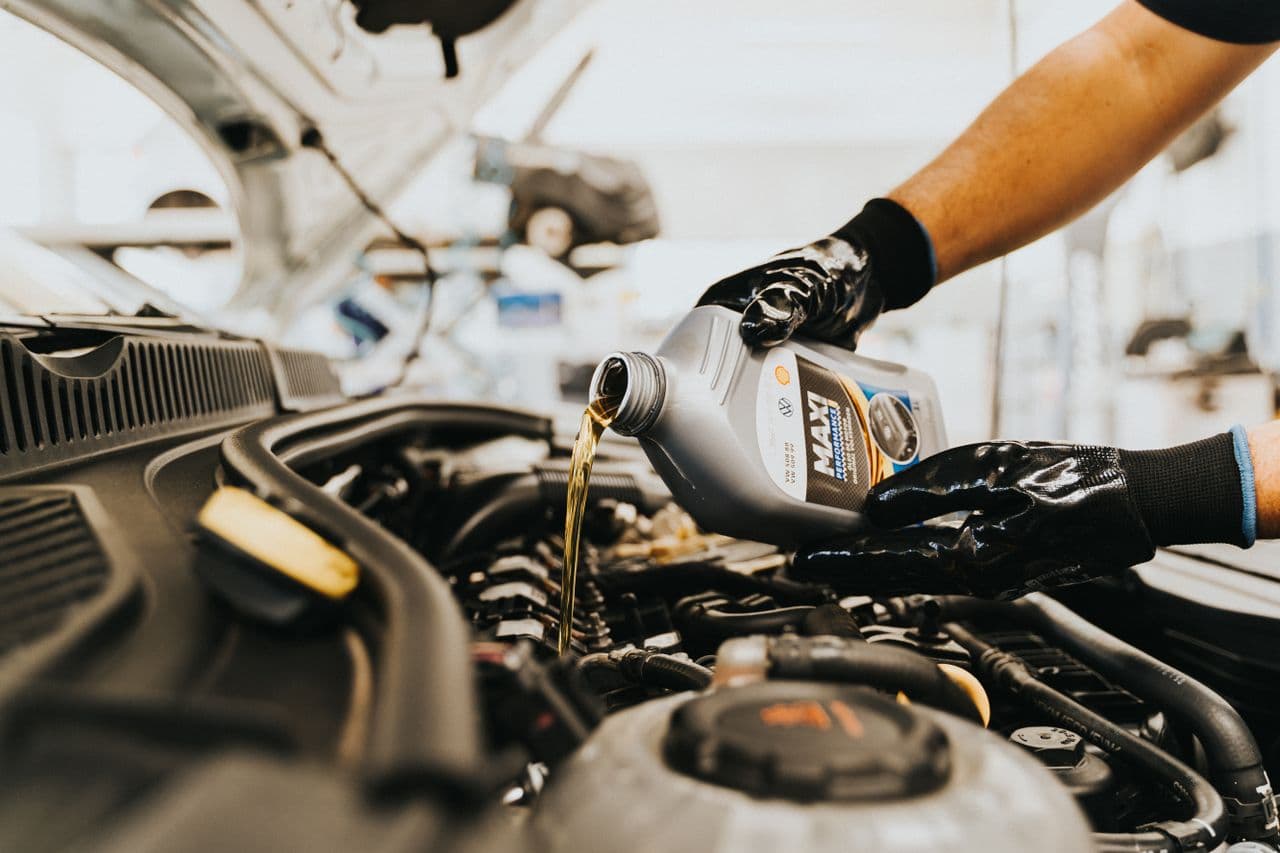
Oil: why 5W-30 and not what is on the mower shelf
Oil viscosity is two numbers and for this machine the first one carries the weight. The W figure describes cold behavior, and a snow blower is an engine that is always started cold, frequently below 20°F, and often shut off before it is properly warm.
That is why the oils sold specifically for snow throwers are 5W-30 — Husqvarna's, Ariens', Briggs & Stratton's and MTD's snow-thrower oils are all that weight, where mower shelves are full of 10W-30 and straight SAE 30. Thicker cold oil means slower cranking and a first minute of running before the oil has reached everywhere it should.
Your manual remains the authority on viscosity and capacity, and plenty of manuals accept ordinary automotive 5W-30 of the right API rating, which costs less. What matters is the cold rating, not the label on the bottle.
The wear parts worth checking before the first storm
These are the parts that quietly decide whether the machine clears properly, and they are all cheap next to the damage they prevent.
- Skid shoes. They set how high the auger housing rides, and they wear down. If the scraper bar is touching pavement at the lowest useful setting, they are finished — snow blower skid shoes covers material and fitment.
- Shear pins. Keep spares taped to the machine, and use the grade the maker specifies. A stronger bolt is not an upgrade, it is a gearbox risk — snow blower shear pins explains why.
- Belts. They glaze and stretch. A machine whose auger slows under load, or stops throwing while the engine keeps revving, is usually telling you the belt is done. Belts are model-specific — buy by part number from the manual.
- Paddles and scraper bar (single-stage). The rubber paddles are what actually move the snow and they wear against pavement. When the machine stops clearing to the surface, that is paddle wear, not lost power.
- Tires. Check pressure before the season; an underinflated tire costs you traction that no amount of weight or tire chains will give back cleanly.
Electric machines: what the list looks like
Short, and this is one of the genuine arguments for the category. There is no fuel to go stale, no oil to change, no plug to foul and no carburetor to varnish.
What is left is mechanical: check the scraper bar and paddles on a single-stage electric, keep the cord in good condition or the battery contacts clean and dry, and store the pack per the maker's guidance rather than on a charger in an unheated shed. Battery snow blowers covers the watt-hour side of that, and what a snow blower costs prices the difference over a decade.
How we picked
- Whether the product addresses the failure that actually strands people — stale fuel — rather than one that sounds impressive
- Published dose, viscosity or specification, because a maintenance product with no stated numbers cannot be used correctly
- Cost per season at the stated dose, not sticker price
- Whether the same item is useful across other equipment you own, or is single-purpose
- Honest scope: what the product cannot fix, especially damage that has already happened
- For wear parts, whether the listing lets you confirm fitment before ordering
We have not physically tested these products. We do not own them, we have no lab, and we do not accept free product. Everything above is compiled from published manufacturer specifications, published manuals, published standards and live retailer data - and we tell you which is which on every claim. How we pick.
Quick picks
Ranked against the criteria below. Tap a row to jump to the full write-up; the price button goes straight to Amazon.
| # | Product | Best for | Score | Price |
|---|---|---|---|---|
| 1 |  STA-BIL Storage Fuel Stabilizer, 32 oz Keeps fuel usable for a stated 24 months and treats 80 gallons per bottle — the cheapest insurance against the single most common reason a snow blower will not start in November. | The one maintenance item a gas machine actually needs | 9.0/10 | $13.58 - View on Amazon #ad affiliate link · Price as of September 26, 2026 |
| 2 |  Husqvarna 4-Cycle 5W-30 Synthetic Blend Engine Oil, 32 oz A 5W-30 semi-synthetic sold specifically for two-stage snow blowers, stated to exceed API SJ — the right weight for an engine that starts at 10°F and never warms up much. | The viscosity a snow engine wants in the cold | 8.2/10 | $15.99 - View on Amazon #ad affiliate link · Price as of September 26, 2026 |
| 3 |  Husqvarna Shear Bolts and Nuts Kit, 6-Pack The OEM kit, with the part numbers it replaces printed on the listing and the bolt dimensions published — which is exactly what you want from a part designed to break. | Husqvarna and Poulan two-stage machines | 8.4/10 | $9.49 - View on Amazon #ad affiliate link · Price as of September 26, 2026 |
| 4 |  CheeMuii Poly Skid Shoes with Hardware, 490-241-0010 Polyurethane shoes on the common 490-241-0010 pattern, supplied with every bolt, nut and washer you need — which is what turns this into a fifteen-minute job. | Most two-stage machines, with the bolts in the box | 8.2/10 | $14.99 - View on Amazon #ad affiliate link · Price as of September 26, 2026 |
| 5 | 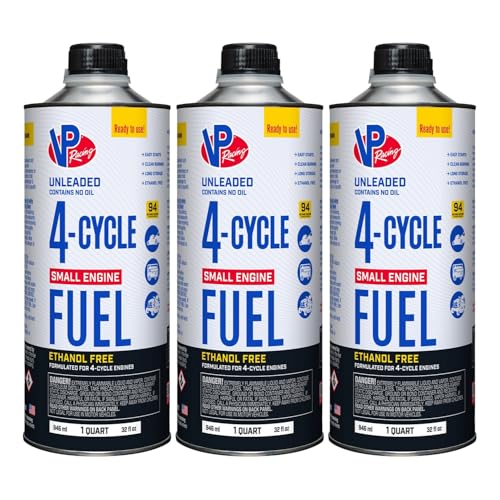 VP Racing SEF 4-Cycle Small Engine Fuel, 3 x 1 Quart Ethanol-free 94 octane in sealed cans, stated stable for five years — the fuel that removes the ethanol problem instead of treating it, at a price that only makes sense at low volumes. Our skip-this pick | A machine that burns a gallon a winter | 7.0/10 | $27.93 - View on Amazon #ad affiliate link · Price as of September 26, 2026 |
The one maintenance item a gas machine actually needs
STA-BIL Storage Fuel Stabilizer, 32 oz
Keeps fuel usable for a stated 24 months and treats 80 gallons per bottle — the cheapest insurance against the single most common reason a snow blower will not start in November.
Ask any small-engine shop what comes through the door in November and the answer is the same: machines that will not start because the fuel in them is a year old. Gasoline oxidizes, the light fractions evaporate, and what is left behind in a carburetor bowl is a varnish that blocks passages the width of a pin.
Ethanol makes it worse, because it attracts water and can separate out of the fuel in a tank that sits through a humid summer. That is the failure a stabilizer is designed to prevent.
STA-BIL publishes the numbers that matter: one ounce per two and a half gallons, fuel kept usable for up to 24 months. A 32-ounce bottle therefore treats 80 gallons, which for a machine that burns a few gallons a winter is years of protection for the price of a takeout meal.
The part people get wrong is the last step. Adding stabilizer to the tank protects the tank; it does nothing for the carburetor until treated fuel has actually been pulled through it. Add it, top up the tank, then run the engine for several minutes before you put the machine away.
It is prevention only. If your machine already sat with untreated fuel and will not start, no additive fixes that — the carburetor needs cleaning. And if your machine is electric, this whole category is one of the costs you do not have; what a snow blower costs sets that difference out.
What works
- Publishes an exact dose — 1 oz per 2.5 gallons — so you can treat a can correctly rather than guessing
- A 32 oz bottle treats 80 gallons, which is several seasons for a snow blower
- The maker states the directions properly: treat the fuel, then run the engine so treated fuel reaches the carburetor
- Costs less than a single carburetor clean at a dealer
What does not
- Does nothing for a machine that already has varnished fuel in it — this is prevention, not a cure
- Cannot undo ethanol damage that has already happened, and the maker does not claim it can
- Useless on electric machines, which is most of what this site now recommends for small driveways
- The bottle itself has an expiry — 2 years once opened
The viscosity a snow engine wants in the cold
Husqvarna 4-Cycle 5W-30 Synthetic Blend Engine Oil, 32 oz
A 5W-30 semi-synthetic sold specifically for two-stage snow blowers, stated to exceed API SJ — the right weight for an engine that starts at 10°F and never warms up much.
Oil viscosity is written as two numbers — 5W-30 — and for a snow blower the first one is the one that counts. The W number describes how the oil behaves cold, and a snow blower is an engine that is always started cold, often well below freezing, and rarely runs long enough to get properly hot.
That is why the oils sold specifically for snow throwers are 5W-30 rather than the 10W-30 or SAE 30 you find on a mower shelf: Husqvarna's is 5W-30, and so are the snow-thrower oils from Ariens, Briggs & Stratton and MTD. A heavier cold rating means an engine that turns over slowly and runs for its first minute with oil that has not reached everywhere it needs to be.
This one states it exceeds API SJ, which is more than most small-engine oils on a retail listing bother to say, and it is sold for most two-stage four-stroke machines.
Two honest caveats. Ordinary automotive 5W-30 meeting the same API rating will satisfy many manuals for a fraction of the price, and your own manual is the authority on both the viscosity and the capacity. And if your machine is a small single-stage with a splash-lubricated engine and no drain plug, the oil change is a different, messier job than the listing implies.
Draining and refilling is the single most skipped service item on these machines, and it is the one that quietly decides whether the engine reaches its second decade — snow blower maintenance puts it in order with the rest.
What works
- 5W-30 is the weight the snow-specific oils are sold in, and the low first number is what matters on a cold start
- States an actual specification (exceeds API SJ) rather than just a viscosity
- 32 oz covers a typical two-stage oil change with some left over
- Sold by a snow blower manufacturer for snow blower engines, not repackaged mower oil
What does not
- Costs more than a quart of ordinary automotive 5W-30, which many engines will also accept
- Semi-synthetic rather than full synthetic
- Your manual is still the authority on both viscosity and capacity — brands differ
- Irrelevant to electric machines, and to the many single-stage engines with no drain plug worth using
Husqvarna and Poulan two-stage machines
Husqvarna Shear Bolts and Nuts Kit, 6-Pack
The OEM kit, with the part numbers it replaces printed on the listing and the bolt dimensions published — which is exactly what you want from a part designed to break.
A shear pin is a fastener engineered to fail. It holds the auger to its shaft, and when the auger hits something it cannot pass — a newspaper, a chunk of ice, a rock — the pin snaps so the auger stops instead of the gearbox tearing itself apart. Replacing it is a five-minute job; replacing a gearbox is not.
That design intent is why the grade of the bolt matters more than its dimensions. A pin that is stronger than specified does not protect your machine better; it protects it less, because the force that should have snapped a cheap bolt instead goes into the auger shaft, the bearings and the gearcase.
Husqvarna's kit is the straightforward answer for its own machines and Poulan's. It publishes the bolt dimensions, lists every superseded part number so you can confirm fitment on a ten-year-old blower, and — being OEM — is the grade the engineers chose.
Keep the spares somewhere you can reach in the dark with cold hands, because a pin never breaks in the garage. Tape a couple inside the chute cover or the fuel-cap area of the machine itself.
If you are breaking pins often, the pin is not the problem. Either the surface is feeding stone into the auger — see using a snow blower on gravel — or the skid shoes are set too low.
What works
- OEM, so the bolt is the grade the machine was designed to break — the whole point of the part
- Publishes actual bolt dimensions rather than just a part number
- Lists the superseded numbers, which is how you confirm fitment on an older machine
- Six is the right number: enough for several jams, not a lifetime of clutter
What does not
- Husqvarna and Poulan only — the wrong kit for an MTD-family machine
- Costs more per pin than the generic multipacks
- Six bolts will not last a season on a gravel drive that jams the auger regularly
- Nothing here helps if the real problem is that you are feeding the machine stone
Most two-stage machines, with the bolts in the box
CheeMuii Poly Skid Shoes with Hardware, 490-241-0010
Polyurethane shoes on the common 490-241-0010 pattern, supplied with every bolt, nut and washer you need — which is what turns this into a fifteen-minute job.
Skid shoes are the two brackets that hold the front of the auger housing off the ground. They set how high the scraper bar rides, they take the wear instead of the housing, and they are the single cheapest adjustment that changes how a snow blower behaves on your driveway.
Poly is the upgrade most people want. Steel shoes rust, streak concrete, and ring loudly over a paver joint; polyurethane does none of that and is kinder to a surface you care about. The trade is wear — on abrasive concrete, poly is a part you replace every few seasons.
What makes this kit the pick is the hardware. The bolts holding your current shoes have been sitting in salt spray for years, and a good proportion of them will round off or snap coming out. A kit with eight bolts, eight nuts, eight washers and the bushing washers means you finish the job the day you start it.
Set them by the surface, not by the bolt slot: on smooth concrete run the scraper close to the ground, and on gravel raise the housing until the auger cannot reach stone — usually a good inch of clearance. That one adjustment is the difference between clearing gravel and firing it at a window.
What works
- Complete hardware included — original bolts are usually rusted solid and get destroyed coming off
- Polyurethane will not rust, and it does not leave the orange streaks steel shoes leave on concrete
- Broad stated fitment across the major two-stage families
- Two bushing washers included, which is the part aftermarket kits usually omit
What does not
- Poly wears faster than steel on abrasive concrete — this is a consumable
- "Fits most" lists are a starting point; the bolt-hole spacing on your housing is the real test
- No published thickness, so you cannot predict how much height adjustment you gain
- On a machine with badly worn housing edges, new shoes will not save the scraper bar
A machine that burns a gallon a winter
VP Racing SEF 4-Cycle Small Engine Fuel, 3 x 1 Quart
Ethanol-free 94 octane in sealed cans, stated stable for five years — the fuel that removes the ethanol problem instead of treating it, at a price that only makes sense at low volumes.
Skip this one
Right idea, wrong economics for most people. Ethanol-free canned fuel genuinely removes the problem that stabilizer only manages, but it is sold by the quart and works out at several times pump price per gallon. Buy it for a machine that burns under a gallon a season or for the fuel you leave in over summer. For a two-stage machine clearing a long driveway all winter, pump gas plus stabilizer does the same job for a fraction of the money.
Canned small-engine fuel is the brute-force answer to the ethanol problem. Instead of adding a stabilizer to pump gas and hoping, you buy fuel with no ethanol in it at all, blended to a consistent specification and sealed in a can that the maker states stays good for five years.
For the right machine that is genuinely the better answer. A snow blower that starts three times a winter, or a generator that starts once a year, spends almost all its life with fuel sitting in it — which is precisely the condition ethanol blends handle worst.
The problem is arithmetic. This is sold by the quart, and three quarts is three-quarters of a gallon. Per gallon it costs several times what the pump charges, so as a routine fuel for a two-stage machine clearing a long driveway all winter it is indefensible.
Use it the way it makes sense: as the fuel you leave in the machine over the summer, or as the entire fuel supply for a small machine that barely drinks. For anything heavier, pump gas with a stabilizer in it does the same job for a fraction of the money.
One label detail worth repeating because the cans look alike on a shelf: this is the 4-cycle version and it contains no oil. The 2-cycle premix sold beside it has oil blended in at 50:1 and will foul a four-stroke snow blower engine.
What works
- No ethanol at all, which removes the water-attraction and phase-separation problem rather than treating it
- Stated five-year sealed shelf life, so a can bought this year is still good for the winter after next
- 94 octane and consistent blend, with none of the seasonal variation pump gas has
- Clearly labeled as containing no oil, which matters because the 2-cycle premix version looks almost identical on a shelf
What does not
- Works out at several times the price of pump gas per gallon — this is the expensive way to buy fuel
- Three quarts is under a gallon, so it is a top-up rather than a season's supply for a two-stage machine
- Does nothing for the fuel already in your tank
- Pointless if your machine gets used every week — at that rate the fuel never sits long enough to spoil
The pre-season checklist
- Pull the plug lead before anything else.
- Deal with last year's fuel. If it sat untreated, drain it rather than trying to run it through. If it was stabilized, top up and run the machine for a few minutes.
- Check the oil level, and change it if the manual's interval has passed. Take the old oil to a recycling point.
- Look at the spark plug. Fouled or rounded electrodes mean a new one; the manual has the type and gap.
- Set the skid shoes for your surface — low on smooth pavement, an inch or more on gravel.
- Check shear pins and belts, and put spare pins where you can find them in the dark.
- Start it in October, not in the first storm. This is the whole point of the checklist: find the problem while the dealer still has parts and an appointment.
What we would not bother with
- Fuel system "cleaners" as a cure. Once a carburetor is varnished, an additive poured into the tank is not going to reach or dissolve it. That is a cleaning job.
- Premium octane. Higher octane resists knock; it does not clean anything or start better. The fuel problem is age and ethanol, not octane.
- Annual dealer servicing on a machine you can service yourself. Oil, plug and a belt check are genuinely within reach of most owners with the manual open.
- Replacing wear parts on a schedule rather than on inspection. Skid shoes and paddles wear at wildly different rates depending on surface — look at them instead.
Questions people ask
Why won't my snow blower start after summer?
What oil does a snow blower take?
Can I use E15 fuel in a snow blower?
How much fuel stabilizer do I need?
Should I drain the fuel or leave the tank full over summer?
How often should a snow blower be serviced?
Do electric snow blowers need maintenance?
Sources
- US EPA — E15 fuel registration: lists "Engines in nonroad equipment, such as lawnmowers and chain saws" among engines that cannot use E15
- Amazon listing — STA-BIL Storage fuel stabilizer, 1 oz per 2.5 gal, 24-month fuel life
- Amazon listing — Husqvarna 5W-30 4-cycle synthetic blend, for most 2-stage snow blowers, exceeds API SJ
- Amazon listing — VP Racing SEF 4-cycle fuel, 94 octane, no ethanol, 5-year sealed life
- Amazon listing — Husqvarna shear bolts and nuts kit, 580790401
- Amazon listing — CheeMuii 490-241-0010 poly skid shoes with hardware
Next stage
Where the machine spends eight months
Service it, then store it properly. Covers compared on fabric weight and — more importantly — whether they vent.
Keep goingAbout the author
Scooter M.
An enthusiast who is genuinely into this. I read the manuals, compile the published specs, and do the math on door clearances. No lab coat, no test bench, and nothing here is a product I have used - which is exactly why every claim carries a source.
Published by Slate Mill Group, with the Shovel Report team. Published September 26, 2026; last updated September 26, 2026. Editorial policy.
Read next

Best Snow Blower Cover
Best Snow Blower Covers
Covers judged on fabric weight, published dimensions, fastening system and whether they vent.
Best Shear Pin Kit
Snow Blower Shear Pins
How to identify the right shear pin, and why the cheap upgrade to a stronger bolt is a mistake.
Best Skid Shoes
Best Snow Blower Skid Shoes
Skid shoes judged on material, published geometry and whether the bolts are in the box.

Ownership Cost
What a Snow Blower Actually Costs
Purchase tiers, running costs and maintenance — the full ownership picture for both fuels.
Best Battery Blower
Best Battery Snow Blowers
Cordless machines ranked by stored watt-hours and stage, with the runtime math spelled out.