By Scooter M. · Last updated September 21, 2026
Shovel Report earns a commission when you buy through the links on this page, at no extra cost to you. It does not change what we recommend, and we publish a skip-this verdict on products we could otherwise earn from. Full disclosure.
A single-stage snow blower has one auger that gathers and throws, and it contacts the ground — so it clears to bare pavement and cannot be used on gravel. A two-stage machine has a serrated auger plus a separate impeller, riding on adjustable skid shoes that hold the auger above the surface. That clearance is what makes gravel and uneven surfaces workable.
How each one actually works
Single stage. A rubber- or steel-edged auger spins in the housing, scoops snow up and flings it out of the chute in one motion. Because the auger reaches the ground, it scrapes the surface clean and it helps pull the machine forward as it bites. Simple, light, cheap, and excellent on pavement.
Two stage. A slow, serrated metal auger breaks up and gathers snow, then feeds it to a separate high-speed impeller that does the throwing. The auger never touches the ground: the housing rides on skid shoes you adjust to set the clearance. Because throwing is a separate job from gathering, a two-stage machine throws farther and handles deeper, wetter snow.
You will also see three-stage machines, which add an accelerator between auger and impeller to feed snow faster. That is a throughput refinement. It does not change the surface story — three-stage machines are two-stage machines for these purposes.
The comparison
Single-stage against two-stage
Quick picks
Ranked against the criteria below. Tap a row to jump to the full write-up; the price button goes straight to Amazon.
| # | Product | Best for | Score | Price |
|---|---|---|---|---|
| 1 |  EGO Power+ SNT2400 24-in Two-Stage A true two-stage, self-propelled 24-inch machine — the only configuration in this build that belongs on a gravel driveway. | Gravel, and everything else hard | 8.8/10 | $1,178.99 - View on Amazon #ad affiliate link · Price as of October 15, 2026 |
| 2 |  Snow Joe SJ627E 22-in Corded Snow Blower 840 pounds of snow a minute from a wall socket, at 35 pounds and a fraction of a cordless machine's price. Our skip-this pick | Most snow moved per dollar | 8.6/10 | $249.99 - View on Amazon #ad affiliate link · Price as of October 15, 2026 |
| 3 |  EGO Power+ SNT2112 21-in Snow Blower A steel-auger 21-inch machine on two 56V packs, with a 40-foot stated throw and a warranty that says EGO expects it to last. | Best cordless blower overall | 8.5/10 | $749.00 - View on Amazon #ad affiliate link · Price as of October 15, 2026 |
| 4 | 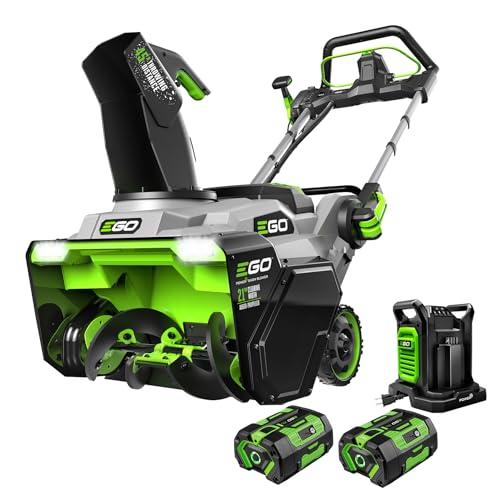 EGO Power+ SNT2125AP 21-in Auger-Propelled Two 7.5 Ah packs instead of two 5.0 Ah — 50% more stored energy, which is the whole answer on a long driveway. | Long driveways on battery | 8.3/10 | |
| 5 |  SENIX STE15 21-in Corded Snow Blower A 21-inch, 15-amp corded machine with a published 880 lb/min, 12-inch clearing depth and 33-foot throw — the best-documented corded blower we can verify is in stock. | The most published throughput on a cord | 8.0/10 | $199.00 - View on Amazon #ad affiliate link · Price as of October 15, 2026 |
Gravel, and everything else hard
EGO Power+ SNT2400 24-in Two-Stage
A true two-stage, self-propelled 24-inch machine — the only configuration in this build that belongs on a gravel driveway.
The single most useful thing to understand about snow blowers is the difference between one stage and two, because it decides which surfaces you can use the machine on at all.
A single-stage machine has one auger that both picks the snow up and throws it, and it does that by contacting the surface. That is why it clears down to bare pavement — and why it will pick up gravel and fling it at your garage door. A two-stage machine has a serrated auger that gathers snow and a separate impeller that throws it, and the whole assembly rides on adjustable skid shoes with the auger held above the ground. That gap is the entire reason two-stage machines work on gravel.
So on a gravel driveway this is not a preference, it is the requirement. Set the skid shoes so the auger clears the stone by roughly an inch, accept that you will leave a thin layer of packed snow, and stop expecting bare-surface results.
The catch is that it ships as a bare tool. EGO sells it without batteries or charger, and on a 56V two-stage machine you want large packs — so budget for them. See single-stage versus two-stage for the full decision.
What works
- Two-stage design keeps the auger off the ground, which is the requirement on gravel
- 24 inches is a genuine two-car-driveway width
- Self-propelled, so the machine's weight stops being your problem
What does not
- Sold as a bare tool — batteries and charger are a substantial extra
- Two-stage machines are heavy and take real storage space
- Overkill for a short concrete drive
Most snow moved per dollar
Snow Joe SJ627E 22-in Corded Snow Blower
840 pounds of snow a minute from a wall socket, at 35 pounds and a fraction of a cordless machine's price.
Skip this one
The best-value machine on this site is the wrong machine on gravel, and no setting changes that. A single-stage auger contacts the ground by design. If your driveway is gravel, skip every product here except the two-stage one, however good the value looks.
This machine exists to make a point about arithmetic. Snow Joe states it moves up to 840 pounds of snow per minute through a 22-inch by 13-inch intake. The best-documented electric shovel in this build, the Toro Power Shovel, is rated at 300 pounds per minute through a 12-by-6-inch path. That is not a small difference in degree; it is a different job.
Work through a driveway with it. A 20-by-40-foot drive under 6 inches of fresh snow contains very roughly two to four thousand pounds of snow depending on density. At the stated 840 lb/min that is a few minutes of actual throughput — the clock is dominated by walking and turning, not by the machine.
The 13-inch intake depth is the underrated spec. Most single-stage machines in this price class top out around 8 to 10 inches, which means a foot of snow needs layered passes. Thirteen inches takes most storms in one.
The cord is the price. Fifteen amps over a long, thin extension cord is a voltage-drop problem, so you need a heavy-gauge, cold-flexible outdoor cord, and you spend the whole clear aware of where it is. Measure your outlet-to-far-corner distance before you buy — beyond about 100 feet, go cordless.
What works
- 840 lb/min is roughly triple what the best electric shovel here moves
- 13 inches of intake depth handles a real storm in one pass
- 35 lb published weight makes it manageable to turn and store
What does not
- Corded, so your working radius is a cord length
- 15 amps needs a properly rated cold-weather extension cord
- Single-stage: no gravel, and limited on steep grades
Best cordless blower overall
EGO Power+ SNT2112 21-in Snow Blower
A steel-auger 21-inch machine on two 56V packs, with a 40-foot stated throw and a warranty that says EGO expects it to last.
The steel auger is the reason this model exists. EGO's own comparison is against the SNT2102, which uses a rubber-edged auger, and they state the steel version cuts through ice and snow 50 percent faster. That is a manufacturer claim, but the underlying engineering is uncontroversial: a rigid steel edge bites crusted snow that a flexible one rides over.
It also changes where you can use it. A steel single-stage auger touches the ground — that is how single-stage machines clear to the surface — so on gravel it becomes a stone thrower, and on pavers or a sealed asphalt apron you want the highest skid setting and a slow walking pace.
EGO states up to 8 inches of snow on a 12-car driveway from two 5.0 Ah packs on one charge, and a throw distance up to 40 feet. Both are best-case figures on the maker's terms, and both are in the right order of magnitude for a two-battery 56V machine.
The warranty is the quiet signal. Five years on the tool and three on the batteries is longer than most of this category offers, and battery life is where cordless outdoor equipment usually disappoints. If your driveway is gravel, stop here and read that page instead — this is the wrong machine for it, whatever else it does well.
What works
- Steel auger, which EGO states cuts 50% faster than the rubber-edged SNT2102
- 40-foot stated throw is genuinely long for a battery machine
- 5-year tool and 3-year battery warranty
What does not
- Single-stage, so it is not a gravel machine and never will be
- Two 5.0 Ah packs are a significant share of the price
- 21 inches will feel narrow on a three-car driveway
Long driveways on battery
EGO Power+ SNT2125AP 21-in Auger-Propelled
Two 7.5 Ah packs instead of two 5.0 Ah — 50% more stored energy, which is the whole answer on a long driveway.
On a long driveway the question is not how fast a machine clears, it is whether it finishes. Battery capacity is the constraint, and it is one you can compute rather than guess: watt-hours equal volts times amp-hours. Two 56 V 7.5 Ah packs give 840 Wh nominal. Two 5.0 Ah packs give 560 Wh. That is 50 percent more work available before you are standing in the snow waiting for a charger.
What that converts to in driveway length depends on snow density, depth and how fast you walk, and no honest source can give you a single number. But the ratio is real: if a 5.0 Ah kit gets you three quarters of the way down your drive, the 7.5 Ah kit finishes it.
Auger propulsion is the second difference. Instead of a separate wheel drive, the auger's contact with the ground pulls the machine forward. It is simpler and lighter than a wheel drive and works well on pavement. It also means propulsion disappears when the auger is not biting.
Everything else follows the 21-inch EGO pattern, including the surface limits. Gravel is still out; see gravel driveways for what actually works there.
What works
- 840 Wh of nominal stored energy is 50% more than the 5.0 Ah kits' 560 Wh
- Auger propulsion pulls the machine forward so you steer rather than push
- Same 56V platform, so the packs run every other EGO tool
What does not
- Auger propulsion only works while the auger is engaged with the surface
- The largest packs are the most expensive part of the machine
- Still single-stage, still not for gravel
The most published throughput on a cord
SENIX STE15 21-in Corded Snow Blower
A 21-inch, 15-amp corded machine with a published 880 lb/min, 12-inch clearing depth and 33-foot throw — the best-documented corded blower we can verify is in stock.
The Snow Joe SJ625E we used to list here is no longer available, and there is no current listing for that model. This is the closest comparable machine we can verify is in stock: another 21-inch, 15-amp corded single-stage blower in the same price band.
It is also unusually well documented. SENIX publishes a throughput of up to 880 pounds per minute, a 21-by-12-inch clearing path, a throw of up to 33 feet and a 180-degree rotating chute. Throughput is the specification this site cares about most, because it is the only one that converts directly into minutes spent outside, and most makers in this class do not publish it at all.
Two things are missing or weaker. There is no published weight, which matters less on a wheeled machine than on a carried one but is still a gap. And the 12-inch clearing depth is an inch shallower than the SJ627E's published 13, so in a genuinely deep storm you clear in layers slightly sooner.
Everything else about corded single-stage machines applies: it is tethered to an outlet, practical to about 100 feet of cord, and it must not be used on gravel. On a flat, paved driveway within reach of power, it is a lot of machine for the money — see budget snow blowers for where it sits.
What works
- A published 880 lb/min is the highest throughput figure of any corded machine on this site
- 33-foot stated throw clears a two-car width without re-handling snow
- 3-year limited warranty is longer than is typical for a corded single-stage
- Foldable handle stores in a small garage corner
What does not
- No published weight
- Corded: impractical past about 100 feet from an outdoor outlet
- 12-inch clearing depth is an inch shallower than the SJ627E's published 13
- Single-stage, so it cannot be used on gravel
The gravel rule
This is the part of the decision that is not a preference. A single-stage auger on a gravel driveway will pick up stones and throw them at the same velocity it throws snow — a maker-stated 25 feet or more. That is a hazard to windows, vehicles and people, not a cosmetic problem.
On gravel, a two-stage machine with the skid shoes set so the auger clears the stone by roughly an inch is the only correct configuration. You will leave a thin layer of packed snow behind, which is the trade and is fine. The setup detail is in using a snow blower on gravel, and the complete gravel-driveway answer is on our gravel page.
The same logic applies in weaker form to pavers that have heaved and to broken concrete: anything the auger can catch on is a reason to want clearance.
When single-stage is the better machine
Most of the time, for most houses. On a concrete or asphalt driveway, single-stage machines are lighter, cheaper, easier to store, easier to turn, and they clear to bare pavement in a way a two-stage machine deliberately does not.
The two-stage premium buys clearance and capacity. If you have neither a gravel surface nor a foot of snow at a time nor a very long driveway, you are paying for capability you will not use, and paying for it in storage space as well as money.
The honest sizing guidance: single-stage for a hard-surface residential driveway; two-stage for gravel, for very deep snow, for long driveways, and for steep ones where you want powered wheels.
One safety point specific to two-stage machines
A two-stage machine has more stored rotational energy and a longer path from intake to chute, which means chute clogs are common and clearing them by hand is more dangerous, not less. Always use the clean-out tool. Never put a hand in the chute or the housing, even with the engine stopped and the key removed.
Questions people ask
Do I need a two-stage snow blower?
Can a single-stage snow blower be used on gravel?
Why does a two-stage snow blower leave snow behind?
What is a three-stage snow blower?
Sources
Next stage
The gravel driveway answer in full
Stage is the first constraint on gravel and not the only one. Here is the complete setup: the machine, the skid-shoe height, the shovel and the de-icer.
Keep goingAbout the author
Scooter M.
An enthusiast who is genuinely into this. I read the manuals, compile the published specs, and do the math on door clearances. No lab coat, no test bench, and nothing here is a product I have used - which is exactly why every claim carries a source.
Published by Slate Mill Group, with the Shovel Report team. Published August 10, 2026; last updated September 21, 2026. Editorial policy.
Read next
Best Skid Shoes
Best Snow Blower Skid Shoes
Skid shoes judged on material, published geometry and whether the bolts are in the box.
Best Single-Stage
Best Single-Stage Snow Blowers
The machines that scrape to bare pavement — ranked on throughput, depth and auger material.
Best for Gravel
Gravel Driveway? Start Here.
The two-stage requirement, the skid-shoe setup, and the tools that will not throw stone.
Gravel Setup
Using a Snow Blower on Gravel
Skid-shoe height, clearing sequence and timing for gravel without throwing stone.
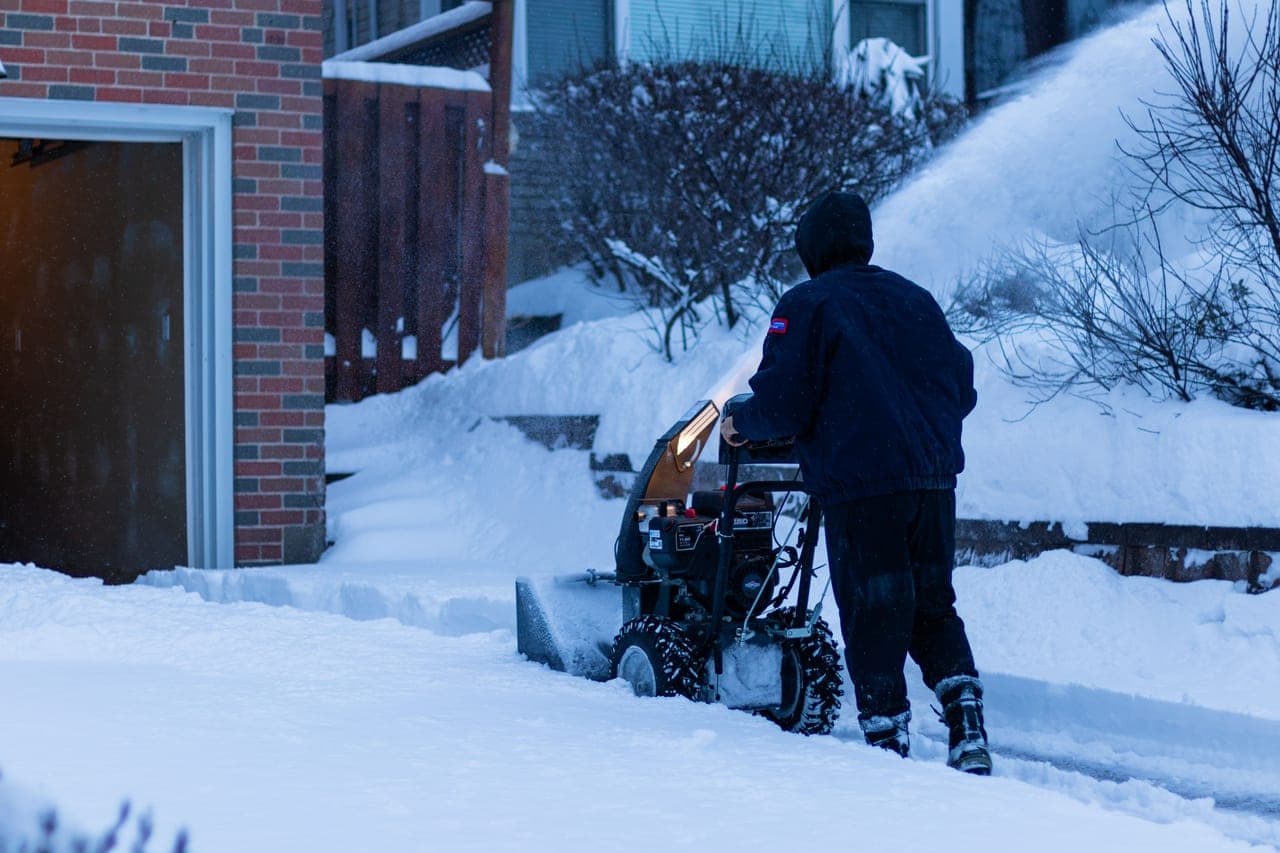
Best Electric Blower
Best Electric Snow Blowers
Corded and battery machines compared on stated throughput, intake depth and surface fit.
Best for Deep Snow
Best Snow Blowers for Heavy, Wet Snow
Deep and dense snow shifts the priorities to intake depth, steel augers and throughput.

Glossary
Snow Removal Glossary
Plain definitions for the terms on snow equipment spec sheets, each linked to where it matters.