By Scooter M. · Last updated October 18, 2026
Shovel Report earns a commission when you buy through the links on this page, at no extra cost to you. It does not change what we recommend, and we publish a skip-this verdict on products we could otherwise earn from. Full disclosure.
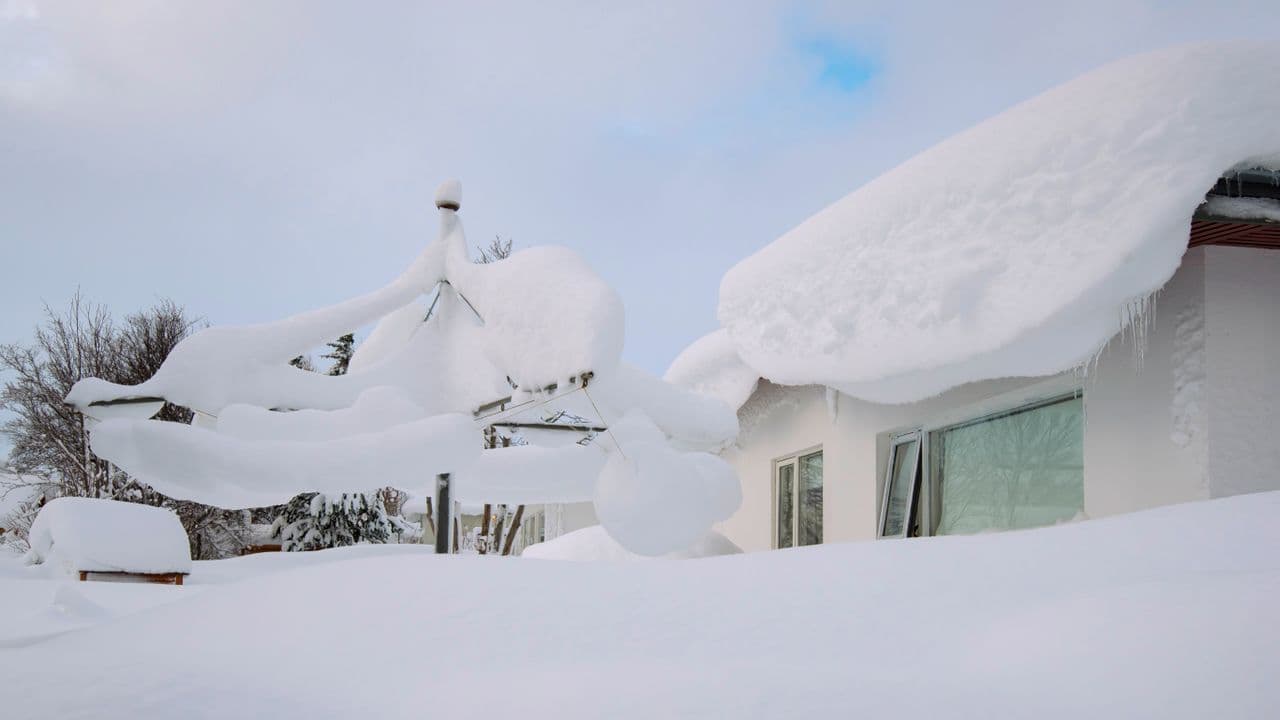
Rake your roof when the snow on it is heavy rather than deep, when another storm is forecast on top of it, or when ice dams are forming at the eaves - and do it with a long-handled non-metallic rake standing on the ground, which is the only method FEMA suggests reduces the risk. There is no universal depth threshold, because snow weight varies roughly threefold by snow type. If you see sagging ceilings, cracking noises, or doors that no longer close, stop reading and get out: FEMA says evacuate and call a structural professional.
Why inches is the wrong unit
Every rule of thumb you will find gives a depth. Depth is not what loads a roof - mass is, and the relationship between the two is not fixed. It varies by region, by storm and by how long the snow has been sitting.
There is a clean way to get from one to the other. Snow depth converts to liquid water at a ratio meteorologists call the snow-to-liquid ratio, and the 30-year climatology of National Weather Service observations by Baxter, Graves and Moore at Saint Louis University found a US mean of about 13 to 1, with large regional variation: 15 to 18 through Colorado, Wyoming and Montana, 14 to 16 on the lee of the Great Lakes, and 9 to 11 along the West Coast. That study also notes the familiar 10 to 1 rule was handed to observers by the Weather Bureau in 1875 and described as only a rough approximation by 1894.
Water weighs 62.4 pounds per cubic foot, so an inch of water spread over a square foot weighs 5.2 pounds. Put those together and you can convert a snow depth into a roof load without needing anyone's rule of thumb:
One foot of snow on one square foot of roof, by snow type
One further factor the table cannot capture, and it is the one that actually causes failures: rain on snow. FEMA lists it explicitly as a cause of structural failure, because heavy rainfall on a snowpack melts and saturates it, significantly increasing the load. A roof that was comfortable on Friday can be in trouble on Saturday with no new snow at all.
The warning signs that end the discussion
FEMA's Snow Load Safety Guidance (P-957) lists the signs of an overstressed roof. These are not "consider raking soon" signals. FEMA's instruction if any of them appears is that the building should be promptly evacuated and a local building authority or qualified design professional contacted for a detailed structural inspection.
- Sagging ceiling tiles or boards, or ceiling boards falling out of the ceiling grid
- Sagging sprinkler lines and sprinkler heads, or sprinkler heads deflecting below suspended ceilings
- Popping, cracking and creaking noises
- Sagging roof members, including metal decking or plywood sheathing
- Bowing truss bottom chords or web members
- Doors or windows that can no longer be opened or closed - the one most homeowners notice first and misread as a draught problem
- Cracked or split wood members, or cracks in walls or masonry
- Severe roof leaks
We are a site that sells roof rakes and we are telling you that at this point a rake is the wrong tool. Nothing on this page is a substitute for a structural assessment of a building that is showing distress.
The three reasons to rake, in order
1. Another storm is coming. This is the best reason and the most actionable. FEMA notes that if subsequent snow events are anticipated, removing snow from the roof will minimize the risk of accumulation causing structural damage - and adds the practical point that immediate removal takes less effort than waiting, because fresh snow is lighter and has not bonded.
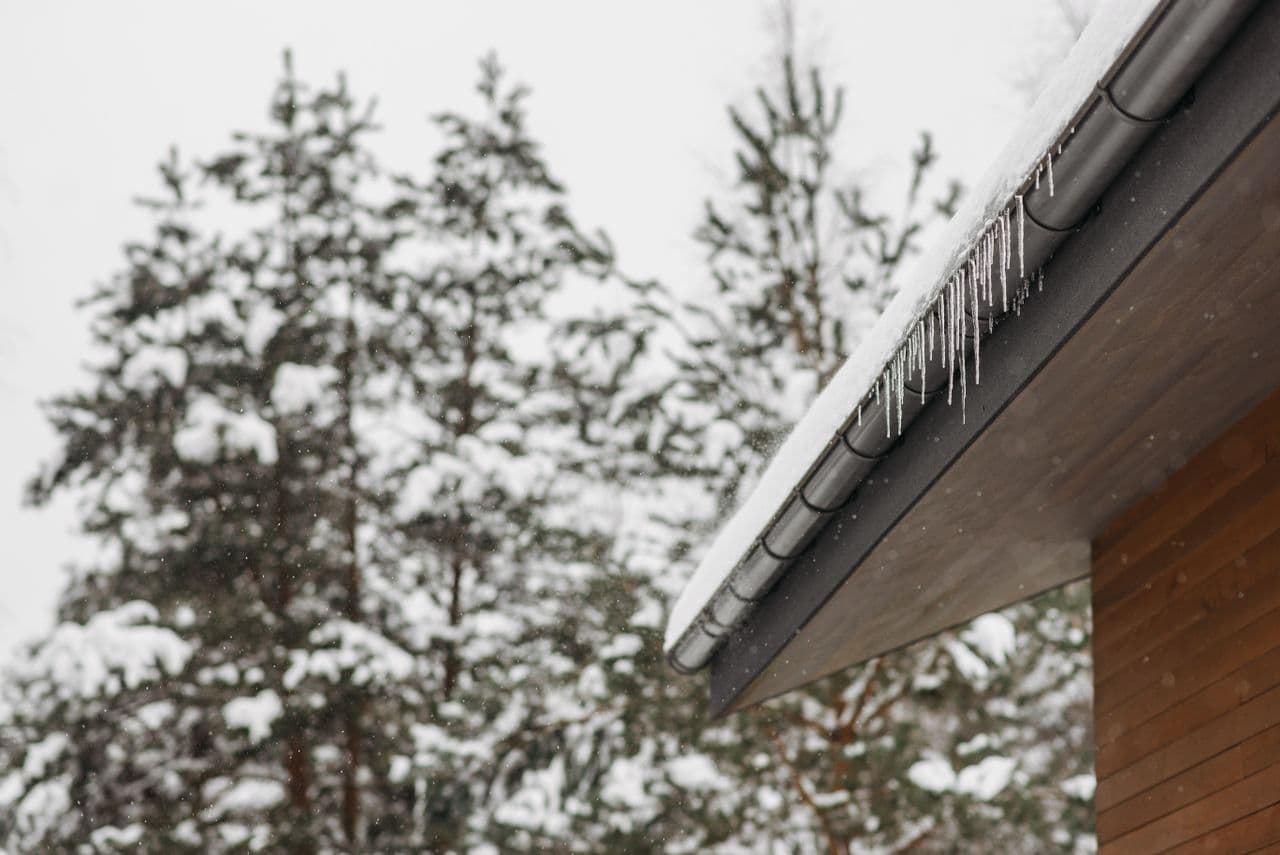
2. Ice dams are forming at the eaves. This is the common residential reason and it is about water rather than weight. Clearing the lower few feet of roof removes the material feeding the dam. It treats the symptom - the underlying cause is heat loss through the ceiling into the attic - and the full picture is on how to remove an ice dam.
3. The load is genuinely high for your structure. Which brings you back to the arithmetic above and a conversation with someone who knows your building. Note that FEMA is distinctly cautious here: it says snow removal is a dangerous activity that should only be done by qualified individuals following safety protocols, and that determining whether removal is necessary at all is a job for a building authority or design professional.
Roof geometry decides where the problem is
Snow does not sit evenly, and uneven loading is more dangerous than the average suggests. FEMA's list of causes is worth knowing because it tells you where to look:
- Unbalanced load from drifting and sliding snow. Snow accumulating at different depths in different places produces high, concentrated loads.
- Blocked drainage and ice dams. A blocked or poorly maintained drainage system lets dams form, which concentrates load at the eaves and stops a sloped roof shedding.
- Roof geometry. FEMA is explicit that simple roofs with steep slopes shed snow most easily, and that irregularities and obstructions collect drifts unevenly - flat roofs with parapets, stepped roofs, saw-tooth roofs, and roofs with equipment or chimneys.
A smooth metal roof has the opposite problem: it sheds its entire load in one sheet once the sun warms it, which is a retention question rather than a drainage one. That is covered on snow guards for a metal roof.
The method, which is not negotiable
FEMA's own wording: in some cases a long-handled non-metallic snow rake can be used from the ground, thereby reducing the risk. Two things in that sentence are doing real work.
Non-metallic. FEMA states that metal snow rakes can damage roofing material and pose an electrocution risk and should be avoided. That is an independent confirmation of the argument this site already makes on best roof rakes for snow: the softer blade is the one that does not take the granules off your shingles. Our default has been poly for that reason, and electrocution is a second reason we had not been giving.
From the ground. Not from a ladder, not from the roof. FEMA's other guidance makes clear why it treats rooftop work as a different category of activity: it says any roof snow removal should follow proper OSHA protocol for rooftop work with fall arrest harnesses where applicable, that someone should be below keeping foot traffic clear of falling snow and ice, and that buried skylights are a high risk to anyone on the roof. That is a description of professional work, not a weekend task.
Two more FEMA points that change how you should rake. Leave snow on the roof - it states that removing snow completely can seriously damage the roof covering and lead to leaks, and that at least a couple of inches should be left. And mind the slide: when using a non-metallic rake, roof snow can slide at any moment, so keep a safe distance from the eave to stay outside the sliding range.
How we picked
- Non-metallic blade, which FEMA names specifically - metal rakes damage roofing material and carry an electrocution risk
- The shortest reach that clears your eave, because the load sits at the far end of the pole and the force at your hands scales with distance
- Sectional poles, so one purchase gives you a short tool for a low eave and a long one when you need it
- Blade width against weight, since every inch of extra width is more mass held out at arm's length
- Nothing that invites you onto a ladder or the roof - this is a ground-only category
We have not physically tested these products. We do not own them, we have no lab, and we do not accept free product. Everything above is compiled from published manufacturer specifications, published manuals, published standards and live retailer data - and we tell you which is which on every claim. How we pick.
Quick picks
Ranked against the criteria below. Tap a row to jump to the full write-up; the price button goes straight to Amazon.
| # | Product | Best for | Score | Price |
|---|---|---|---|---|
| 1 |  Extreme Max 5600.3288 Poly Roof Rake, 21 ft A 23-inch angled poly blade on 21 feet of snap-together aluminum poles — the shingle-safe default, now from a maker whose plow systems we already cover. | Shingle-safe reach | 8.1/10 | |
| 2 |  VEVOR Aluminum Roof Rake, 26-in Blade A 26-inch aluminum blade on a 7.5-to-20-foot adjustable handle, with wheels — the cutting option, with the granule risk that aluminum brings. Our skip-this pick | Cutting crusted snow, accepting the risk | 7.3/10 | $62.90 - View on Amazon #ad affiliate link · Price as of October 18, 2026 |
| 3 |  Leanaco Foam-Blade Roof Rake and Brush, 24 ft A 16-inch EVA foam head with a brush on the other side, on a 24-foot telescoping pole — the one roof tool here designed not to mark the surface it touches. | Solar panels and anything you must not scratch | 7.9/10 | $99.99 - View on Amazon #ad affiliate link · Price as of October 18, 2026 |
| 4 |  SNOWPEELER Premium Roof Rake, 30 ft Thirty feet of aluminum poles and an 18-inch cutting blade that slices snow onto a fabric slide — a different mechanism from a pull rake, with glide pads holding it 2¼ inches off the roof. Our skip-this pick | Two-story roofs, from the ground | 7.9/10 |
Shingle-safe reach
Extreme Max 5600.3288 Poly Roof Rake, 21 ft
A 23-inch angled poly blade on 21 feet of snap-together aluminum poles — the shingle-safe default, now from a maker whose plow systems we already cover.
Snow Joe's roof rakes have all gone out of stock at the retailer we link to, including the RJ204M that used to hold this slot. The Extreme Max 5600.3288 is the closest comparable rake we can verify is available: a poly blade on a 21-foot reach.
The blade material is the reason it holds this slot. Asphalt shingles are protected by a layer of mineral granules bonded to the surface — that layer is the roof's wear surface and its UV protection. A metal blade dragged across it under pressure takes granules with it, and the damage is cumulative and invisible from the ground. Poly does not do that, and Extreme Max states this blade suits both metal and shingle roofs.
The reach comes from four 5-foot aluminum extension poles with snap-button joints, for 21 feet in total, and a 6-by-23-inch angled poly blade. The listing does not publish a weight, which is a real gap on a tool you hold overhead — the further out a load sits, the more it costs your shoulders.
The limitation is the same one every poly rake has: it skates over crusted or refrozen snow instead of cutting it. For that job you want aluminum, with the granule risk that comes with it. The full trade is laid out on this page, and roof heat cable covers the electric alternative for roofs you cannot reach.
What works
- Poly blade — the choice that does not strip the mineral granules off asphalt shingles
- 21 feet of reach covers the eave of most single-story and many two-story homes from the ground
- Snap-button poles assemble without tools and break down for storage
- Maker rates it for metal as well as shingle roofs
What does not
- No published weight, which matters on a tool held overhead at full extension
- Poly skates over crusted or refrozen snow rather than cutting it
- Snap-button joints can work loose under heavy pulling
- 23 inches is slightly narrower than some rakes in the class
Cutting crusted snow, accepting the risk
VEVOR Aluminum Roof Rake, 26-in Blade
A 26-inch aluminum blade on a 7.5-to-20-foot adjustable handle, with wheels — the cutting option, with the granule risk that aluminum brings.
Skip this one
Skip the aluminum blade if your roof is asphalt shingle and you only ever face fresh, light snow. You are buying cutting power you do not need and accepting granule risk to get it — the wheels reduce that risk but do not remove it, and a poly-bladed rake does the fresh-snow job without the downside.
The Snow Joe RJ205M aluminum rake we used to list is no longer available. The VEVOR is the closest comparable rake we can verify is in stock that keeps the point of this entry: an aluminum blade, for snow a poly blade cannot cut.
Aluminum earns its place on packed, crusted or refrozen snow. Poly skates over a hard crust; an aluminum edge bites into it and pulls material down the slope. VEVOR's blade is 26 inches wide, which is the widest on this page, on a handle that adjusts from 7.5 to 20 feet.
The risk is the same one that applies to every metal roof rake. Asphalt shingles are protected by mineral granules, and a metal edge dragged across them under pressure strips granules off. The damage is cumulative and shortens the roof's life. VEVOR fits wheels to the blade assembly, which help hold the edge off the surface — a genuinely useful feature — but a wheel does not guarantee the edge never touches.
So the decision is about your snow and your roof. On a metal roof, or where you routinely face crust, it is the right tool. On an asphalt shingle roof that only sees fresh snow, the poly rake above does the job without the granule risk.
What works
- Aluminum cuts packed and refrozen snow that a poly blade rides over
- 26 inches is the widest blade on this page
- Wheels on the head help hold the edge off the roof surface
- Adjustable from 7.5 to 20 feet, so it works on a low roof without extra poles
What does not
- Aluminum under pressure can strip the mineral granules off asphalt shingles
- 20 feet maximum is the shortest reach on this page
- No published weight
- A 26-inch blade full of wet snow is a heavy load at full extension
Solar panels and anything you must not scratch
Leanaco Foam-Blade Roof Rake and Brush, 24 ft
A 16-inch EVA foam head with a brush on the other side, on a 24-foot telescoping pole — the one roof tool here designed not to mark the surface it touches.
Nearly every roof rake sold has an aluminum or hard poly blade, because snow is heavy and a stiff blade moves it efficiently. On a solar array that is exactly the wrong property: the blade rides on tempered glass with an anti-reflective coating, and a scratch there is permanent and costs output.
This one leads with an EVA foam head instead. Foam is soft enough to push snow off glass without marking it, and the reverse side carries a brush for the lighter work.
The reach is the other half of why it belongs on this page. Panels are on a roof, roofs in winter are slippery, and almost every serious injury in this category involves a ladder. A pole that extends to 24 feet lets you work with both feet on the ground.
Be realistic about what foam does. It is good at pushing loose or lightly settled snow downhill off a smooth surface. It is poor at a layer that has thawed and refrozen onto the glass — and the correct response to that is to wait rather than to lean harder, because panels are more fragile than they look and the array is usually generating something anyway once the top edge clears.
The honest alternative is patience: most arrays shed snow themselves once the sun reaches the glass. Clearing snow off solar panels covers when intervening is worth it and when it is not.
What works
- EVA foam will not scratch tempered glass or an anti-reflective coating, which rules in solar panels
- Twenty-four feet of reach keeps you off a ladder, which is the main safety argument in roof work
- Dual-sided head means one tool for snow and for the moss-and-leaves job the rest of the year
- Published minimum and maximum pole lengths, so you can check it against your roof height
What does not
- No published weight, and a 24-foot aluminum pole fully extended is hard work whatever it weighs
- Foam is gentler and slower than a hard blade — it pushes powder well and bonded snow poorly
- Foam wears and tears where a poly blade would shrug it off
- "Stays wobble-free at 21FT" is a maker's claim about a long cantilevered pole, and we cannot verify it
Two-story roofs, from the ground
SNOWPEELER Premium Roof Rake, 30 ft
Thirty feet of aluminum poles and an 18-inch cutting blade that slices snow onto a fabric slide — a different mechanism from a pull rake, with glide pads holding it 2¼ inches off the roof.
Skip this one
Reach is a lever, and this is the longest one. Buying the maximum reach you can find is the standard mistake in this category, because the load sits at the far end of the pole and the force at your hands scales with how far out it is. Buy the shortest rake that reaches your eave. Only buy this one if you have measured and genuinely need the length.
The Snow Joe RJ208M 28-foot rake we used to list is no longer available. The closest comparable live tool for a two-story roof is the SNOWPEELER Premium, and it is worth knowing up front that it works differently from a conventional roof rake.
A pull rake drags snow toward you. The SNOWPEELER pushes an 18-inch cutting blade up into the snowpack, and the snow it cuts rides down a fabric slide off the edge of the roof. You are not hauling a loaded blade toward yourself at full extension, which is what makes long-reach raking so punishing.
It is also designed not to touch the shingles. The blade rides on glide pads adjustable to 2¼ inches of clearance, so it leaves a thin layer on the roof on purpose rather than scraping to the surface. The reach is 30 feet from six 5-foot aluminum poles with stainless hardware, and it ships with 10-foot and 15-foot slides.
The costs are weight and money. At a published 13.4 pounds it is heavy held out at 30 feet, and it is the most expensive rake here. It also needs clear ground below the eave for the snow to land on. For a two-story roof that genuinely needs clearing from the ground, the mechanism is worth it.
What works
- 30 feet is the longest reach on this page
- Glide pads keep the blade 2¼ inches off the roof — it does not scrape the shingles
- Cuts and slides snow off rather than pulling a heavy load toward you
- Aluminum and stainless hardware resist corrosion
What does not
- 13.4 lb is heavy at 30 feet of extension
- The slide mechanism has a learning curve and needs clear ground to land on
- Leaves a 2¼-inch layer on the roof by design
- The most expensive rake on this page by a wide margin
What this page will not tell you
It will not give you a number of inches at which to rake, and it will not tell you what your roof can hold. Those two omissions are deliberate.
On the first: the arithmetic above shows why a depth threshold is meaningless across regions, and we are not going to publish one that is wrong for half the country. On the second: residential design snow loads are set regionally by code and vary enormously - a jurisdiction in heavy-snow country may require 40 pounds per square foot or more where a mild-winter one requires a fraction of that - and your building's age, construction and condition all bear on it. FEMA's position is to establish it with your local building authority or a qualified design professional, and that is our position too.
What we will tell you is the useful operational rule, which is FEMA's: do not wait. Rake before the next storm rather than after it, keep the drainage clear so dams cannot form, leave a couple of inches of snow behind, and stand on the ground with a poly rake. If the building is making noises or the doors have stopped closing, that is not a raking problem and we are not the right source for it.
Questions people ask
When should you rake snow off your roof?
How much does snow on a roof weigh?
How much snow is too much on a roof?
What are the warning signs a roof is overloaded with snow?
Should I use a metal or plastic roof rake?
Should I remove all the snow from my roof?
Can I rake a roof from a ladder?
Sources
- FEMA Snow Load Safety Guidance, FEMA P-957 - overstress warning signs, causes of failure, safety measures and methods of snow removal
- Baxter, Graves and Moore, Saint Louis University - A Climatology of Snow-to-Liquid Ratio for the Contiguous United States: US mean about 13, regional means 9.0 to 18
- OSHA - Falls and Other Hazards to Workers Removing Snow from Rooftops and Other Elevated Surfaces
Next stage
Choosing the rake itself
Reach is a lever rather than a feature, and buying the longest rake you can find is the standard mistake. This works the measurement through properly.
Keep goingAbout the author
Scooter M.
An enthusiast who is genuinely into this. I read the manuals, compile the published specs, and do the math on door clearances. No lab coat, no test bench, and nothing here is a product I have used - which is exactly why every claim carries a source.
Published by Slate Mill Group, with the Shovel Report team. Published October 18, 2026; last updated October 18, 2026. Editorial policy.
Read next
Best Roof Rake
Best Roof Rakes for Snow
Reach against shingle safety — the poly-versus-aluminum blade decision, and honest weight limits.
Best for Ice Dam Removal
How to Remove an Ice Dam
Emergency removal, the methods that damage a roof, and what actually prevents the next one.
Best Snow Guards
Snow Guards for a Metal Roof
Adhesive against screw-down, why standing seam changes the answer, and which kits publish holding data.
Best for Ice Dams
Roof Heat Cable for Ice Dams
Watts per foot, self-regulating versus constant wattage, and the amp arithmetic that decides whether you can simply plug it in.