By Scooter M. · Last updated September 14, 2026
Shovel Report earns a commission when you buy through the links on this page, at no extra cost to you. It does not change what we recommend, and we publish a skip-this verdict on products we could otherwise earn from. Full disclosure.
Buy self-regulating cable if your roofline has valleys, dormers or any point where the cable must cross itself; constant-wattage cable is fine on a simple straight eave and costs less. Size it on the zigzag pattern plus the downspouts, not on the width of the house, and check the amps before you order — 5 watts per foot means a 160-foot kit is about 6.7 amps of a 15-amp circuit.
What heat cable actually does, and what it does not
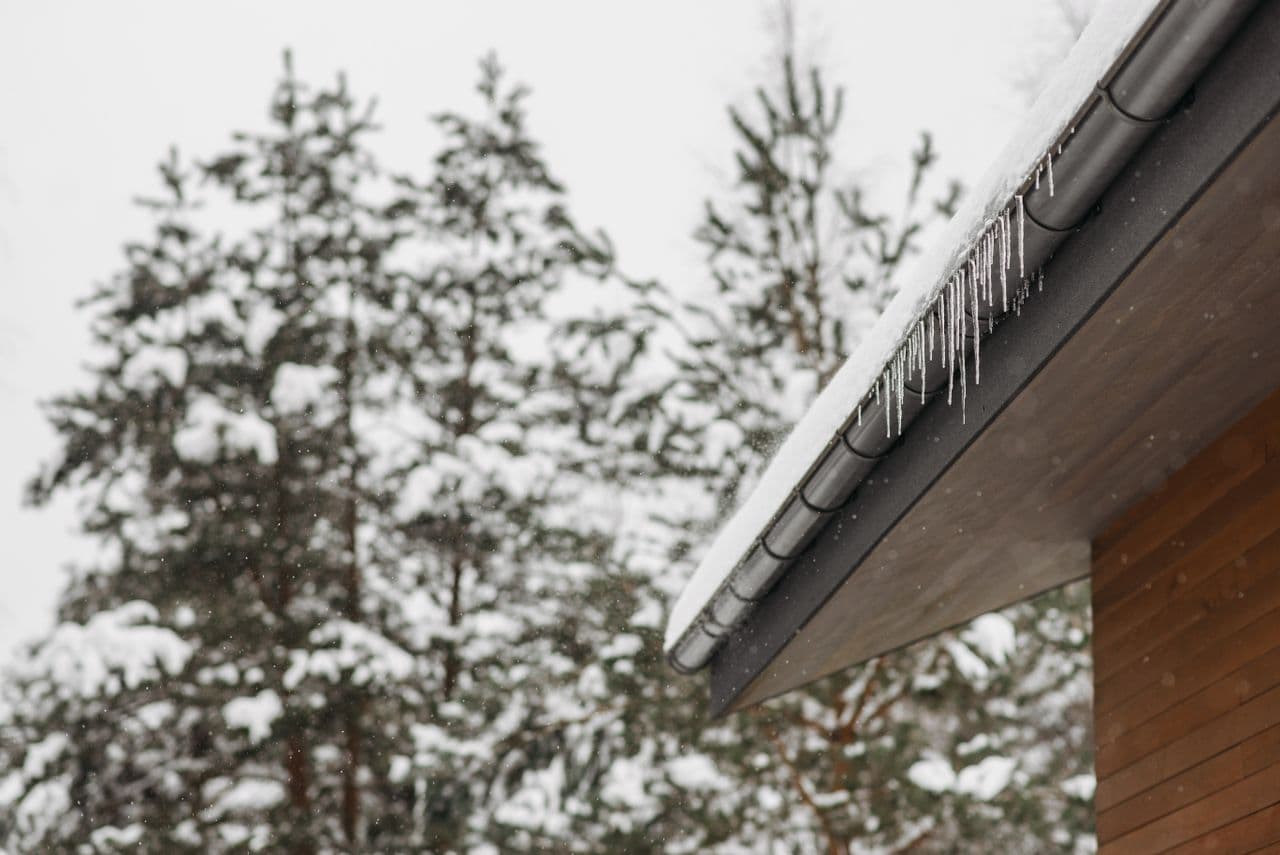
An ice dam forms because heat escaping through your ceiling warms the roof deck, snow melts against the warm part, the meltwater runs down to the cold overhang where there is no heated room beneath it, and it refreezes into a ridge. That ridge then backs water up under the shingles, which is where the damage comes from.
A heat cable does not stop any of that. What it does is keep a channel open through the dam so water has somewhere to go instead of pooling behind it. That is a genuinely useful thing — the water damage, not the ice, is what costs money — but it is worth being precise that you are managing drainage, not preventing the dam.
The cause is heat loss into the attic, and the fix for the cause is air sealing and insulation. That is the consistent position of building-science and energy-efficiency guidance, and it is also what we say about roof rakes — a rake removes the snow that feeds the dam, a cable drains the water the dam traps, and neither one stops your ceiling leaking heat.
Self-regulating or constant wattage — the spec that matters
This is the real technical decision and most listings bury it under length.
Constant wattage cable draws the same power per foot along its whole length regardless of conditions. It is cheaper and entirely adequate on a simple run.
Self-regulating cable contains a conductive polymer whose resistance rises as it warms, so each foot throttles its own output. WarmlyYours publishes 5 watts per linear foot at 50 degrees F for the Ice Shield and states that the design helps prevent overlapped or criss-crossed cable from overheating.
That overlap tolerance is the point. On a straight eave you can lay a clean zigzag with no crossings and the distinction barely matters. On a roof with a valley, a dormer return or a downspout that doubles back, crossings become hard to avoid — and a constant-wattage cable crossing itself concentrates heat at that point with nothing to limit it.
Published output for every kit on this page
Read the self-regulating row carefully. Five watts per foot is quoted at 50 degrees F, which is a reference condition rather than a ceiling — the cable draws more as it gets colder, because that is what self-regulating means. Size the circuit on the high side.
Measure the zigzag, not the house
The single most common ordering mistake is buying cable equal to the width of the roof. Heat cable is installed in a triangular zigzag along the eave — up the roof, back down, along a bit, repeat — because a straight line at the gutter would leave the water above it nowhere to go.
That pattern consumes roughly three to four times the linear distance it covers, before you add the gutter run and the downspout. A twenty-foot eave with a two-foot-tall triangle plus one downspout can comfortably want sixty to eighty feet of cable. Sketch the pattern, add the gutter length, add the full drop of every downspout, then buy the next size up.
How we picked
- Self-regulating versus constant wattage, because it decides whether the cable can safely cross itself on a complex roofline
- Published watts per foot and total wattage, which convert directly into amps and into a winter electricity cost
- Implied circuit load against a standard 15-amp circuit — the constraint most buyers discover after the cable arrives
- Whether clips and spacers are included, since they are the entire mechanism for attaching cable without fastening through the roof
- Published safety listings (UL, CSA) on a product that sits outdoors in meltwater for months
We have not physically tested these products. We do not own them, we have no lab, and we do not accept free product. Everything above is compiled from published manufacturer specifications, published manuals, published standards and live retailer data - and we tell you which is which on every claim. How we pick.
Quick picks
Ranked against the criteria below. Tap a row to jump to the full write-up; the price button goes straight to Amazon.
| # | Product | Best for | Score | Price |
|---|---|---|---|---|
| 1 |  WarmlyYours Ice Shield Deicing Cable, 100 ft Self-regulating rather than constant wattage — output rises and falls with the cable's own temperature, which is what makes overlapping runs safe. | Cable that can safely cross itself | 8.4/10 | |
| 2 |  Frost King RC100 Roof Cable Kit, 100 ft A hundred feet of constant-wattage cable at a published 5 watts per foot, with the spacers and shingle clips included — the mainstream default in this category. | A typical eave run, complete in the box | 8.1/10 | $90.80 - View on Amazon #ad affiliate link · Price as of September 14, 2026 |
| 3 |  Easy Heat ADKS-800 Roof and Gutter Kit, 160 ft 160 feet at a published 5 watts per foot — 800 W in one run, UL and CSA listed, for the roofline a 100-foot kit does not reach around. | A long eave, or a roof plus its downspouts | 7.9/10 | $98.69 - View on Amazon #ad affiliate link · Price as of September 14, 2026 |
| 4 |  Frost King RC30 Roof Cable Kit, 30 ft Thirty feet at a published 5 watts per foot — 150 W, the smallest sensible kit, for the single valley or doorway that dams every year. | One problem spot, not a whole roof | 7.6/10 | $51.30 - View on Amazon #ad affiliate link · Price as of September 14, 2026 |
| 5 |  Easy Heat Roof and Gutter Deicer Cable, 240 ft 240 feet and a published 1,200 watts — ten amps on a 120-volt circuit, which is the point at which this stops being a plug-in purchase. Our skip-this pick | A very large roofline, with an electrician involved | 7.0/10 | $144.39 - View on Amazon #ad affiliate link · Price as of September 14, 2026 |
Cable that can safely cross itself
WarmlyYours Ice Shield Deicing Cable, 100 ft
Self-regulating rather than constant wattage — output rises and falls with the cable's own temperature, which is what makes overlapping runs safe.
There are two kinds of heat cable sold for roofs and the difference is not marketing. Constant wattage cable draws the same power per foot everywhere along its length, forever. Self-regulating cable contains a conductive polymer whose resistance rises as it warms, so each individual foot throttles its own output based on how cold that foot actually is.
Two consequences follow, and the second is the one that should decide your purchase. The first is energy: a self-regulating cable backs off on a mild night instead of running flat out, so consumption tracks the weather. The second is safety. If constant-wattage cable overlaps or crosses itself, heat concentrates at the crossing with nothing to limit it. WarmlyYours states explicitly that the self-regulating design helps prevent overlapped or criss-crossed cable from overheating.
On a simple straight eave that distinction is academic, because you can lay the zigzag without crossings. On a roof with a valley, a dormer, a complicated gutter return or a downspout that doubles back, crossings are hard to avoid — and that is where the extra money buys something real.
Read the output figure precisely. WarmlyYours publishes 5 watts per linear foot at 50 degrees F. That is a reference condition, not a maximum: a self-regulating cable draws more as it gets colder, which is the whole point. When you size the circuit, assume more than 500 watts for a 100-foot run rather than exactly 500.
Everything else on this page applies equally here: it is a plug-in kit needing an outdoor GFCI receptacle, and it manages a symptom rather than fixing the building.
What works
- Self-regulating cable can touch or cross itself without creating a hot spot — the single most useful safety property in this category
- Draws less where it is warmer, so the energy cost tracks the weather rather than the calendar
- Plug-in kit with clips and spacers included; no field termination
- From a maker whose snow-melting hardware we already cover, with published specifications rather than vague claims
What does not
- The 5 W/ft figure is quoted at 50 degrees F — in genuinely cold weather a self-regulating cable draws more, so plan circuit capacity on the high side
- Costs more per foot than constant-wattage cable of the same length
- Still a symptom treatment; it does not stop heat escaping into your attic
- No published weight
A typical eave run, complete in the box
Frost King RC100 Roof Cable Kit, 100 ft
A hundred feet of constant-wattage cable at a published 5 watts per foot, with the spacers and shingle clips included — the mainstream default in this category.
This is the kit most people end up buying, and the specification explains why: 100 feet at a published 5 watts per foot on a standard 120-volt outdoor outlet, arriving pre-assembled with the spacers and shingle clips already in the box.
Those clips matter more than the listing makes them sound. The cable has to be held in a zigzag along the eave at a consistent spacing, and it has to be attached without putting a fastener through the roofing. The clips are the entire mechanism for doing that, and buying a bare cable without them means a second order before you can start.
The thermostat is the other feature worth paying for. A heat cable with no control is a 500-watt appliance that runs whenever it is plugged in, which is how people end up shocked by a January bill. Frost King states the kit switches on and off automatically with temperature.
The honest limitation is that it is constant wattage rather than self-regulating. Every foot draws the same power whether it is buried in an ice dam or sitting in dry air, and — more importantly — if the cable touches or crosses itself, the heat concentrates at that point rather than backing off. Self-regulating cable is designed to tolerate exactly that, and it is the upgrade worth understanding before you buy.
Before ordering any length, read the section on this page about what a heat cable does and does not fix. It manages a symptom. The cause is heat leaking into your attic, and that is an insulation job — the same argument we make about roof rakes.
What works
- Spacers and shingle clips are included, which is not universal and is the fiddly part of the job
- Pre-assembled — no cutting, no splicing, no field termination
- A thermostat means it is not drawing 500 W every night from November onward
- The most widely stocked length, so replacements and spares are easy to find
What does not
- Constant wattage: every foot draws the same regardless of how cold that foot actually is
- Overlapping or crossing a constant-wattage cable concentrates heat — a self-regulating cable tolerates that and this does not
- 500 W continuous is a real load and a real line on a winter bill
- No published weight, and length cannot be trimmed to fit
A long eave, or a roof plus its downspouts
Easy Heat ADKS-800 Roof and Gutter Kit, 160 ft
160 feet at a published 5 watts per foot — 800 W in one run, UL and CSA listed, for the roofline a 100-foot kit does not reach around.
Length is the specification people get wrong, because a heat cable is not laid in a straight line. It goes along the eave in a zigzag — up the roof, back down, along — and then usually into the gutter and down the downspout. That consumes cable far faster than the width of the house suggests. A 20-foot eave with a modest triangle pattern and one downspout can easily want 60 to 80 feet.
This is the kit for when the arithmetic comes out past 100 feet. Easy Heat publishes 160 feet at 5 watts per foot, so 800 watts total, on 120 volts, with UL and CSA listings and a grounded three-wire plug.
Do the amp arithmetic before ordering. 800 watts at 120 volts is roughly 6.7 amps — close to half of a standard 15-amp circuit, on a load that runs for hours at a time. If the outdoor receptacle you plan to use shares a circuit with anything else that matters, that is the conversation to have with an electrician before the cable arrives, not after.
The six-foot cord is the practical constraint nobody reads. The cable is pre-assembled with the cord at one end, so the run has to *finish* within six feet of a receptacle. On a long eave that dictates which end you start from, and occasionally dictates that you need an outlet added.
One honest note about why you might be reading this entry. If your roofline genuinely needs 160 feet of heat cable, that is worth pausing on. A large heated area is a large heat-loss area, and the money may do more work in the attic than on the roof — the argument is laid out in the body of this page.
What works
- 160 feet covers a long eave or a shorter eave plus gutters and downspouts in one continuous run
- UL and CSA listed, which on a product that lives outdoors in water all winter is worth checking for
- One kit and one outlet rather than two kits on two circuits
- Grounded three-wire plug rather than a two-prong cord
What does not
- 800 W is roughly 6.7 amps — a substantial share of a 15-amp circuit before anything else is plugged in
- Constant wattage, so it cannot safely overlap itself
- Only a 6-foot power cord, so the outdoor receptacle has to be close to where the run ends
- A 160-foot requirement is often a sign the roof needs insulation work rather than more cable
One problem spot, not a whole roof
Frost King RC30 Roof Cable Kit, 30 ft
Thirty feet at a published 5 watts per foot — 150 W, the smallest sensible kit, for the single valley or doorway that dams every year.
Most ice dam problems are not evenly distributed around a house. There is one valley where two roof planes meet and dump meltwater into a cold corner, or one stretch above a doorway where the dam forms every single year while the rest of the eave is fine.
For that, a perimeter of cable is the wrong purchase. This is thirty feet at a published 5 watts per foot — 150 watts, about 1.25 amps — which is small enough to plug in almost anywhere and cheap enough to treat as an experiment.
Treating it as an experiment is genuinely the right frame. Heat cable does not work equally well on every roof, and finding out on one problem area costs a fraction of finding out around the whole house. If the spot stays clear all winter, you know the approach works on your building and can extend it. If it does not, you have learned that cheaply.
The limitation is arithmetic. Thirty feet sounds like a lot until you lay it in a zigzag: a triangle pattern two feet tall over an eight-foot span, plus a run down one downspout, and it is gone. Measure the pattern before you decide this length is enough.
There is also a failure mode specific to spot treatment worth knowing about. Clearing a channel through one section of dam sometimes just relocates where the water refreezes — it runs along behind the remaining ice and forms the next dam a few feet over. On a roof where the whole eave is marginal, spot heating can chase the problem around rather than solve it.
What works
- 150 W is a negligible electrical load — about 1.25 amps, which almost any outdoor circuit absorbs
- The cheapest honest way to test whether heat cable helps your specific problem before committing to a perimeter
- Short enough to install from a single ladder position in most cases
- Targets the actual failure point rather than heating roofline that never dams
What does not
- Thirty feet is one spot — a zigzag plus a downspout can consume most of it immediately
- Constant wattage, same overlap caution as the other Frost King kits
- Solving one dam sometimes just moves the water to the next cold spot along the eave
- No published weight
A very large roofline, with an electrician involved
Easy Heat Roof and Gutter Deicer Cable, 240 ft
240 feet and a published 1,200 watts — ten amps on a 120-volt circuit, which is the point at which this stops being a plug-in purchase.
Skip this one
Skip the 240-foot kit unless an electrician has already agreed to give it a circuit. At a published 1,200 watts it draws roughly ten amps, which is two-thirds of a standard 15-amp circuit on a load that runs for hours — so it is not a plug-in purchase. And a roofline that needs 240 feet of heating is usually telling you something about how much heat is reaching it. Fix the attic first, then decide how much cable you still need.
This is the largest kit in the range and it is on this page mostly as a boundary marker. Easy Heat publishes 240 feet and 1,200 watts at 120 volts, which works out to roughly ten amps.
Ten amps is the number that changes the nature of the purchase. A standard 15-amp household circuit should not be loaded above about 12 amps continuously, so this cable effectively wants a circuit of its own. That is a licensed electrician and a panel with a spare slot, and it means the true cost of the installation is not the price of the cable.
The energy side is proportional. Twelve hundred watts is 1.2 kilowatt-hours for every hour it runs. We are not going to invent an electricity rate for you — multiply it by your own and by a realistic number of winter hours, and the figure that comes out is the one that should inform the decision.
There is a real case for it. Some houses genuinely have a long, complex, north-facing roofline that dams every year and cannot be practically re-insulated — a finished attic, a cathedral ceiling, a historic building. For those, one continuous run with no junctions sitting in meltwater is the right engineering answer, and this is that run.
But for most people who find themselves looking at a 240-foot kit, the honest read is different: the reason so much roofline needs heating is that so much heat is reaching it. That is the argument the rest of this page makes, and it is worth taking seriously before spending this much on managing the symptom.
What works
- The longest single run here — covers a large or complex roofline without joining kits
- One continuous cable means no junctions sitting in meltwater
- Same 5 W/ft output as the shorter kits, so the behavior is predictable
- Cheaper per foot than buying two shorter kits
What does not
- Ten amps is effectively a dedicated circuit — this is an electrician's job, not a plug-in purchase
- 1,200 W running for hours is a genuinely large winter energy cost
- Constant wattage at this length means a long, unforgiving run with no overlap tolerance
- Needing 240 feet is usually evidence of a building envelope problem rather than a cable shortage
Before you order: three checks
- Can you safely reach the eave? Installation means a ladder, at the edge of a roof, in winter, clipping cable along the shingle line. If that is not something you will do safely, the honest answer is to hire it out or to stick with a roof rake used from the ground.
- Is there an outdoor GFCI receptacle where the run ends? These are plug-in kits with short cords — the Easy Heat ADKS-800 has a published six-foot cord. The run has to finish near an outlet, which often dictates which end you start from.
- Does the circuit have the headroom? Add the wattage, divide by 120 for amps, and compare against what else is on that circuit. A continuous load should not exceed about 80% of the breaker rating.
What this will cost to run
We are not going to invent an electricity rate, because it varies by more than a factor of three across the country and any number we printed would be wrong for most readers. What we can give you is the arithmetic, from published wattage.
A 500-watt kit uses 0.5 kilowatt-hours for every hour it runs. A 1,200-watt kit uses 1.2. Multiply by your own rate and by a realistic number of hours — which, with a thermostat, is the hours below freezing while there is snow on the roof, not the whole winter. Doing that sum before ordering is the difference between an informed purchase and a January surprise, and it is also the strongest argument for self-regulating cable, which backs off on milder nights instead of running flat out.
The alternatives, honestly
- Air sealing and insulation. Fixes the cause, cuts the heating bill, needs no electricity. The right answer wherever the attic floor is accessible.
- A roof rake. Removes the snow that feeds the dam, from the ground, for a fraction of the price and no running cost. It has to be done after every storm. See best roof rakes for snow.
- Nothing. On a roof that dams occasionally and drains fine, a dam is not automatically a problem. The problem is water backing up under shingles — if that is not happening, you may be buying a solution to a photograph.
- De-icer on the roof. Sometimes suggested, and we would avoid it: chlorides on shingles, flashing and gutters is a corrosion and runoff problem, and the material ends up in the planting below. Ice melt damage by surface covers what chlorides do to metal.
If your problem is at ground level rather than on the roof, the same electric-de-icing logic applies in a different shape — snow melting mats for paths and entrances, and how to stop ice building up on steps and porches for treads.
Questions people ask
Do roof heat cables prevent ice dams?
What is the difference between self-regulating and constant wattage heat cable?
How much heat cable do I need for my roof?
How much electricity does a roof heat cable use?
Can I plug a roof heat cable into a normal outlet?
Is heat cable or a roof rake better for ice dams?
Sources
Next stage
The no-electricity alternative
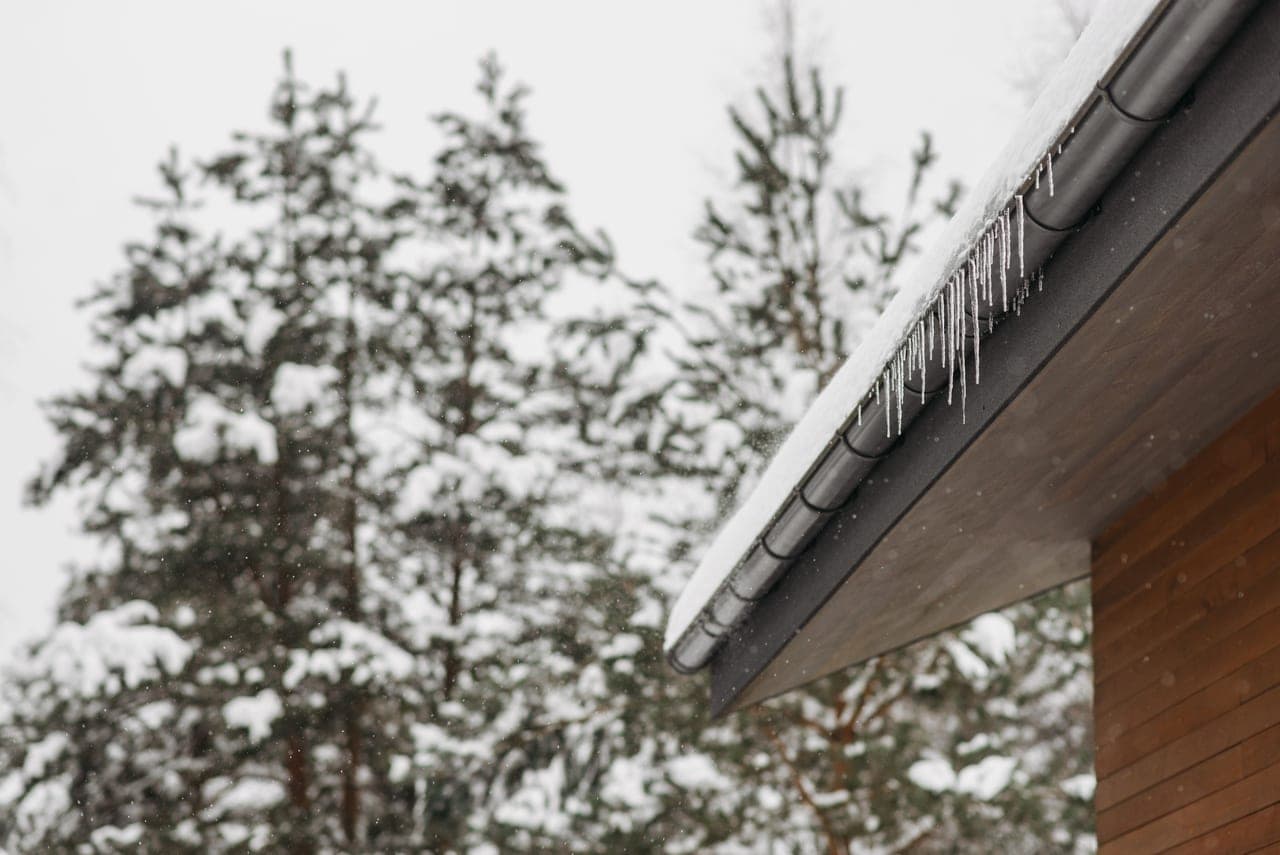
A roof rake removes the snow that feeds the dam, from the ground, with no running cost — if you can reach the eave and will do it after every storm.
Keep goingAbout the author
Scooter M.
An enthusiast who is genuinely into this. I read the manuals, compile the published specs, and do the math on door clearances. No lab coat, no test bench, and nothing here is a product I have used - which is exactly why every claim carries a source.
Published by Slate Mill Group, with the Shovel Report team. Published September 14, 2026; last updated September 14, 2026. Editorial policy.
Read next
Best Roof Rake
Best Roof Rakes for Snow
Reach against shingle safety — the poly-versus-aluminum blade decision, and honest weight limits.

Best Snow Melting Mat
Best Snow Melting Mats
Portable mats and one permanent system, ranked on published amps, coverage and what actually arrives in the box.
Best for Steps and Porches
How to Stop Ice Building Up on Steps and Porches
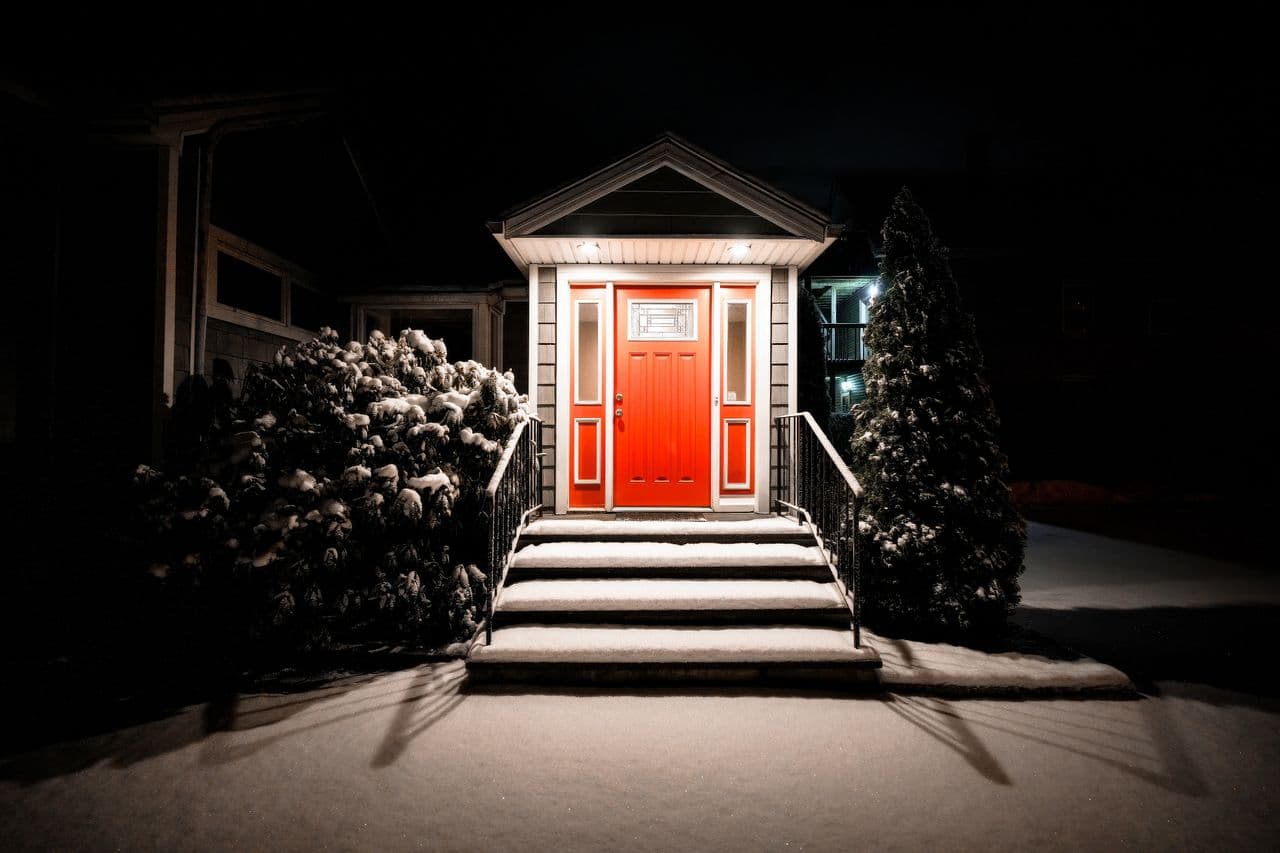
Why steps glaze over before anything else does, and the de-icer or heated mat that actually stops it.

Damage by Surface
Ice Melt Damage, Surface by Surface
Grass, soil, wood, metal, stone and paws — the mechanism for each and the chemistry that suits it.