By Scooter M. · Last updated September 21, 2026
Shovel Report earns a commission when you buy through the links on this page, at no extra cost to you. It does not change what we recommend, and we publish a skip-this verdict on products we could otherwise earn from. Full disclosure.
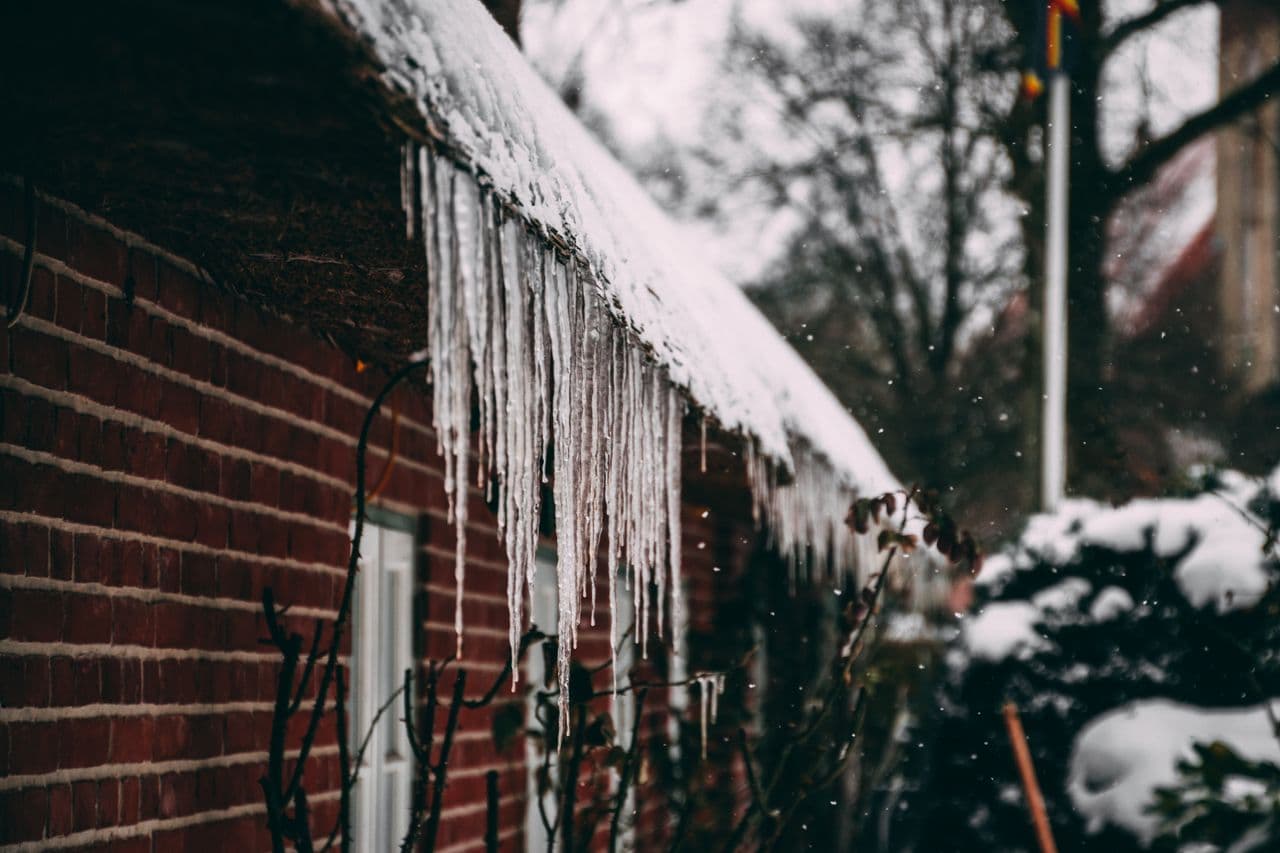
To remove an ice dam: clear snow from the roof edge with a roof rake from the ground, then melt a drainage channel through the dam. The University of Minnesota Extension says that in an emergency, hosing with tap water on a warm day will cut that channel, working upward from the lower edge — and that it is temporary. Never chip at the ice, and do not climb an icy roof.
What an ice dam actually is
An ice dam is a ridge of ice at the roof edge that stops meltwater draining off the roof. The water pools behind it, finds its way under the shingles, and comes through the ceiling.
It forms because your roof is at two different temperatures at once. UMN Extension puts the condition precisely: "For ice dams to form there must be snow on the roof and, at the same time, higher portions of the roof's outside surface must be above 32 degrees F (freezing) while lower surfaces are below 32F."
The upper roof is warm because heat is escaping from the house into the attic. Snow melts against that warm deck, the water runs down to the eave — which overhangs unheated air and stays below freezing — and refreezes there. Each cycle builds the dam higher.
That is why icicles along a gutter are a symptom worth reading rather than a decoration: they mean meltwater is reaching a cold edge and freezing.
The four things people try, ranked
Ice dam removal methods compared
The calcium chloride sock method, and an honest note about it
The widely repeated homeowner method is to fill a tube sock or a leg of old pantyhose with calcium chloride, tie it off, and lay it across the dam so it hangs over the edge. As it dissolves it melts a vertical channel through the ice, and the trapped water behind the dam drains out through it.
Here is what we can and cannot stand behind. The mechanism is sound and it is the least dangerous way to cut a channel, because the sock can be placed from a ladder or pushed into position with a roof rake rather than by walking on ice. But we read the University of Minnesota Extension's ice dam guidance carefully, and it does not mention calcium chloride or the sock method at all — its emergency advice is the tap-water channel quoted above. We have not found a university extension or government source that recommends the sock method, so we are not going to tell you an institution endorses it. It is a widely used field technique, not documented guidance.
What is documented is the chemistry. UNH Extension gives calcium chloride an effective temperature of -25°F — which matters, because dams persist in cold that stops milder de-icers — while noting it "is fast-acting, but can ruin surfaces such as asphalt and concrete, and also injures grass and plants".
Read that last clause with your own roof in mind. Everything that does not dissolve ends up in the gutter, down the downspout and on the bed below. If that bed matters to you, plan where the runoff goes before you start.
What not to do, and why
- Do not chip, hammer or chisel the ice. Asphalt shingles are brittle in the cold, and the ice is bonded to them. You will take granules, and often whole tabs, off with the ice — turning a water problem into a roofing bill.
- Do not use a pressure washer. The pressure that shifts ice also strips shingle granules and drives water up under the courses.
- Do not pour boiling water. It refreezes within minutes somewhere colder, usually in the gutter or at the drip edge, and you have added ice to the problem. UMN's method specifies tap water on a warm day for a reason.
- Do not climb an icy roof. This is the one that hurts people. A snow-covered roof with a dam at the edge is a slide with a hard stop, and ladders on frozen ground move.
- Do not run a heat cable into an existing dam expecting it to cut through. Cable is a prevention tool that works on a clear roof — it does not melt its way out of an established dam.
- Do not ignore a dam because it is not leaking yet. A dam that has not leaked has simply not found a path under a shingle yet.
How we picked
- Whether the product addresses the dam you have now, or the dam you will have next winter — the two jobs need different things
- Chemistry and published lowest effective temperature, because dams sit in cold that stops mild de-icers
- The format the job actually demands: what you can carry and pour from a ladder, not what is cheapest per pound
- Whether the tool lets you work from the ground, which is the safety difference that matters most
- Surface consequences — what the runoff reaches, and what the fastenings go through
- What the maker publishes, and saying plainly where a listing is bare
We have not physically tested these products. We do not own them, we have no lab, and we do not accept free product. Everything above is compiled from published manufacturer specifications, published manuals, published standards and live retailer data - and we tell you which is which on every claim. How we pick.
Quick picks
Ranked against the criteria below. Tap a row to jump to the full write-up; the price button goes straight to Amazon.
| # | Product | Best for | Score | Price |
|---|---|---|---|---|
| 1 | 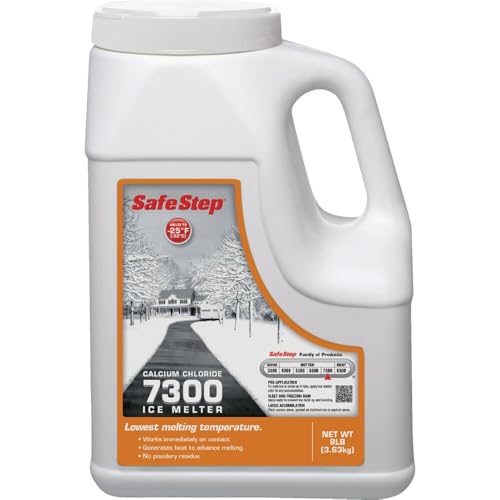 Safe Step Extreme 7300 Calcium Chloride Ice Melter, 8 lb Jug Calcium chloride published to -25°F in an 8-pound jug rather than a 50-pound bag — the format that matters when you are filling stockings at the bottom of a ladder. | Filling ice dam socks, and carrying up a ladder | 7.4/10 | $27.07 - View on Amazon #ad affiliate link · Price as of September 21, 2026 |
| 2 |  VEVOR Aluminum Roof Rake, 26-in Blade A 26-inch aluminum blade on a 7.5-to-20-foot adjustable handle, with wheels — the cutting option, with the granule risk that aluminum brings. Our skip-this pick | Cutting crusted snow, accepting the risk | 7.3/10 | $62.90 - View on Amazon #ad affiliate link · Price as of September 21, 2026 |
| 3 |  Peladow Calcium Chloride Pellets, 50 lb OxyChem's round calcium chloride pellet at about 90% purity, working to a published -25°F and dissolving exothermically — the chemistry for ice that has already bonded. Our skip-this pick | Breaking an existing bond on a cold morning | 7.5/10 | $50.99 - View on Amazon #ad affiliate link · Price as of September 21, 2026 |
| 4 |  Frost King RC100 Roof Cable Kit, 100 ft A hundred feet of constant-wattage cable at a published 5 watts per foot, with the spacers and shingle clips included — the mainstream default in this category. | A typical eave run, complete in the box | 8.1/10 | $92.78 - View on Amazon #ad affiliate link · Price as of September 21, 2026 |
| 5 |  RHS Roof Valley Ice Dam Heater Mat, 5 ft x 13 in A 50 watt-per-foot heated mat made for roof valleys rather than eaves — the permanent fix for the one spot on a roof that cable cannot cover properly. Our skip-this pick | A roof valley that dams every single winter | 6.9/10 | $159.95 - View on Amazon #ad affiliate link · Price as of September 21, 2026 |
Filling ice dam socks, and carrying up a ladder
Safe Step Extreme 7300 Calcium Chloride Ice Melter, 8 lb Jug
Calcium chloride published to -25°F in an 8-pound jug rather than a 50-pound bag — the format that matters when you are filling stockings at the bottom of a ladder.
Calcium chloride is the chemistry you want for an ice dam, because dams form and persist at temperatures where milder de-icers have stopped doing useful work. This jug publishes -25°F on the label, which is consistent with what the chemistry can do — the University of New Hampshire Extension gives the same figure for calcium chloride generally.
What makes the 8-pound jug the right buy here is not the chemistry, it is the packaging. The standard homeowner method for a dam is to fill a tube sock or a leg of old pantyhose with calcium chloride and lay it across the dam so it melts a channel. You do that at the top of a ladder, one-handed, in the cold. A 50-pound bag is the wrong object for that job; a jug you can hold is the right one.
Be clear-eyed about the cost of using it. UNH Extension notes that calcium chloride is fast-acting but can ruin surfaces such as asphalt and concrete and injures grass and plants. On a roof, the granules that do not dissolve wash into the gutter, down the downspout and onto whatever is planted below — which is a real consideration on a bed you care about.
It is also the wrong product for the surfaces most likely to be underneath: not on pavers, not on concrete poured in the last twelve months. Our calcium chloride vs rock salt page covers that trade, and how to remove an ice dam covers the method this jug exists for.
What works
- An 8-pound jug is the size you can actually carry and pour one-handed on a ladder
- Calcium chloride is the chemistry that keeps working at the temperatures ice dams form in
- A resealable jug survives the half-used state better than a folded-over paper bag
- Published -25°F sits within what calcium chloride can genuinely do
What does not
- The listing is nearly bare: no coverage rate, no form, no purity figure
- Costs several times per pound what a 50 lb bag does
- Calcium chloride can damage asphalt and concrete and injure plants, per UNH Extension — and a roof drains onto both
- 8 pounds does not go far if you are treating a long eave
Cutting crusted snow, accepting the risk
VEVOR Aluminum Roof Rake, 26-in Blade
A 26-inch aluminum blade on a 7.5-to-20-foot adjustable handle, with wheels — the cutting option, with the granule risk that aluminum brings.
Skip this one
Skip the aluminum blade if your roof is asphalt shingle and you only ever face fresh, light snow. You are buying cutting power you do not need and accepting granule risk to get it — the wheels reduce that risk but do not remove it, and a poly-bladed rake does the fresh-snow job without the downside.
The Snow Joe RJ205M aluminum rake we used to list is no longer available. The VEVOR is the closest comparable rake we can verify is in stock that keeps the point of this entry: an aluminum blade, for snow a poly blade cannot cut.
Aluminum earns its place on packed, crusted or refrozen snow. Poly skates over a hard crust; an aluminum edge bites into it and pulls material down the slope. VEVOR's blade is 26 inches wide, which is the widest on this page, on a handle that adjusts from 7.5 to 20 feet.
The risk is the same one that applies to every metal roof rake. Asphalt shingles are protected by mineral granules, and a metal edge dragged across them under pressure strips granules off. The damage is cumulative and shortens the roof's life. VEVOR fits wheels to the blade assembly, which help hold the edge off the surface — a genuinely useful feature — but a wheel does not guarantee the edge never touches.
So the decision is about your snow and your roof. On a metal roof, or where you routinely face crust, it is the right tool. On an asphalt shingle roof that only sees fresh snow, the poly rake above does the job without the granule risk.
What works
- Aluminum cuts packed and refrozen snow that a poly blade rides over
- 26 inches is the widest blade on this page
- Wheels on the head help hold the edge off the roof surface
- Adjustable from 7.5 to 20 feet, so it works on a low roof without extra poles
What does not
- Aluminum under pressure can strip the mineral granules off asphalt shingles
- 20 feet maximum is the shortest reach on this page
- No published weight
- A 26-inch blade full of wet snow is a heavy load at full extension
Breaking an existing bond on a cold morning
Peladow Calcium Chloride Pellets, 50 lb
OxyChem's round calcium chloride pellet at about 90% purity, working to a published -25°F and dissolving exothermically — the chemistry for ice that has already bonded.
Skip this one
Do not use calcium chloride on concrete poured within the last twelve months, on pavers, on composite decking, or where runoff drains straight into planting beds. It is the right chemistry for breaking a bond that has already formed and the wrong one for a new driveway.
The Green Gobbler calcium chloride we used to list here is no longer available. Peladow is the closest comparable product we can verify is in stock, and it is the reference calcium chloride pellet that most of the category is measured against: made by OxyChem, at about 90% calcium chloride.
The reason to reach for calcium chloride is its mechanism. It dissolves exothermically — it releases heat as it goes into solution — so it starts working the moment it lands rather than depending on sunlight or ambient warmth. OxyChem also points to the round pellet shape, which penetrates an ice layer and attacks the bond with the pavement instead of sitting on top.
Be precise about the temperature. OxyChem publishes an effective temperature of -25°F. That is very cold, and it is consistent with the chemistry: the Minnesota Pollution Control Agency puts calcium chloride's lowest practical pavement temperature at -20°F, ten degrees colder than magnesium chloride's. Calcium chloride wins on both counts that matter in deep cold — it works colder, and it starts faster on an existing bond.
The cost is what it does to surfaces. Calcium chloride drives the most freeze-thaw cycling of any common de-icer, which is the mechanism that damages concrete, and its brine washes jointing sand out of pavers. Use it to rescue a driveway that has already iced — how to get ice off a driveway — not as routine pre-treatment.
What works
- Exothermic: it generates heat as it dissolves, so it starts working on contact rather than waiting for sun
- Round pellets bore down through an ice layer instead of sitting on top of it
- Published compliance with the ASTM and AASHTO calcium chloride standards
- 50 lb bag is the economical way to buy the coldest-working chloride
What does not
- Rated high risk for corrosion of reinforcing steel and for vegetation by the Minnesota Pollution Control Agency, like the other chlorides
- Hardest on paws of anything we list
- The maker's "up to 3x faster" claim is theirs, not a figure we can verify
- 50 pounds is a heavy bag, and calcium chloride absorbs moisture and cakes if stored open
A typical eave run, complete in the box
Frost King RC100 Roof Cable Kit, 100 ft
A hundred feet of constant-wattage cable at a published 5 watts per foot, with the spacers and shingle clips included — the mainstream default in this category.
This is the kit most people end up buying, and the specification explains why: 100 feet at a published 5 watts per foot on a standard 120-volt outdoor outlet, arriving pre-assembled with the spacers and shingle clips already in the box.
Those clips matter more than the listing makes them sound. The cable has to be held in a zigzag along the eave at a consistent spacing, and it has to be attached without putting a fastener through the roofing. The clips are the entire mechanism for doing that, and buying a bare cable without them means a second order before you can start.
The thermostat is the other feature worth paying for. A heat cable with no control is a 500-watt appliance that runs whenever it is plugged in, which is how people end up shocked by a January bill. Frost King states the kit switches on and off automatically with temperature.
The honest limitation is that it is constant wattage rather than self-regulating. Every foot draws the same power whether it is buried in an ice dam or sitting in dry air, and — more importantly — if the cable touches or crosses itself, the heat concentrates at that point rather than backing off. Self-regulating cable is designed to tolerate exactly that, and it is the upgrade worth understanding before you buy.
Before ordering any length, read the section on this page about what a heat cable does and does not fix. It manages a symptom. The cause is heat leaking into your attic, and that is an insulation job — the same argument we make about roof rakes.
What works
- Spacers and shingle clips are included, which is not universal and is the fiddly part of the job
- Pre-assembled — no cutting, no splicing, no field termination
- A thermostat means it is not drawing 500 W every night from November onward
- The most widely stocked length, so replacements and spares are easy to find
What does not
- Constant wattage: every foot draws the same regardless of how cold that foot actually is
- Overlapping or crossing a constant-wattage cable concentrates heat — a self-regulating cable tolerates that and this does not
- 500 W continuous is a real load and a real line on a winter bill
- No published weight, and length cannot be trimmed to fit
A roof valley that dams every single winter
RHS Roof Valley Ice Dam Heater Mat, 5 ft x 13 in
A 50 watt-per-foot heated mat made for roof valleys rather than eaves — the permanent fix for the one spot on a roof that cable cannot cover properly.
Skip this one
Do not buy this to deal with a dam you have today. It is a permanent installation that wants dry weather, roof access and possibly an electrician, and it does nothing for water coming through a ceiling this week. It is the answer to the narrower question of a valley that dams every winter no matter what you do.
Roof valleys are where two roof planes meet, and they concentrate meltwater from both. They are also the place eave-run heat cable does least good, because a zigzag of cable clipped along a roof edge does not follow a valley down.
This is the product for that specific failure. It is a mat rather than a cable, sized to sit in the valley, rated by the maker at 50 watts per foot — an order of magnitude more heat per foot than the 5 W/ft cable most people run along an eave.
That output is the reason for both the appeal and the caution. It is enough to keep a valley draining in weather that defeats ordinary cable, and it is a serious electrical load: the maker offers lengths up to 50 feet, which at 50 watts a foot is 2,500 watts on one run. That is a dedicated-circuit conversation before it is a shopping decision.
The install is the other consideration. It fastens into the valley with supplied grommet screws, and a valley is the least forgiving part of a roof to put fasteners through. If that sentence makes you uneasy, it should — this is a fair-weather job for someone comfortable on a roof, or a job for a roofer.
None of that helps with water coming through a ceiling tonight. For that, see how to remove an ice dam; for the ordinary eave version of this hardware, see roof heat cable.
What works
- Covers a valley properly, which zigzag cable along an eave does not
- 50 W/ft is ten times the output per foot of typical 5 W/ft roof cable — this is for a spot that genuinely refuses to clear
- Screws are supplied, and the maker designs it for a DIY valley install
- UL Listed components on a permanently installed roof heater is the right assurance to look for
What does not
- Fastening anything through a roof valley — the part of a roof that carries the most water — is a real risk if it is done badly
- 50 W/ft is a heavy electrical load: a 50 ft run is 2,500 watts, which is a dedicated circuit question
- The most expensive item on this page, and useless for an emergency happening right now
- "Melts up to 2 inches of snow" has no conditions attached — no temperature, no time
The order of operations
- Protect the inside first. Buckets, moved furniture, and wet insulation pulled back where you can reach it safely from the attic.
- Rake the snow off the lower roof from the ground. No snow, no new meltwater — this starves the dam while you deal with it. Stay clear of power lines and never rake from a ladder.
- Cut a drainage channel so the water standing behind the dam has somewhere to go: tap water on a warm day, per UMN, or a calcium chloride sock laid across the dam.
- Call a steam contractor if the dam is large, the leak is active, or the roof is out of reach. Steam is the only fast method that does not cost you shingles.
- Once it is over, fix the cause. Air-seal and insulate the attic — everything above is symptom management.
The permanent fix is in the attic, not on the roof
Every product on this page treats a symptom. The cause is heat leaking from the house into the attic, and the order of operations for fixing it is not a matter of opinion.
UMN Extension is specific: "First, make the ceiling air tight so no warm, moist air can flow from the house into the attic space. After sealing air leakage paths between the house and attic space, consider increasing the ceiling or roof insulation to cut down on heat loss by conduction."
Air sealing first, insulation second. That order matters, because insulation laid over unsealed leaks lets warm, moist air keep flowing into the attic — it just slows it down.
Heat cable, valley mats and roof rakes all live downstream of that work. They are worth owning when the attic fix is not possible this winter, or when a particular spot dams regardless — and roof heat cable sets out exactly what that hardware does and does not do.
When it is a professional's job
- Water is actively coming in. Time matters more than cost at that point.
- The dam is thick or runs the length of the eave. Socks cut channels; they do not remove a dam.
- The roof is steep, tall, or metal. All three change the risk from awkward to serious.
- You would be working off a ladder over ice. UMN's guidance is to contact professionals for roof work in winter, and that is the sentence to remember.
Questions people ask
How do you get rid of an ice dam fast?
Does calcium chloride damage a roof?
Can I use hot water to melt an ice dam?
Should I knock the icicles off my roof?
Will a roof rake stop ice dams?
What actually prevents ice dams?
Is it safe to remove an ice dam myself?
Sources
- University of Minnesota Extension — dealing with and preventing ice dams: formation conditions, emergency channel method, roof rake caution, air-seal-then-insulate, and the warning against winter roof work
- UNH Extension — calcium chloride effective to -25F but can ruin asphalt and concrete and injures plants; sodium chloride "the worst of these"
- Amazon listing — Safe Step Extreme 7300 calcium chloride, 8 lb jug, -25F
- Amazon listing — Peladow calcium chloride pellets, 50 lb, -25F published
- Amazon listing — VEVOR snow roof rake, 26 in blade, 7.5-20 ft adjustable
- Amazon listing — Frost King RC100 roof cable kit, 100 ft, 5 W/ft
- Amazon listing — RHS roof valley ice dam heater mat, 5 ft x 13 in, 50 W/ft
Next stage
Stopping the next one
Once the dam is gone, the question is whether heat cable is worth it on your roof — including the cases where it is the wrong purchase.
Keep goingAbout the author
Scooter M.
An enthusiast who is genuinely into this. I read the manuals, compile the published specs, and do the math on door clearances. No lab coat, no test bench, and nothing here is a product I have used - which is exactly why every claim carries a source.
Published by Slate Mill Group, with the Shovel Report team. Published September 21, 2026; last updated September 21, 2026. Editorial policy.
Read next
Best for Ice Dams
Roof Heat Cable for Ice Dams
Watts per foot, self-regulating versus constant wattage, and the amp arithmetic that decides whether you can simply plug it in.
Best Roof Rake
Best Roof Rakes for Snow
Reach against shingle safety — the poly-versus-aluminum blade decision, and honest weight limits.
Chloride Comparison
Calcium Chloride vs Rock Salt
Working temperature, melting speed and surface risk across the common chloride chemistries.
Damage by Surface
Ice Melt Damage, Surface by Surface
Grass, soil, wood, metal, stone and paws — the mechanism for each and the chemistry that suits it.
By Temperature
What Temperature Does Ice Melt Stop Working?
Published working temperatures by chemistry, and what to spread below them.